Heading east
Despite the time difference, we manage to get hold of my parents pretty quickly and talk things through with them. Dad suggests that spending the 30-day quarantine with a Mongolian family in a yurt could be quite romantic. We simply ignore that one... A few phone calls later, my aunt in Switzerland puts us in touch with Oidov in Ulaanbaatar. He sends us to the police station and takes care of the rest for us.
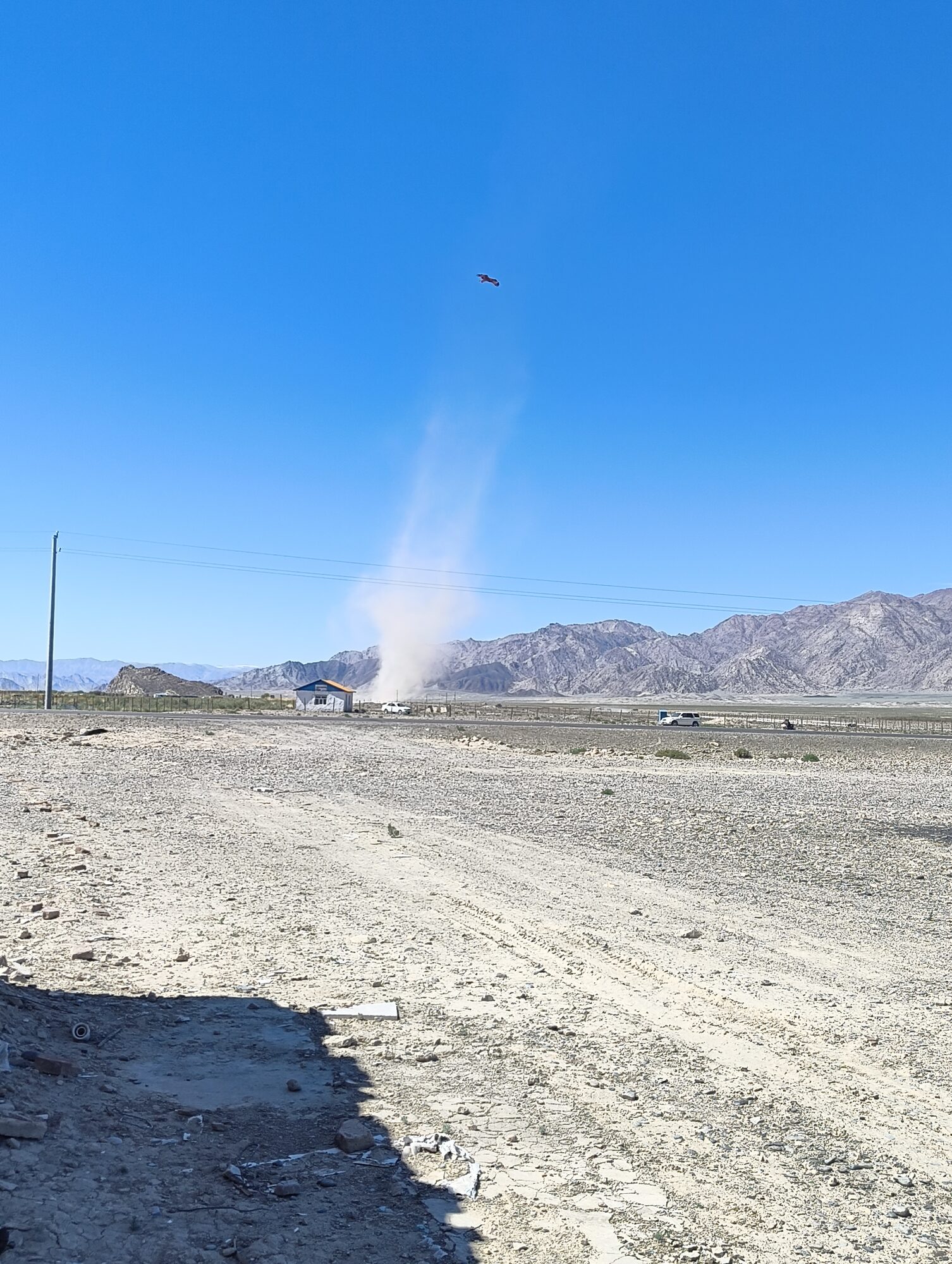
After a lot of back and forth, we're told to leave the village the same way we came in. We still have no idea which areas are under quarantine or where we're allowed to go. Would it actually make more sense to head back to China?
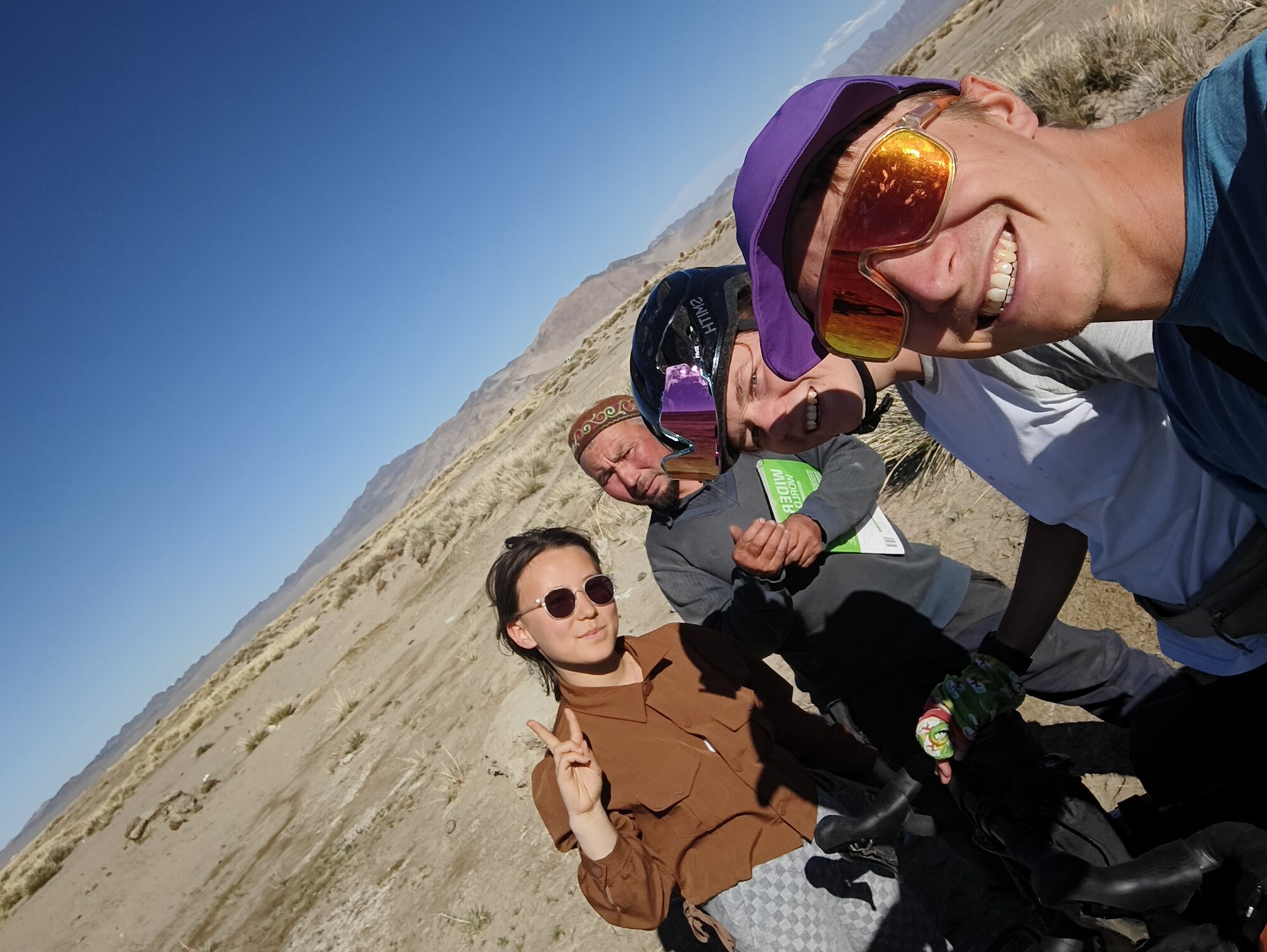
We leave the village along the desert road we only arrived on yesterday. A Mongolian man and his daughter try to talk to us with the help of an English textbook and invite us to their home. As much as we'd love to accept, we just want to get out of this mess as quickly as possible.
Soon we're back on the main paved road and flag down the first truck coming from the Chinese border. The driver loads our bikes onto the empty truck bed, and we climb in. We only want a lift to the next village, really. But he explains that he can take us to Mongolia's main trade route, which continues east. Our brains are completely overloaded after today anyway, so we just go along with it.
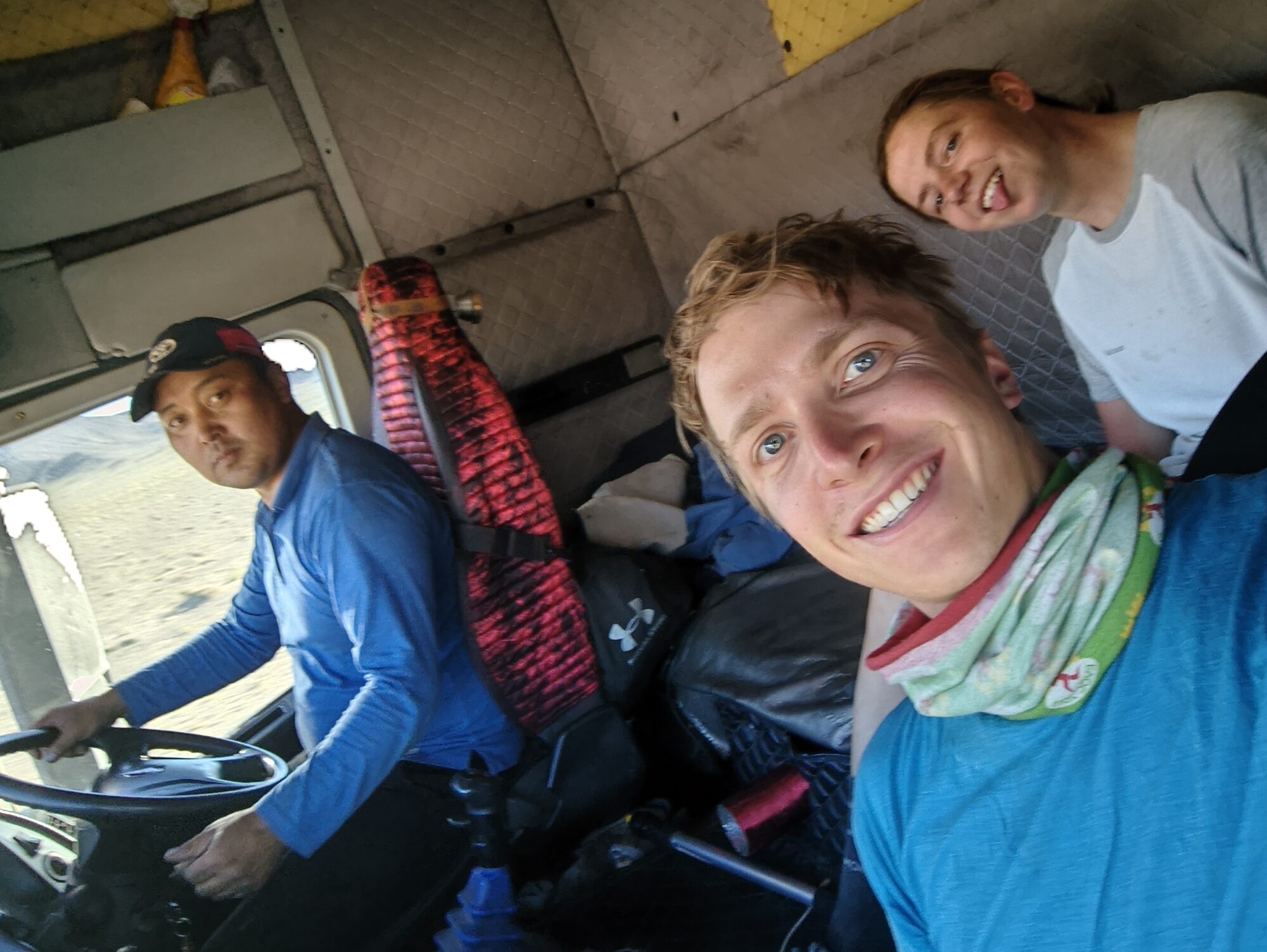
Through a long gorge and over passes more than 3,000 metres high, we travel through the Mongolian fringes of the Gobi Desert late into the night. At 12:30 a.m., we finally reach our destination and pitch the tent beside a small river. The driver does his best to help us put it up, though he's mostly fascinated by our gear.
Across the desert
Over breakfast, we watch the main road about 100 metres away, which is supposed to take us east. We'd somehow pictured the country's main trade route differently. A small car whizzes past roughly every five minutes. The trucks we're hoping for, with enough room for our bikes, just don't seem to be coming. We play down our nerves, go for a dip in the little river and take our time packing up.
We convince ourselves that the perfect lift will stop as soon as we give it a try. Every few minutes, a dot appears on the horizon and slowly grows larger. Once we can make out enough, we have to decide: is there room for two more people and two bikes?
For the first ten minutes, nobody stops. All the cars would have been too small anyway. But then an off-road vehicle actually pulls over.
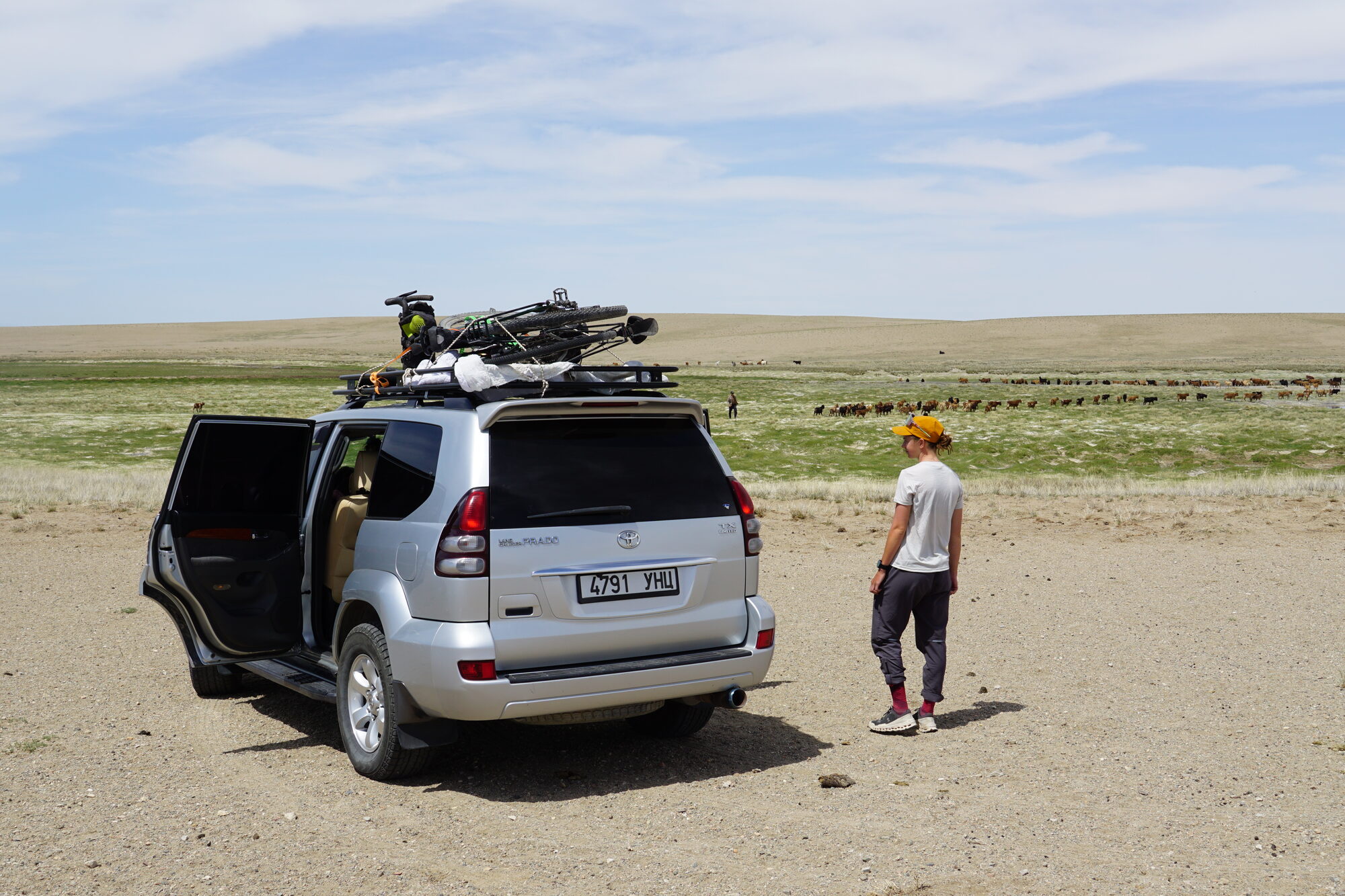
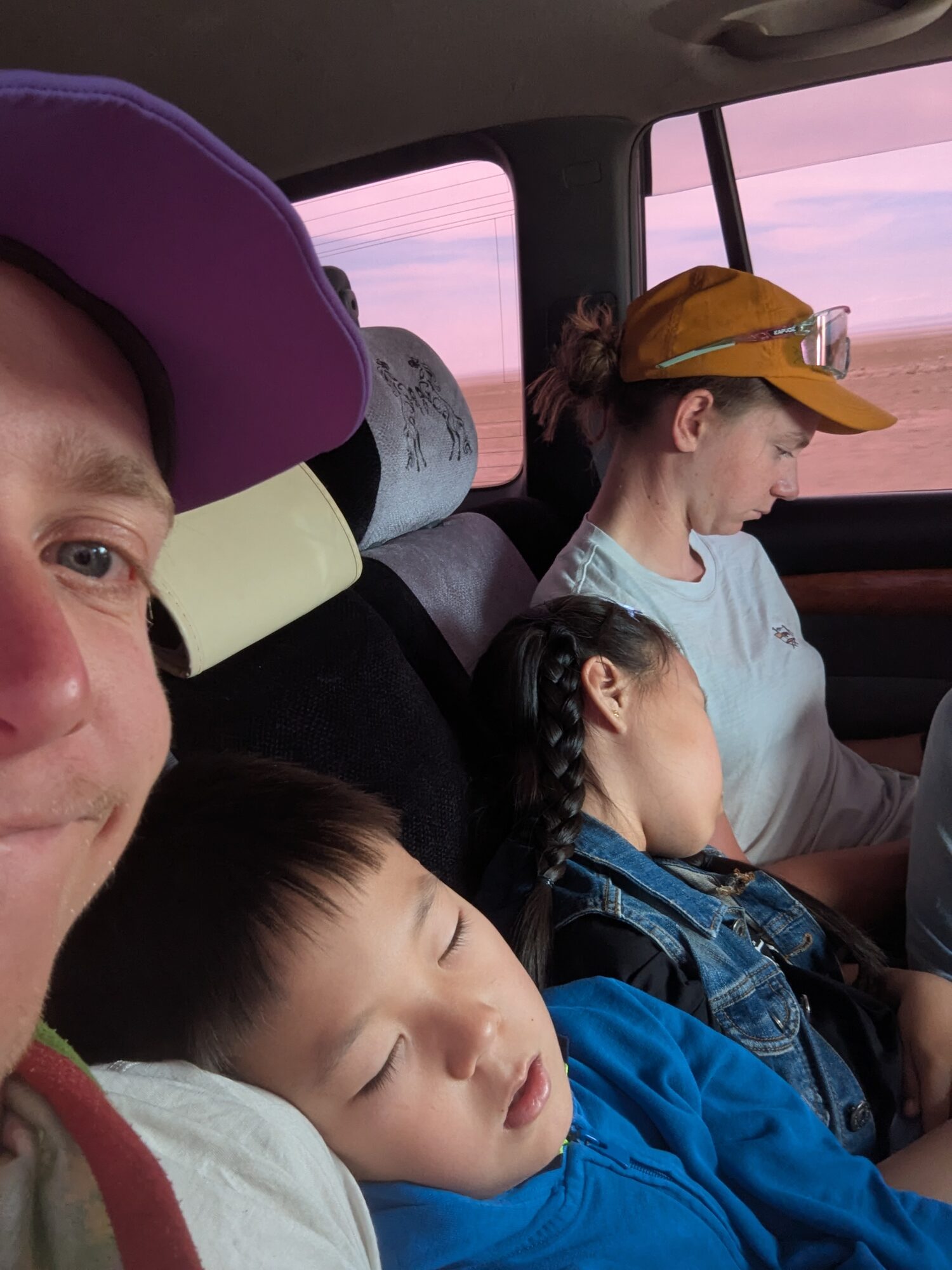
We explain our situation to the family of five and get to strap our bikes onto the roof. Then we're off through the Gobi Desert at 160 km/h. Four of us squeeze onto the back seat, while the youngest child sits on their mother's lap in the front passenger seat. We stop briefly at a ger, a Mongolian yurt, to buy milk. Then we continue east. After four hours, we reach Altai, get out and find a hotel.
Time to change our plans again! Where should we go? Where exactly are the travel restrictions? And what time is it, anyway? There's a time zone change in western Mongolia, and our phones are showing different times.
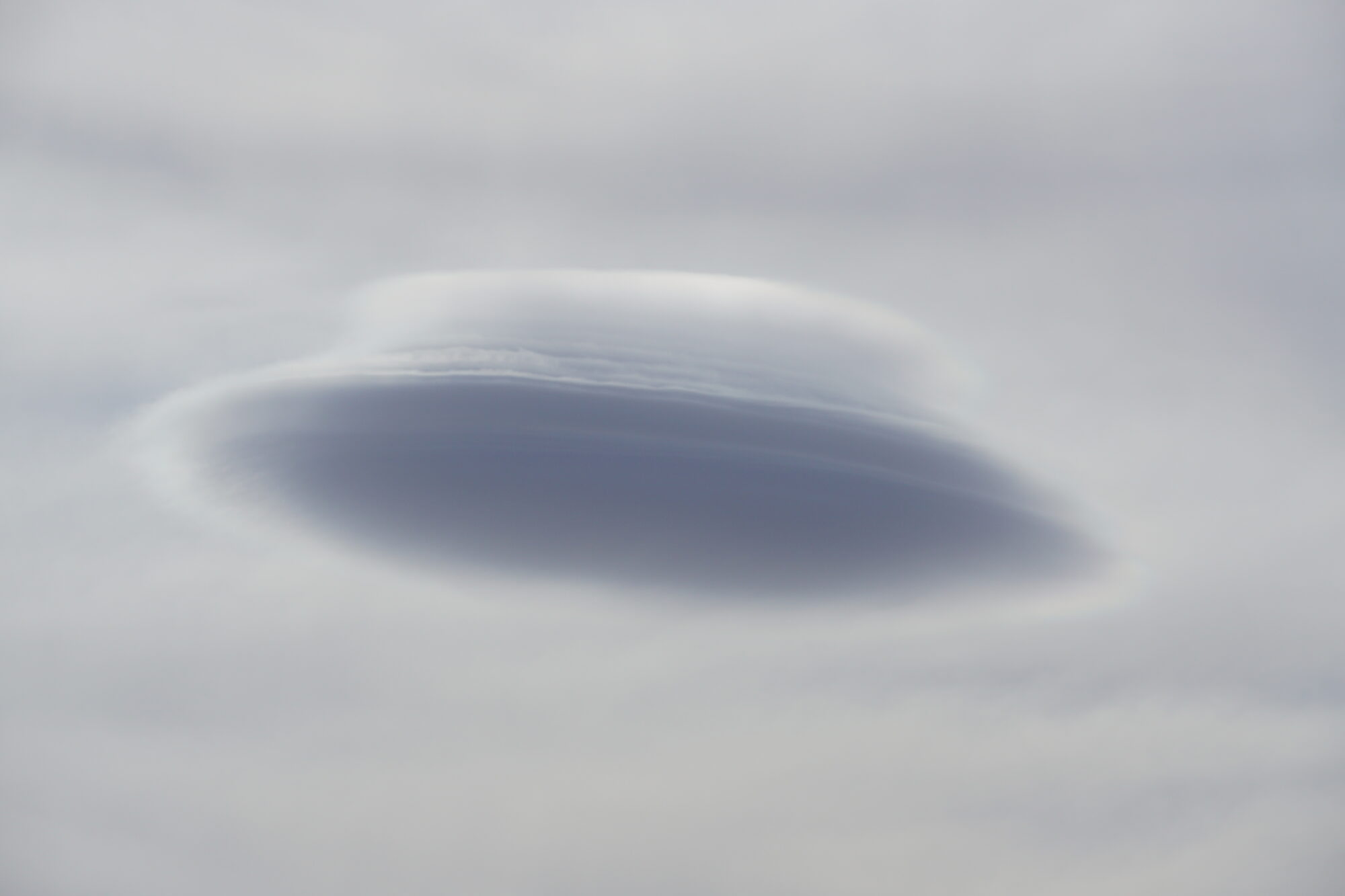
After more back and forth, we decide to head further east. Apparently, more areas are already under quarantine. Maybe that's why the road was so quiet.
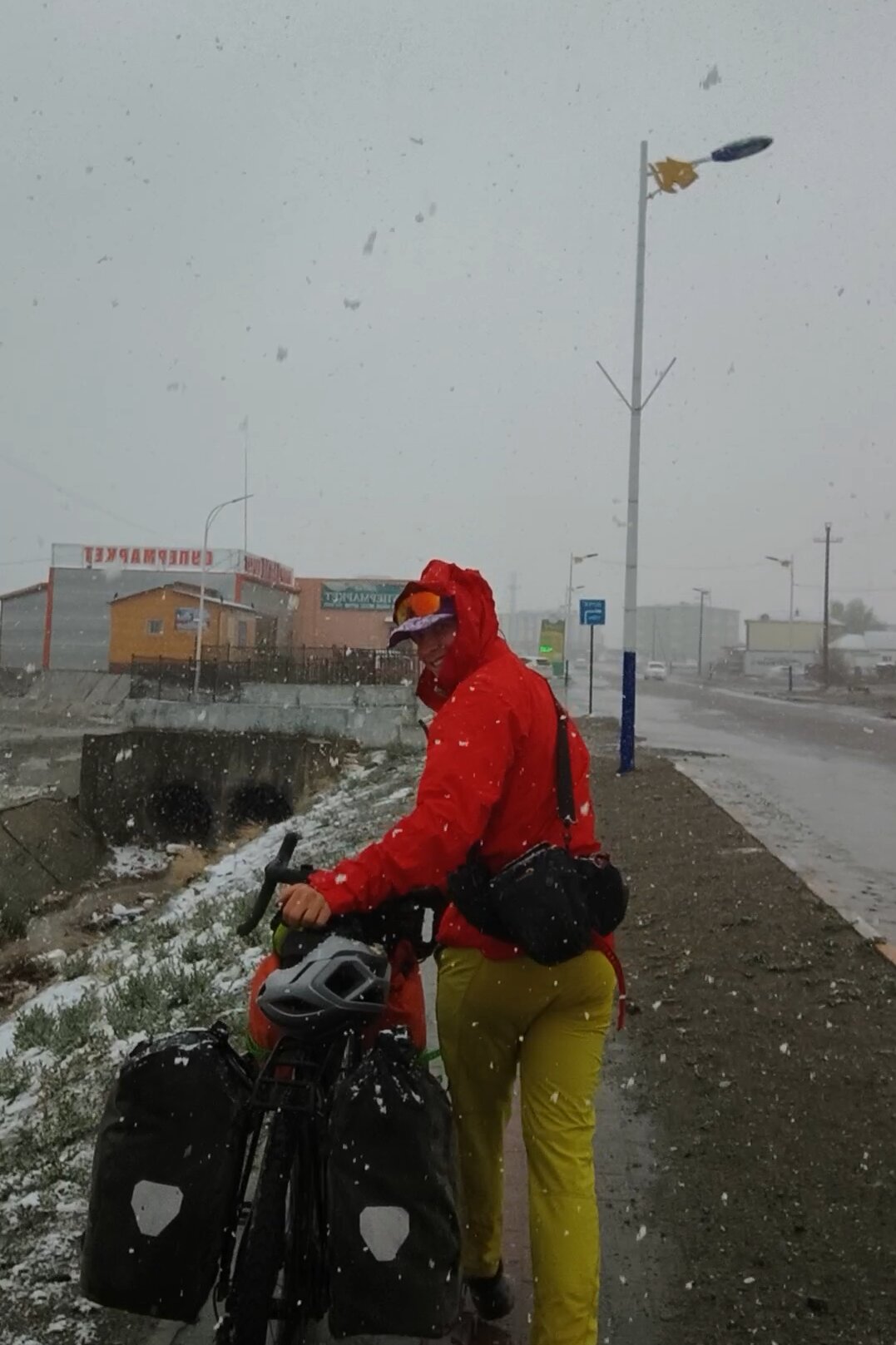
As we walk to the bus station the next day, big snowflakes suddenly start falling. A reminder that we're still well above 2,000 metres. Another six hours later, we reach Bayankhongor. From here, we want to cycle north across the Khangai Mountains to Tsetserleg.
Finally back on the bikes
At last, we're back on the bikes! The forecasts still don't quite agree on whether it'll snow in the mountains, or how much. Whatever, we've got five days' worth of food. That should easily be enough...
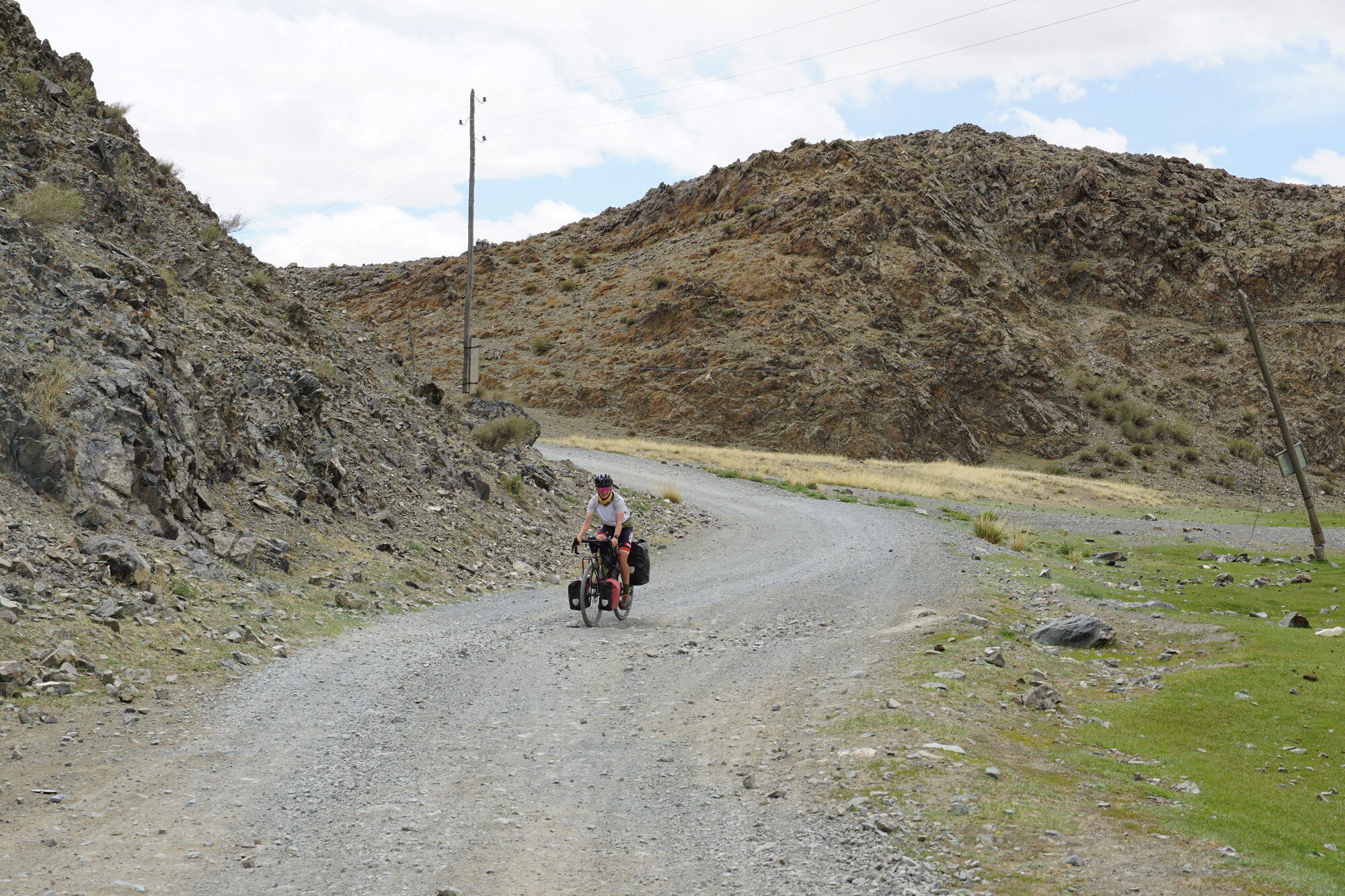
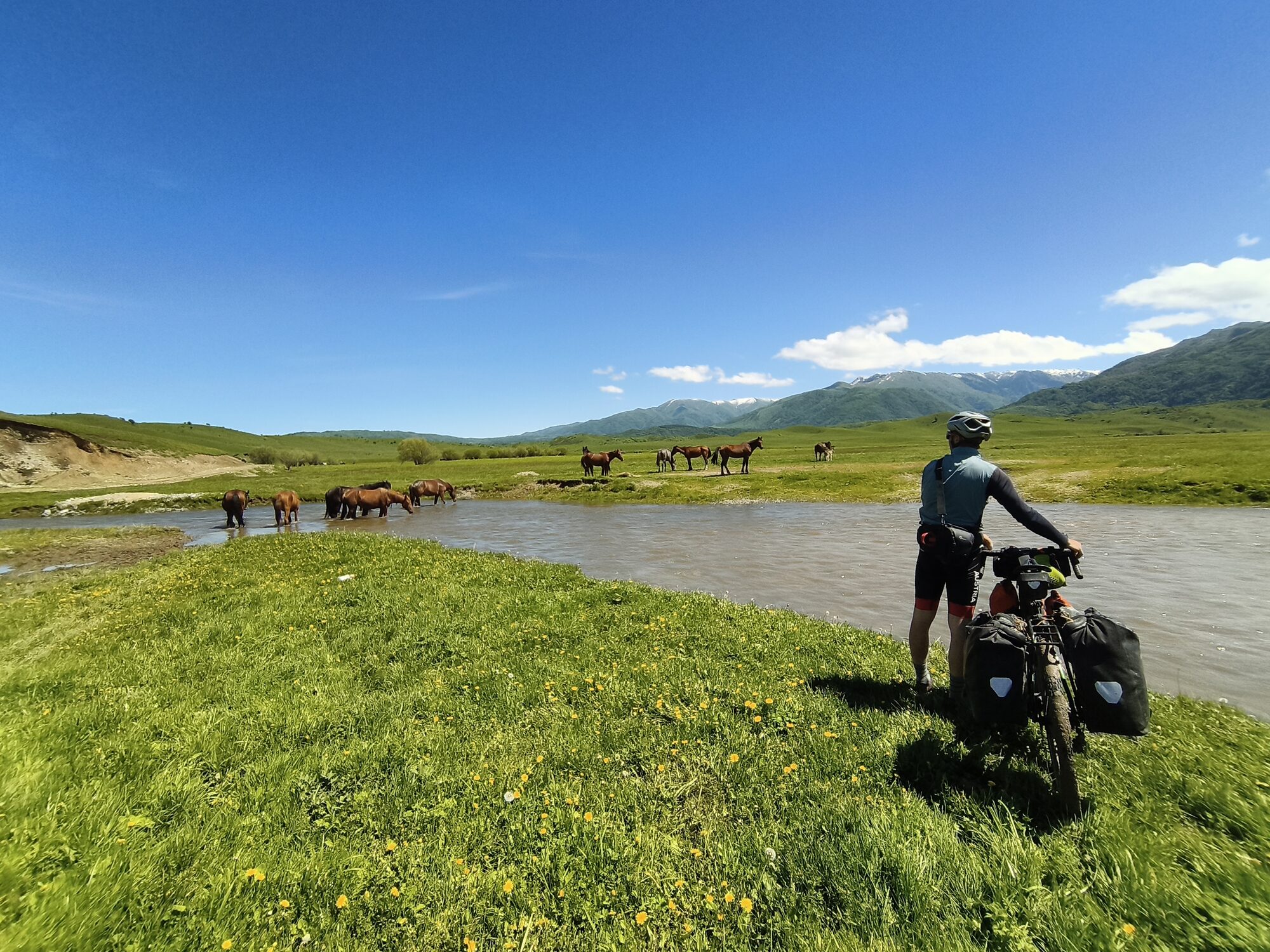
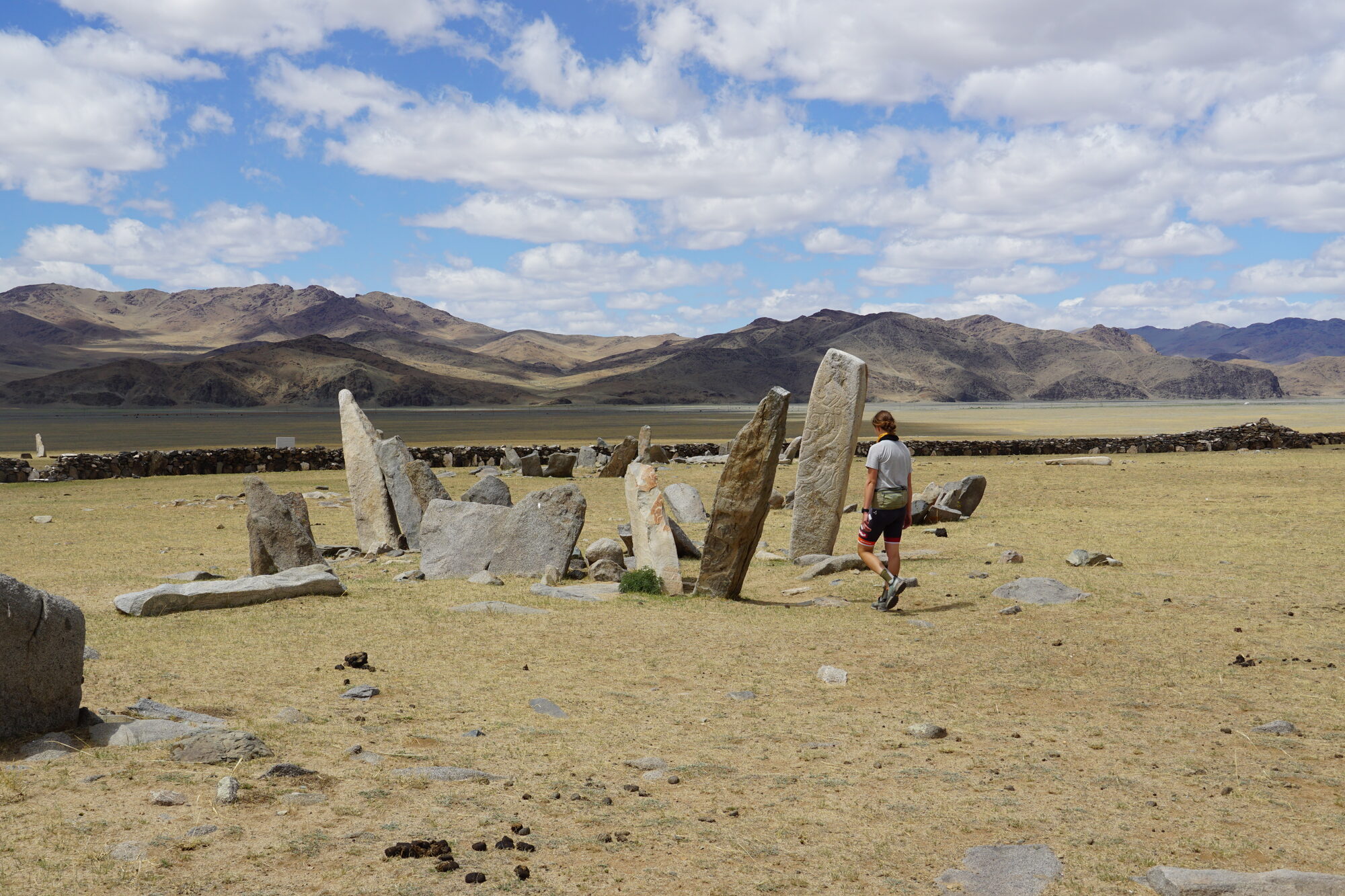
Past barking dogs defending their gers, and herds of yaks and horses, we ride up a broad valley into the mountains. Along the way, we pass a huge stone circle called Shatar Chuluu, apparently a burial site that's several thousand years old.
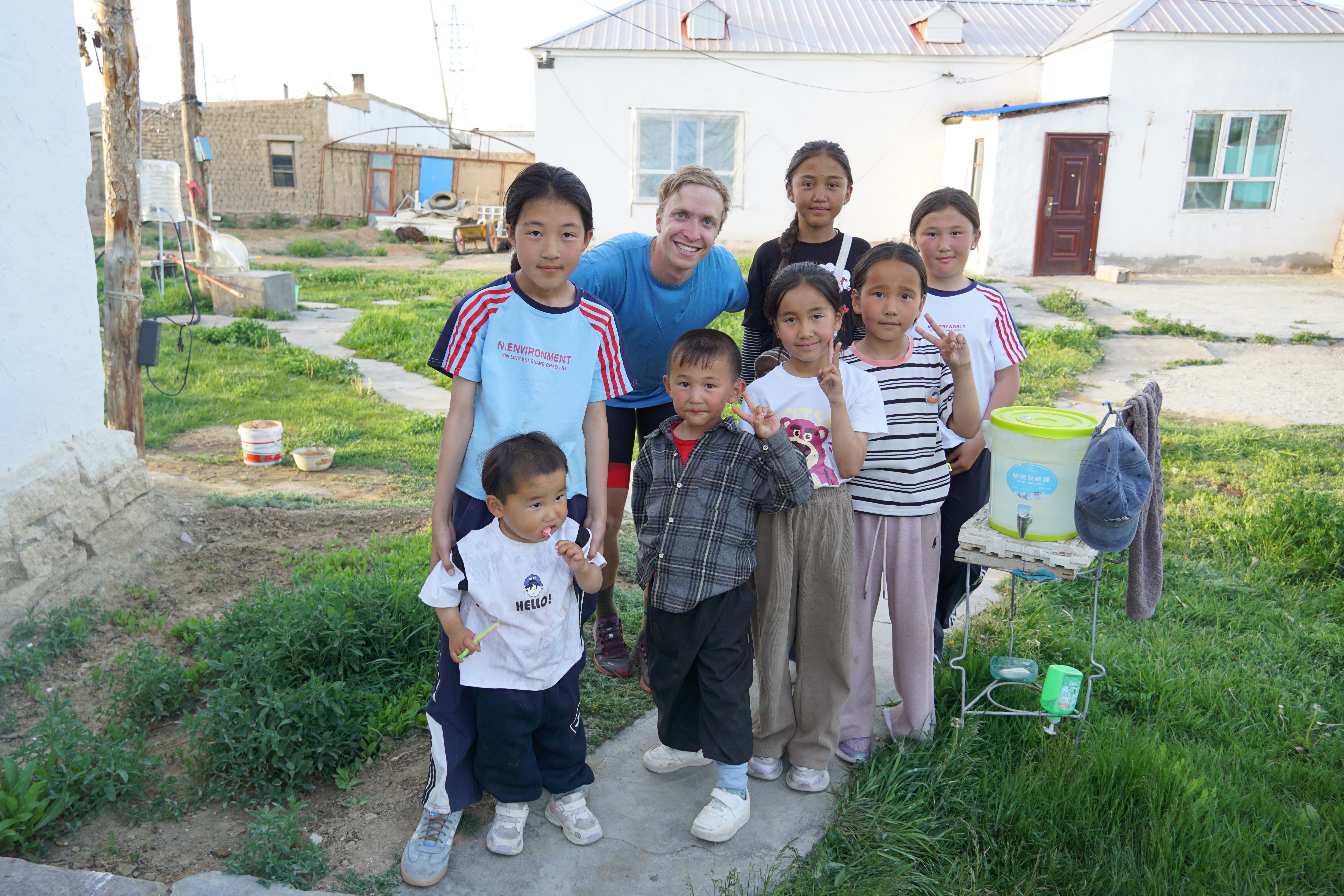
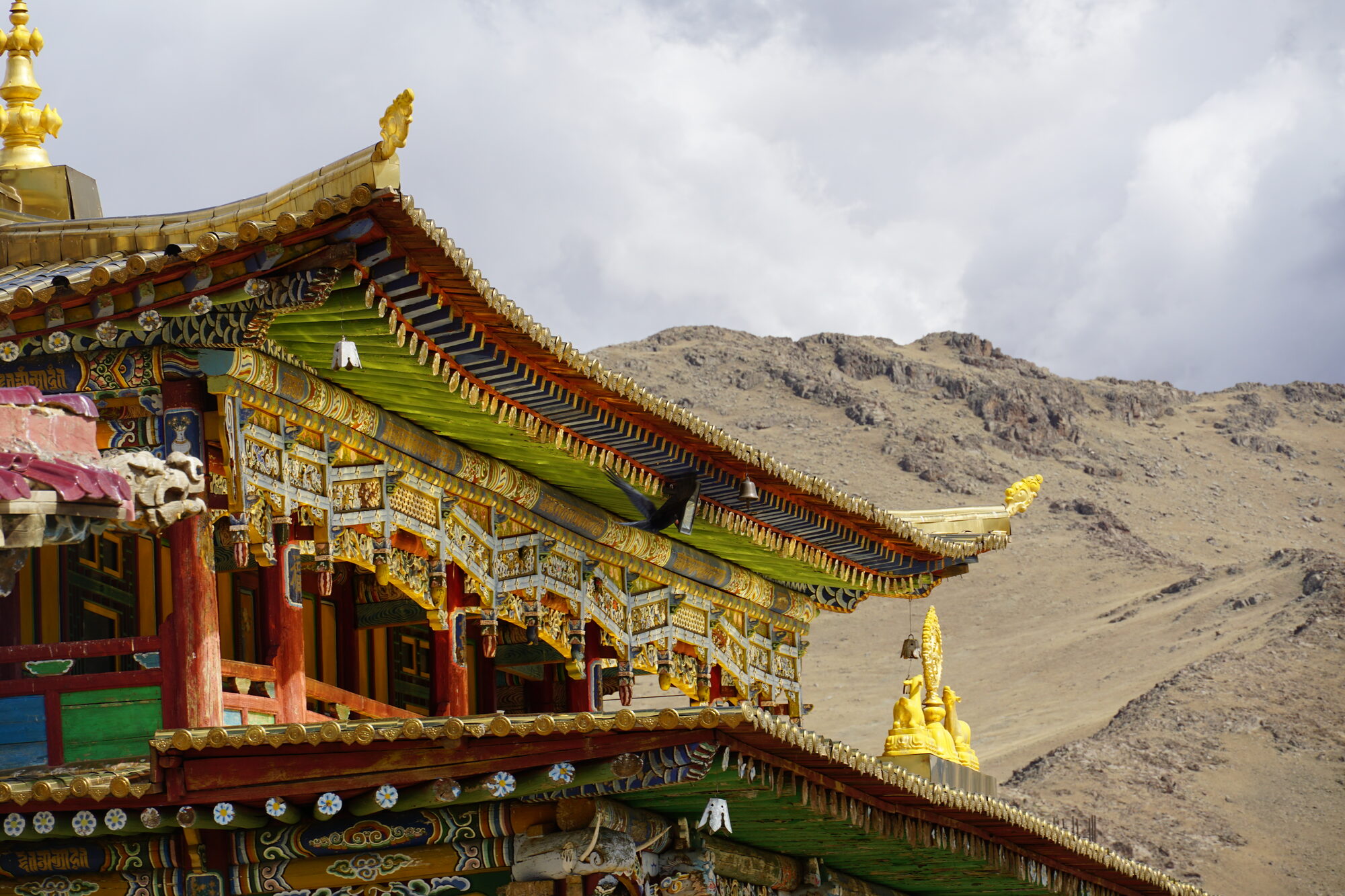
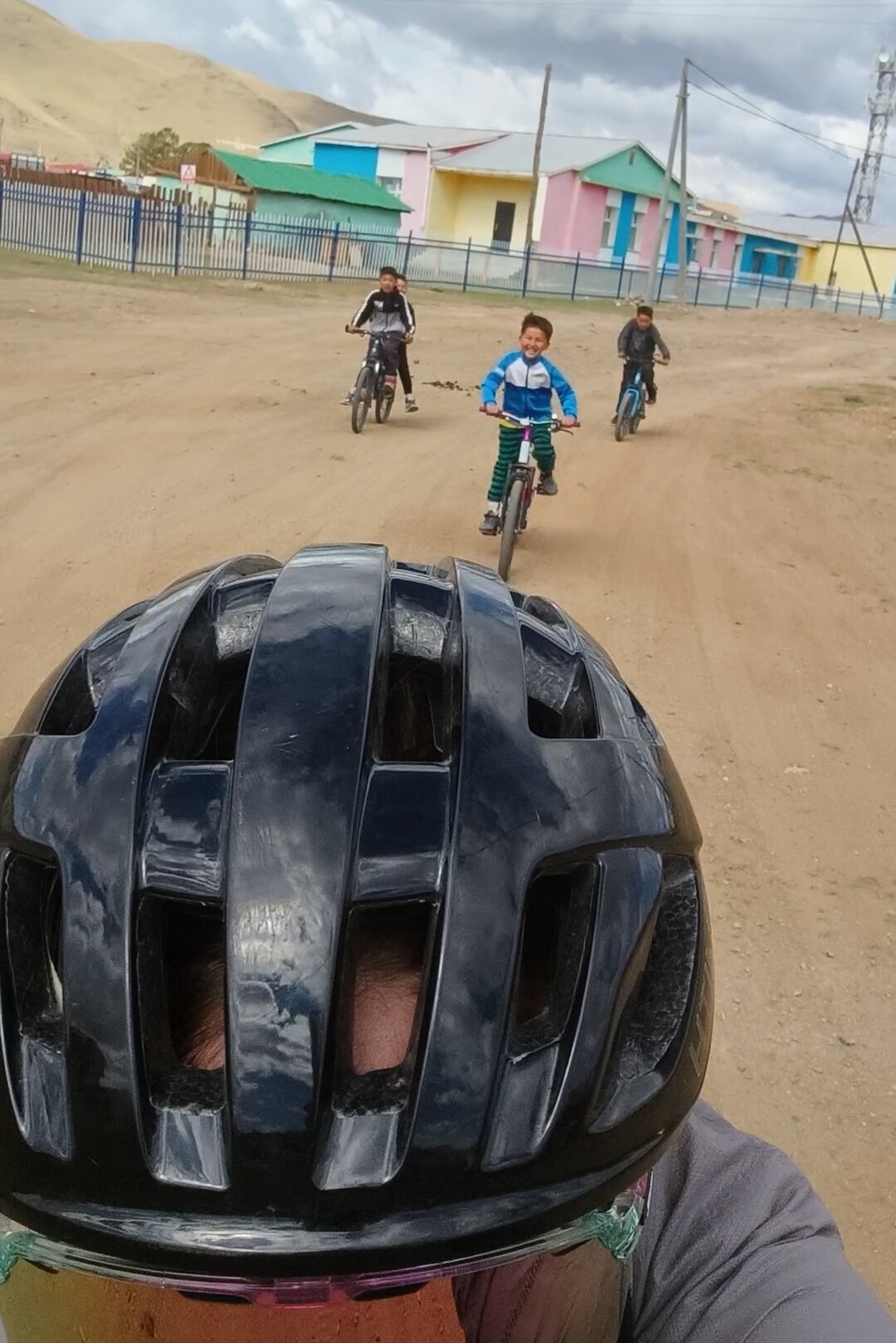
In the last village before our mountain crossing, we admire the little Buddhist temple and pick up our last supplies. Once again, we're the main attraction for the children. They follow us on their bikes and only stop when we cross a small river, waving as we leave.
After that, the road gets much worse. Either the gravel is so fine and deep that our wheels sink into it, or the stones are so big that we have to weave between them. Making any progress is painfully hard work.
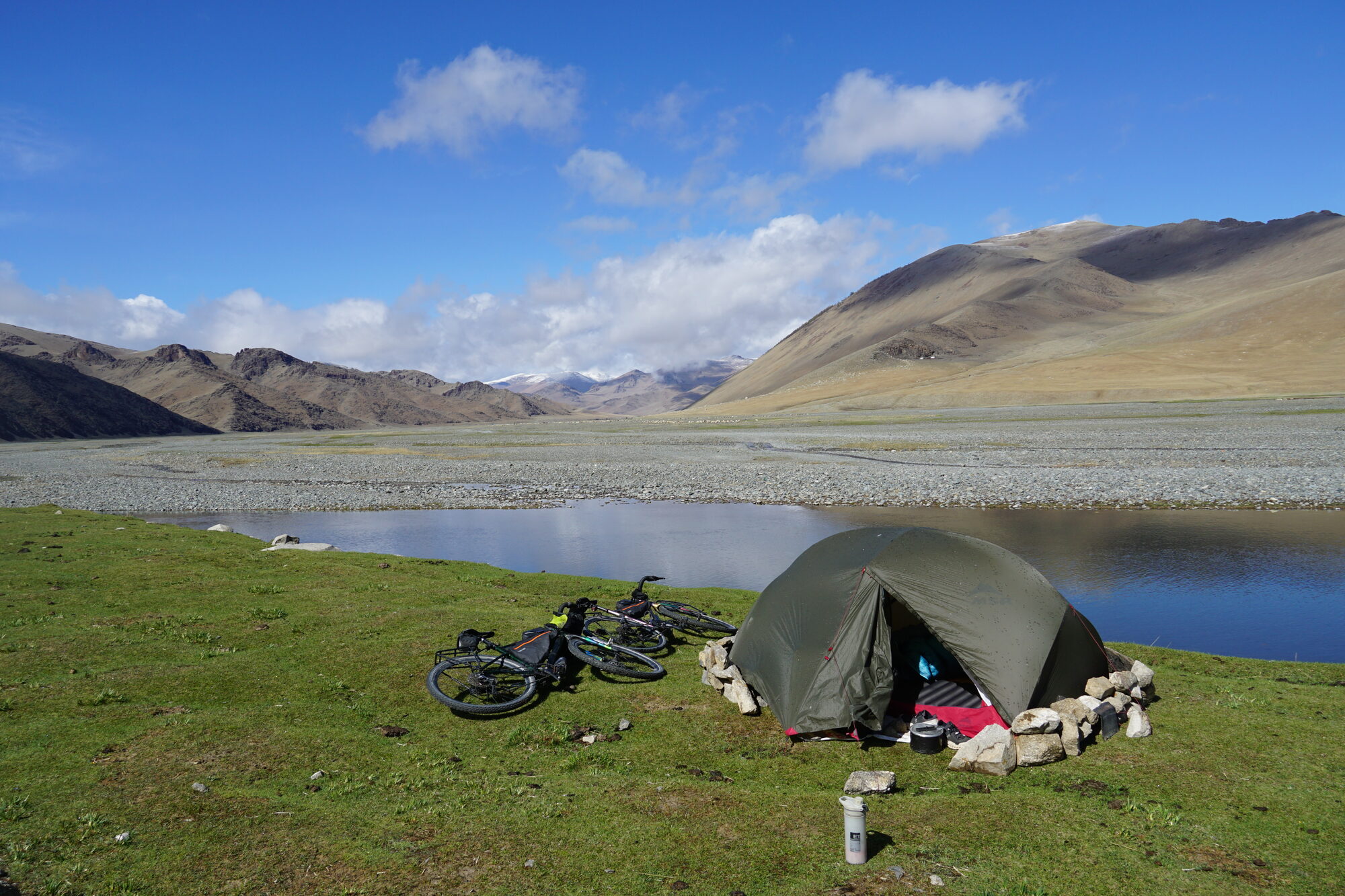
Eventually, we pitch our tent beside the river and are just happy to be on the move again. A herder drives his yaks out of the valley. At the same time, we're surprised by how much traffic there is on this terrible road. Apparently, the nomads are moving all their belongings up to the plateaus where they spend the summer.
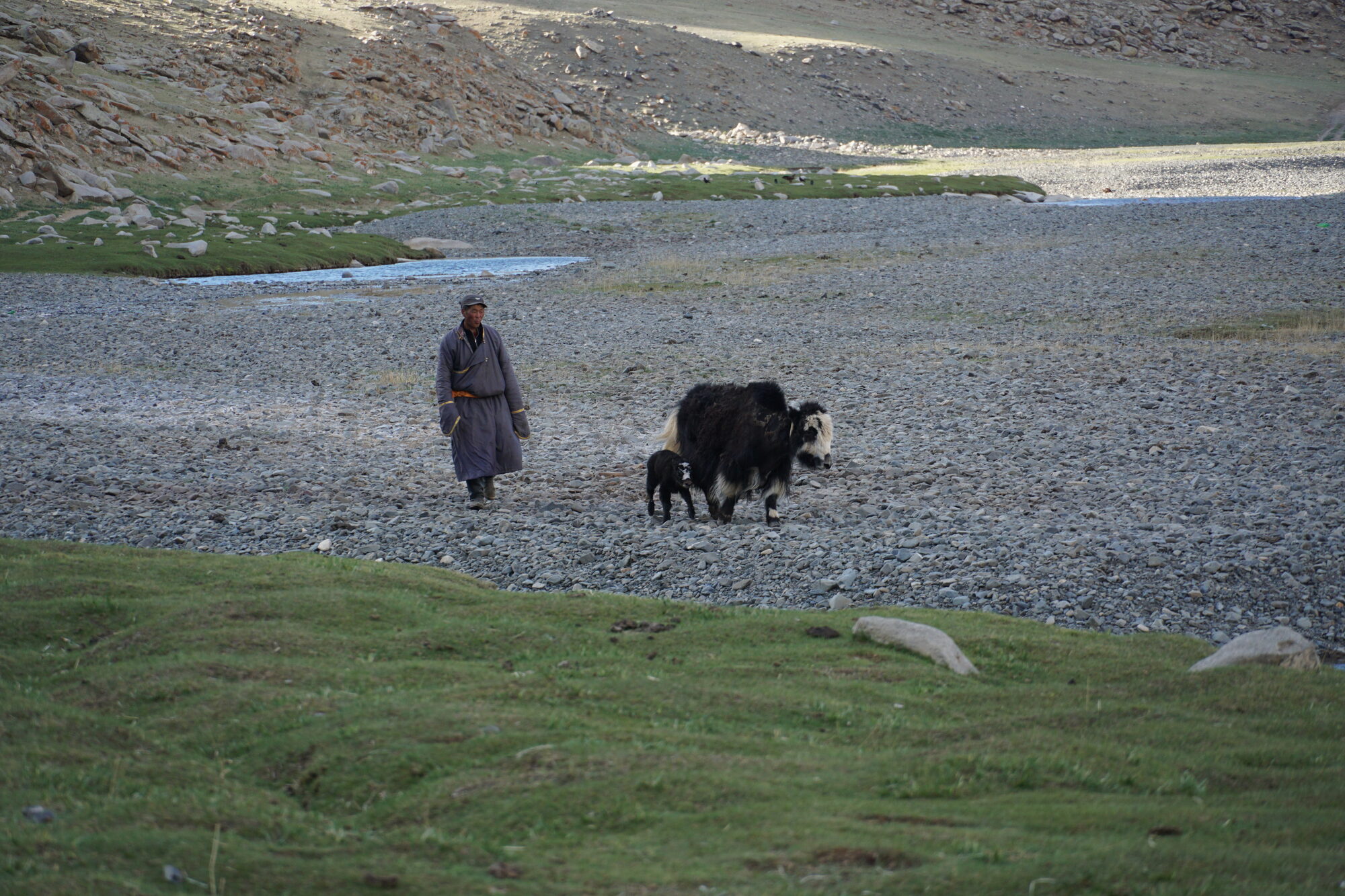
Stopped in our tracks again
By now, the weather models agree: it's going to snow. We have to rethink things yet again and decide to wait it out here in the valley for the next two days. Getting snowed in up in the mountains isn't exactly on our wish list right now.
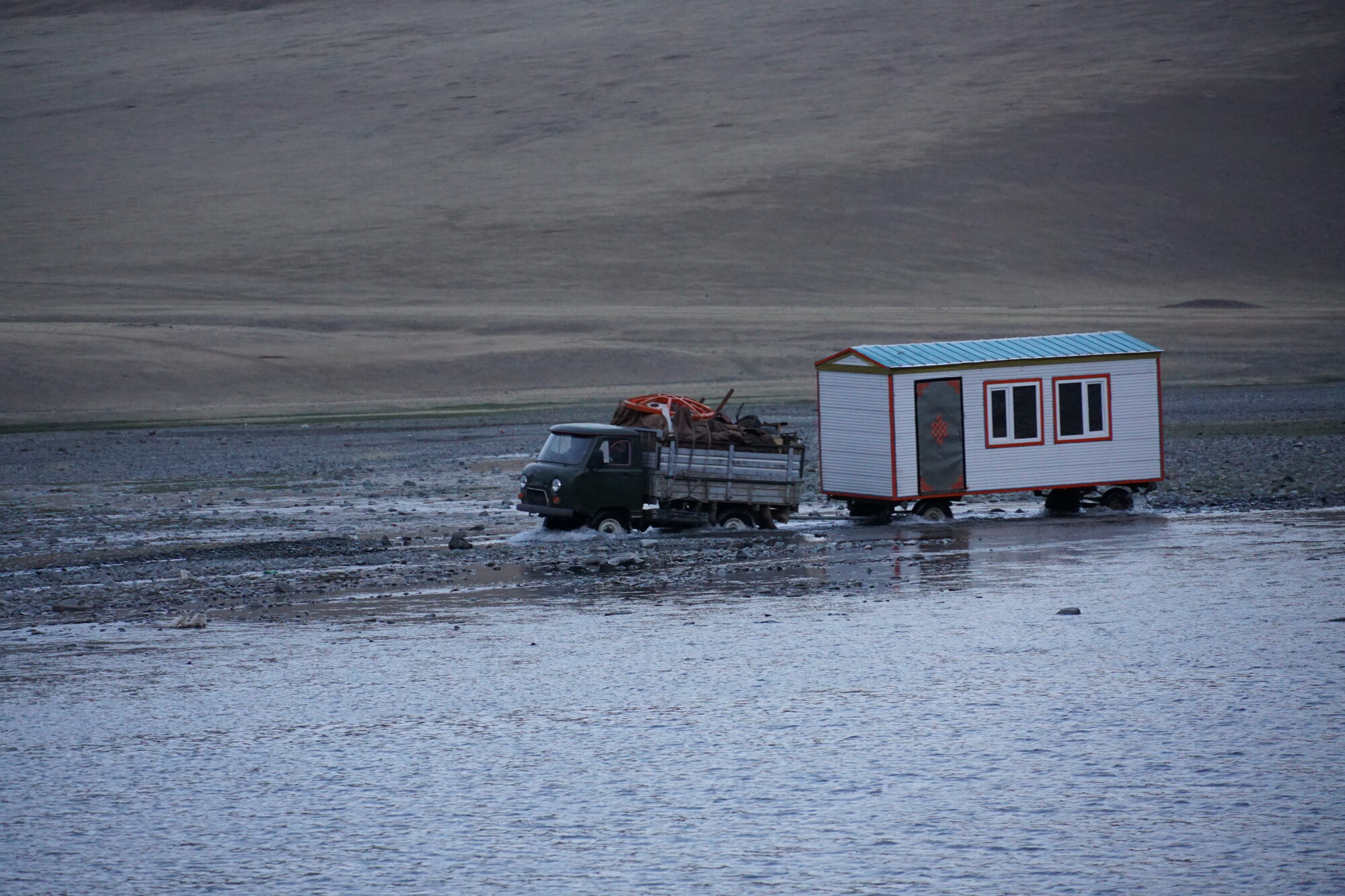
So the bikes stay put. We watch the families passing by, enjoy the peace and quiet and, despite the cold, finally get a chance to recover a little from our difficult start in Mongolia. We'd hoped to be much further along by now, but at least there's nothing we need to organise for once.
Day 2: A Spoon for a Gas Pedal
Finally, good weather is forecast again! As we pack up our things after breakfast, an old Soviet off-road vehicle stops next to us. The two Mongolians inside insist on giving us a lift. We certainly don't mind a shortcut on this exhausting track. So we load our bikes and luggage into the car.
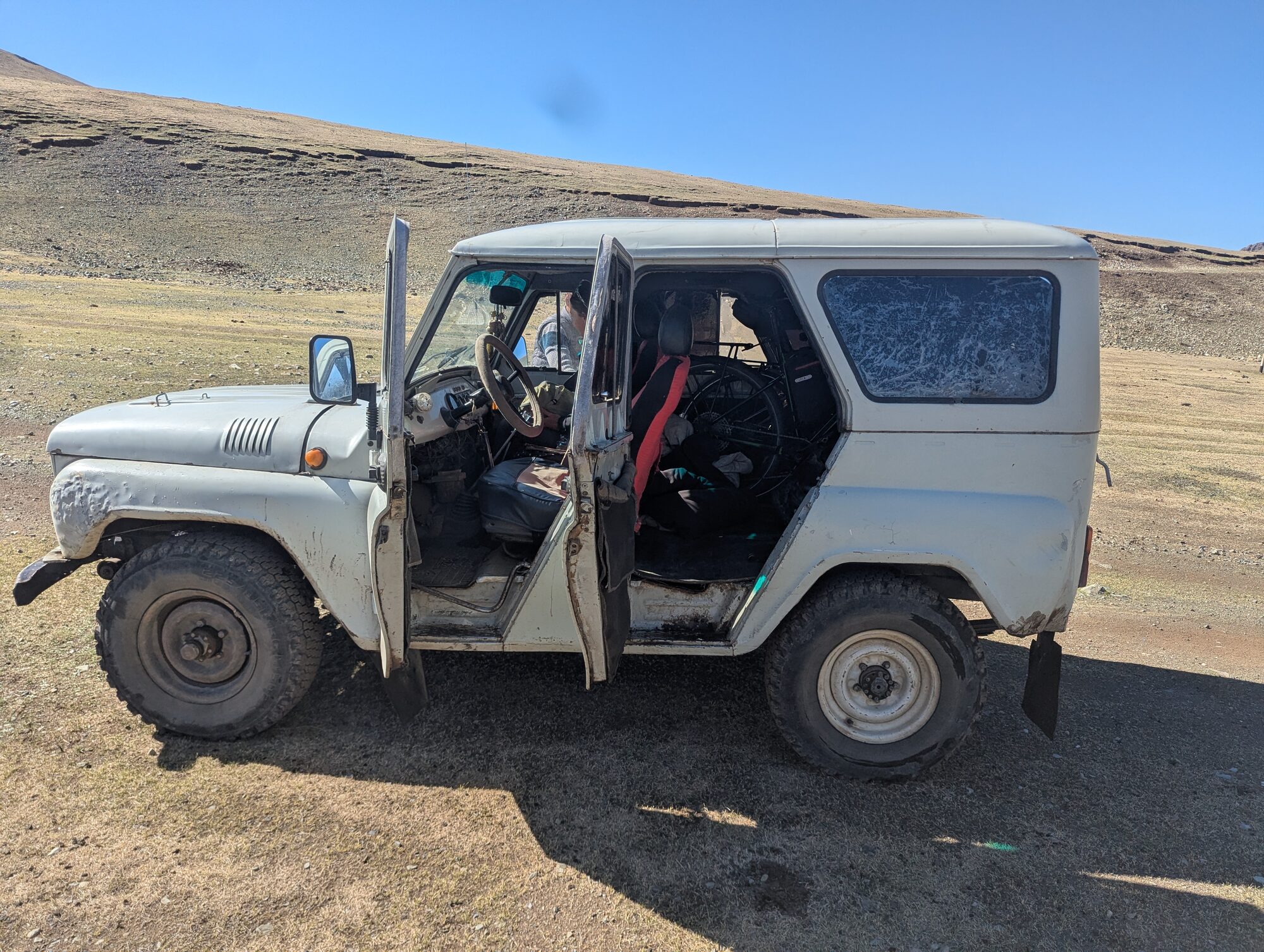
The car is an adventure in itself. The ignition consists of two wires, and the engine also has to be cranked with a metal rod. A spoon serves as the gas pedal, while the dashboard is propped up on two pieces of wood. And so we spend the next 40 minutes bouncing through streams and ditches.
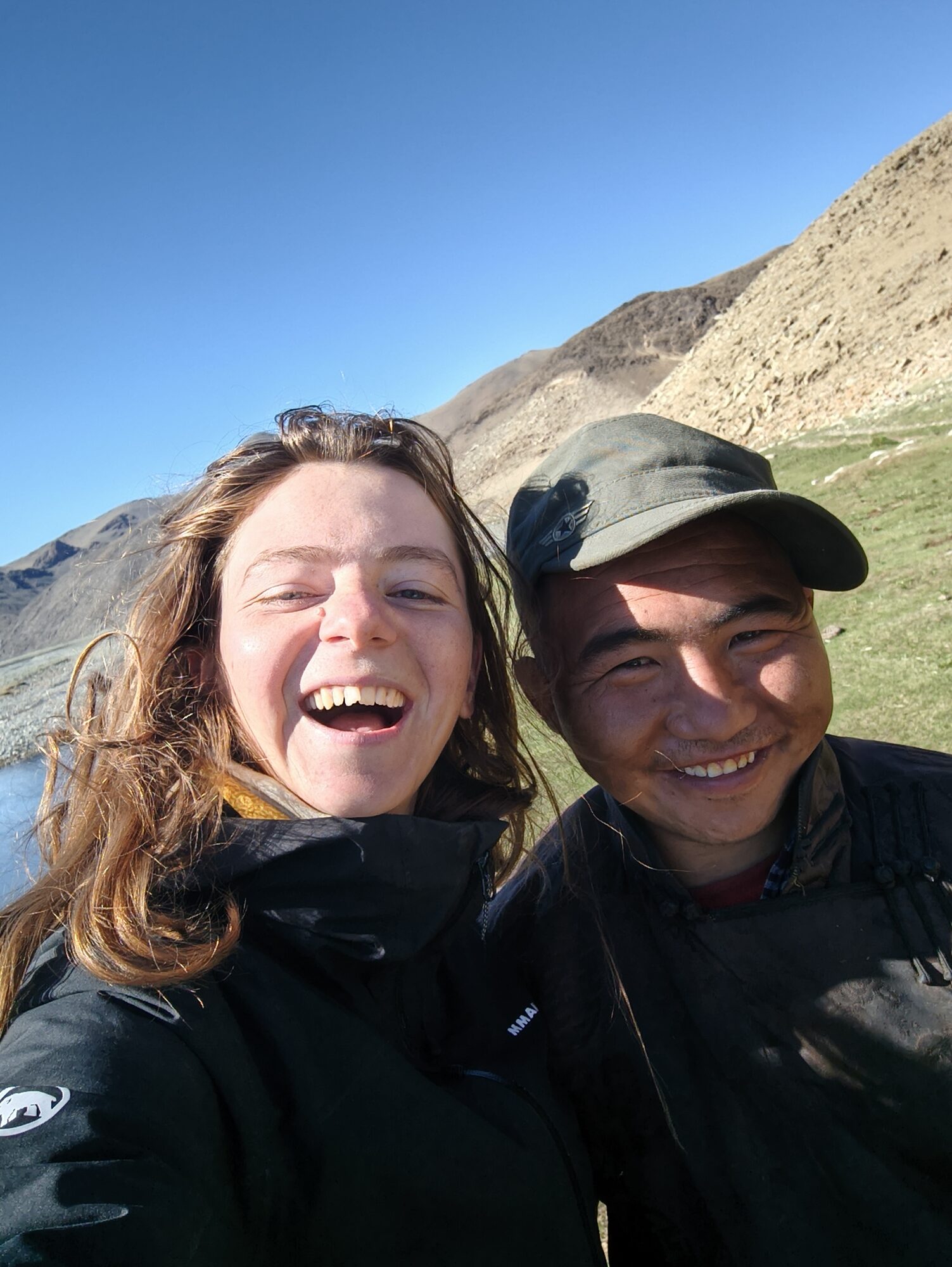
Then we really do continue on our bikes again. We pass gers and head deeper into the mountains. Until we suddenly notice that something is missing: the water in the riverbed next to us. The river has dried up, and our bottles are almost empty. Are we really going to turn around now? Surely the river will reappear further upstream. We're riding through a huge riverbed, after all.
Until now, we've relied on being able to refill our water from rivers along the way. We're learning the hard way that the riverbeds here can be dry at this time of year and only fill up again with the summer thunderstorms.
We continue uphill, and it gets drier and drier. Turning around now makes even less sense! So we keep climbing. Slowly, we're starting to get a little nervous. What are we going to do if we really don't find any more water? We've already drunk far too little all day and are hoping to find somewhere to refill our bottles. On the shimmering horizon, we spot a large patch of snow. We're not entirely sure yet, though, and don't want to get our hopes up over what might turn out to be a mirage or hallucination. With every metre we get closer, the outlines of the snowfield become clearer, and we're visibly relieved. We cook ourselves some soup and refill our water bottles.
We continue along the rough track through a deep valley towards the pass. Again and again, we pass gers, which somehow make this wild solitude feel alive.
After one final steep climb, we reach the highest point of our crossing of the Khangai Mountains at around 2,700 m. We take a break by the pile of stones marking the pass and motivate ourselves with the thought of going for a swim in the river on the other side. On the satellite image, it takes up almost the entire valley floor, after all.
After a long, bumpy descent, once again passing gers and herds of yaks and horses, comes the surprise:
It's completely dry here too.
We have just under 2 litres of water left, and the gravel track runs directly through the streambed, making cycling extremely exhausting once again. We fight our way out of the valley until eventually we have to admit that we're simply too exhausted to keep riding. We can see two small patches of snow on the horizon, but we don't have enough energy or motivation left to tackle those final kilometres on this extremely rough road.
With the last drops of water, we cook our dinner that evening. It will have to be enough for today. Already slightly dizzy from dehydration, we go to sleep thirsty.
Day 3: Slowly Out of the Valley
Luckily, we reach the patch of snow we had already spotted the day before fairly quickly in the morning. It will also be the only one we find in this valley. Breakfast is secured, our water supplies are replenished for now, and we slowly make our way out of the valley.
The road leads directly through the dried-up riverbed. Accordingly, the riding is exhausting. We make painfully slow progress between the rocks, and Vanessa, with her slightly narrower tyres and less cushioning, gets the worst of it.
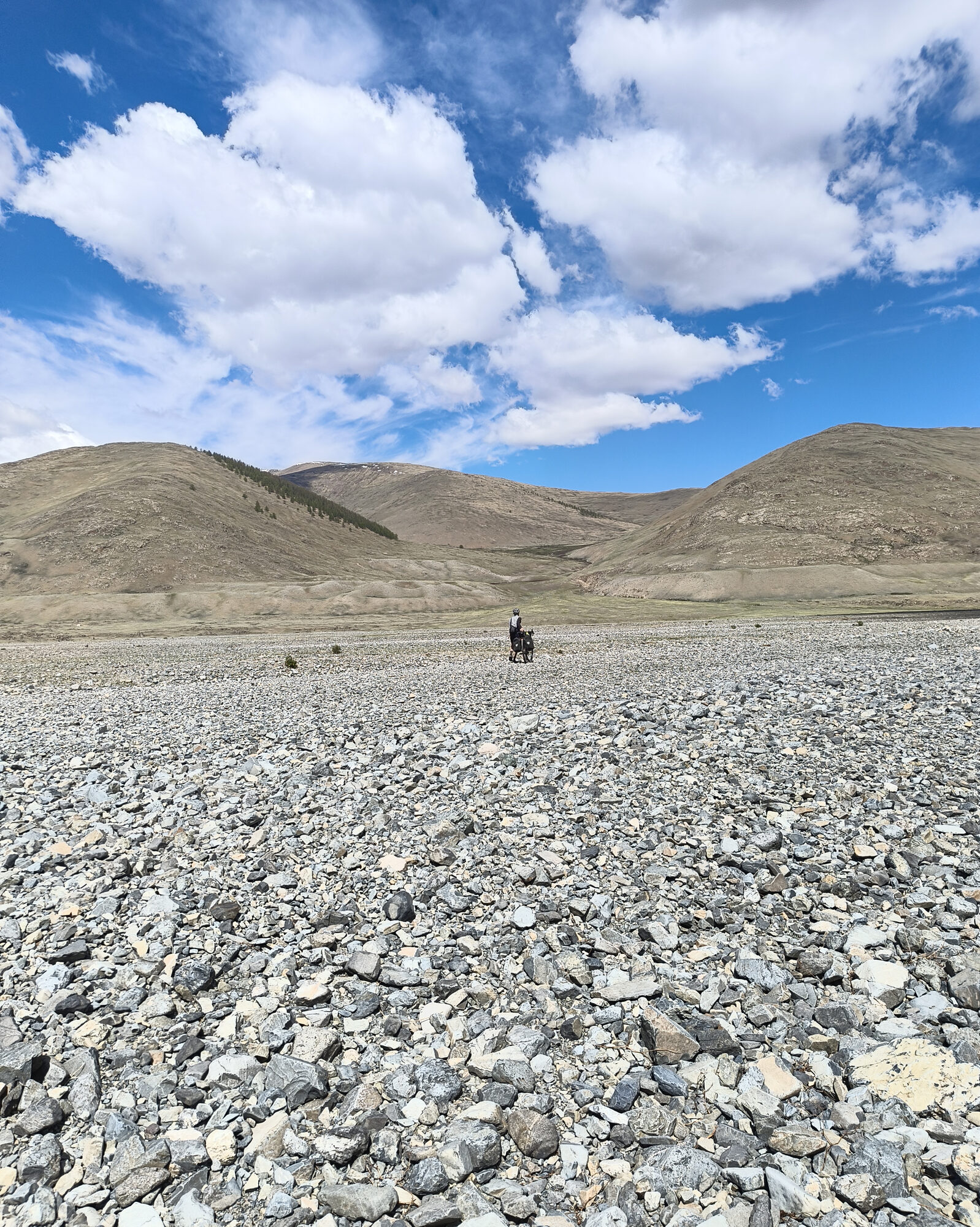
We constantly hope to find a river somewhere or that at least the road will improve. Neither of our wishes comes true. We let as much air as possible out of our tubed tyres, trying somehow to soften the constant impacts from the rocks.
When the first car passes us after a few hours, Vanessa stops it. She practically throws herself in front of the Land Rover and convinces the Mongolians to give us a lift. They agree, and once again we cover the last few kilometres to the next village with our bikes loaded into a car.
Watching the landscape pass by from the car, we realise that just beyond the next bend in the valley, a green plain opens up again, with a full, rushing river running through it. An hour later, we reach the village of Bulgan. That's right, another village called Bulgan! The Mongolians seem to have about ten names for places, which they reuse all over the country, which can get a little confusing. We buy some instant noodles and pitch our tent just outside the village.
Day 4: Back in civilisation
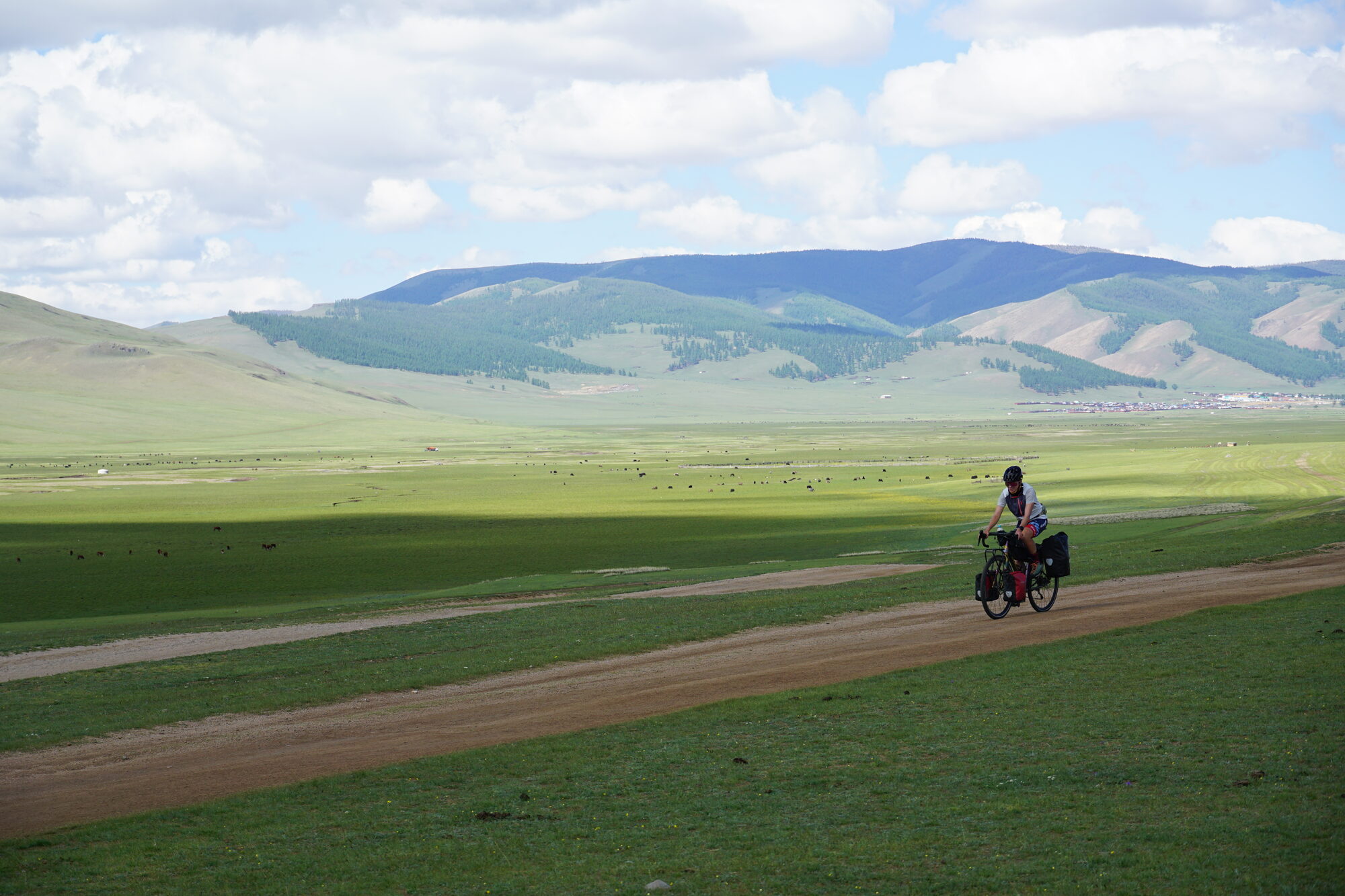
Finally, we get to enjoy the dirt tracks Mongolia is known for. It's another 35 km to Tsetserleg, where we get a hotel room again and go for a meal at Fairfield Hostel.
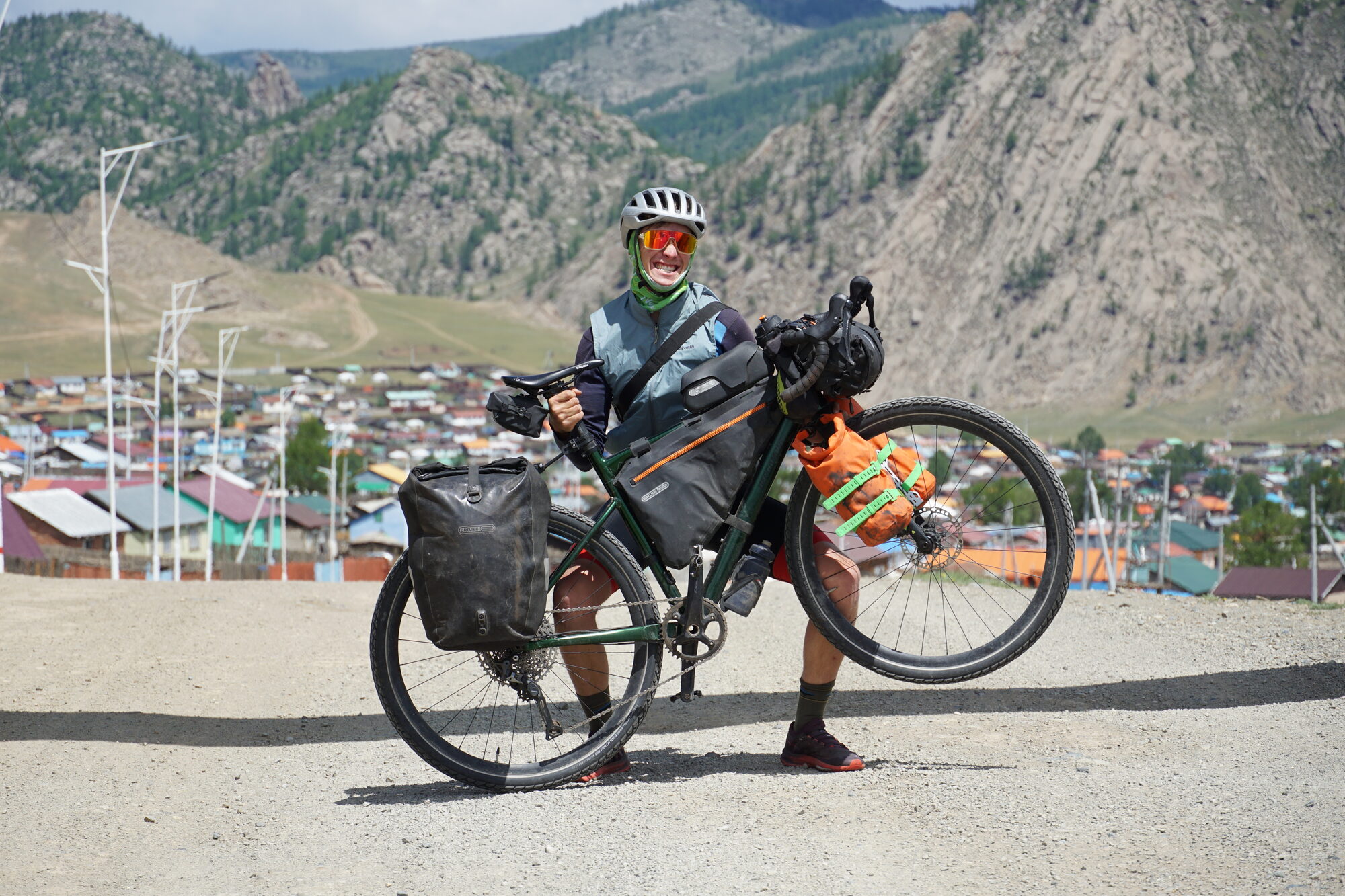
The hostel is run by Murrey, an Australian, and his wife, who offer adventure tours around Mongolia by bike, horse and off-road vehicle. It's a great place to enjoy some Western food, chat with other travellers and swap route ideas.
Murrey himself suggests a five-day loop out to the Orkhon Valley. We decide to go for this well-known bikepacking loop across the lower plateaus, hoping we'll have to improvise a little less here. We just want to spend more time riding our bikes again.
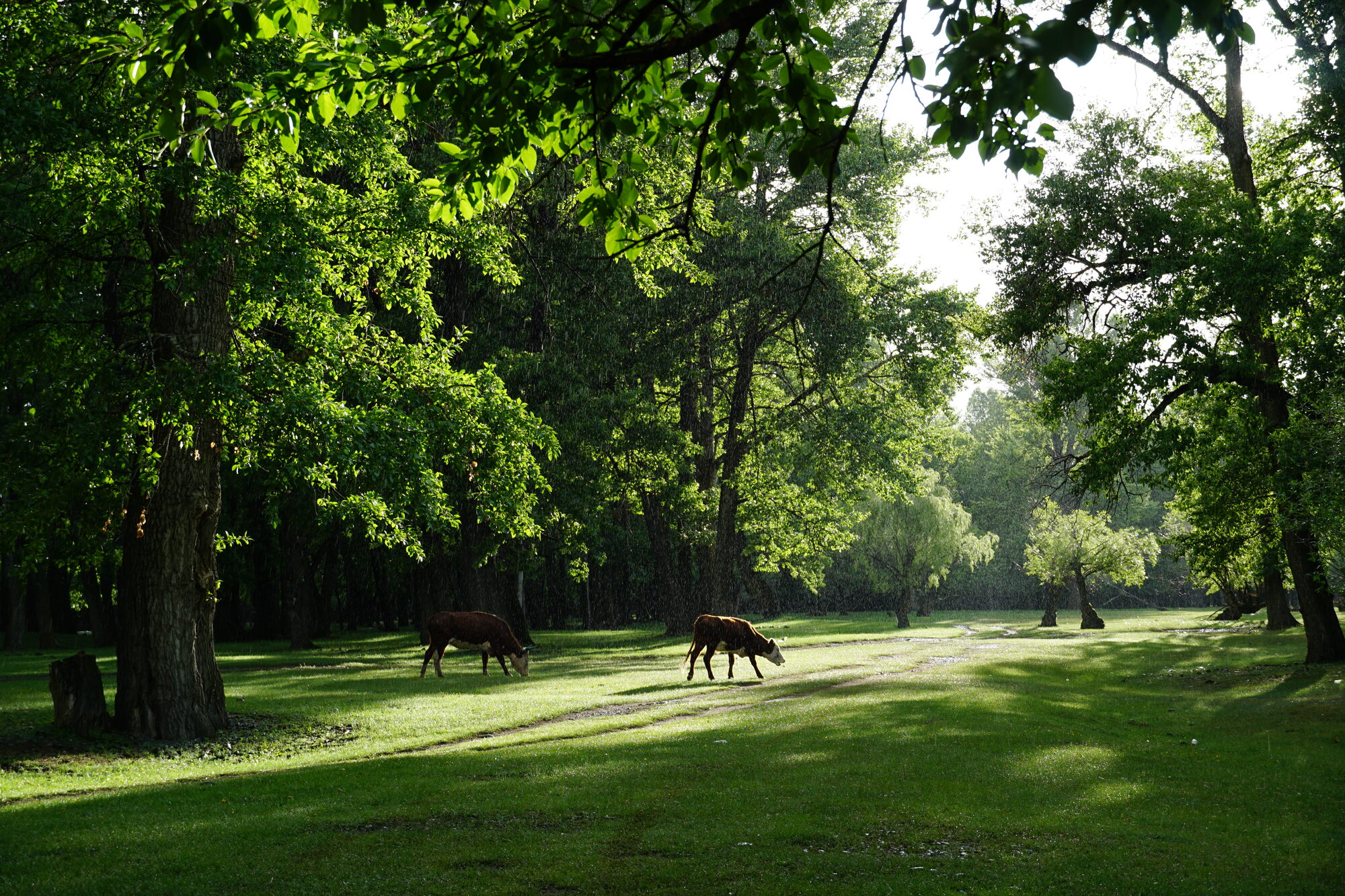
But the next morning, I realise I'm not feeling quite right. We both end up spending the next four days ill in our tent, luckily at a beautiful oasis just outside town.
What we learned
Our first few days in the Mongolian mountains showed us that things work a little differently here than in Kazakhstan, China or back home. A big river can be dry, and a road can turn out to be a riverbed that's a real struggle to ride through. Then there's the weather, which stopped us in our tracks on the very first day. One of our biggest lessons was that in Mongolia, you don't have to head into the mountains to reach the beautiful plateaus. They're right at the foot of the mountain ranges.