Entering China (Dostyk - Alashankou)
The night in the party place was reasonably quiet. According to the timetable, the bus was supposed to leave at 9:30 am. So we got there a little earlier to buy our tickets. We were already expecting our extra luggage (the bikes) to cause some complications. After showing the woman behind the counter our passports and somehow explaining to her that we didn't need a visa and would only get the stamp at the border, the discussion about the bikes began. We eventually agreed to pay the price of one additional person for all our luggage.
We load our bikes onto the bus while the other people who also want to cross the border give us some sceptical looks, and it is clear that very few of them expect us to actually make it into China. Once we are already sitting on the bus, the man from the previous day, who had organised a place for us to sleep, comes by to say goodbye. It's impossible to describe just how incredibly kind the people in this area are.
Off we go ... a little nervous, we take the bus for no more than 10 minutes to the Kazakh border.
Everyone gets off and heads into the departure building. Vanessa and I have by far the most luggage; everyone else is travelling light. The border guards want to scan all our bags as well as our bikes. So everything has to come off the bikes, and even the saddles and wheels have to be removed because otherwise they won't fit through the scanner. My bike then falls over while being scanned, so I have to climb into the huge box to stand it back up again. When we finally have all our stuff scanned, they also want to see what's inside the bags. So we start unpacking everything while they search through them. All the other travellers have long since finished and are waiting outside for us while every medication, repair kit and spare part, as well as the tent, sleeping bags and sleeping mats, are inspected in detail. They really look at everything, even the photos on our camera and notes in our travel diary. After what feels like an eternity, we are finally allowed to leave Kazakhstan.
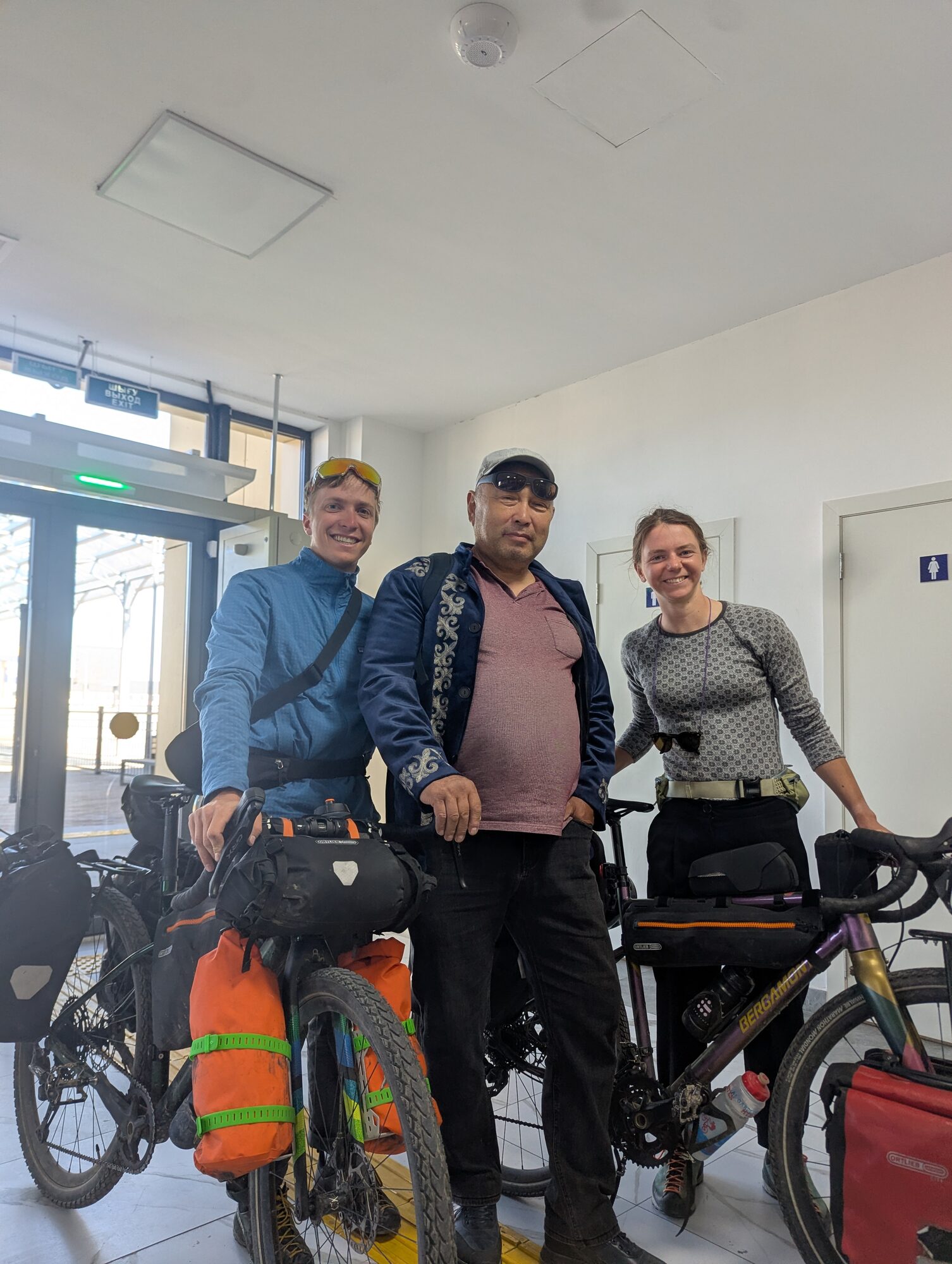
So everything goes back onto the bus and we continue towards the Chinese border. Five minutes later, the bus drives into a checkpoint and we have to get off again. Everyone has to fill out the entry form once more, and all the luggage is scanned again. After a body scan, we have to unpack all our bags yet again because the machine is apparently broken. The bus is scanned as well and searched with dogs. Even though the whole process is quite intense, the border guards are very friendly and efficient. We had emptied our fuel bottle back in Kazakhstan because we'd heard that petrol could be a problem at the border. The empty fuel bottle and the knife we were carrying weren't a problem at all.
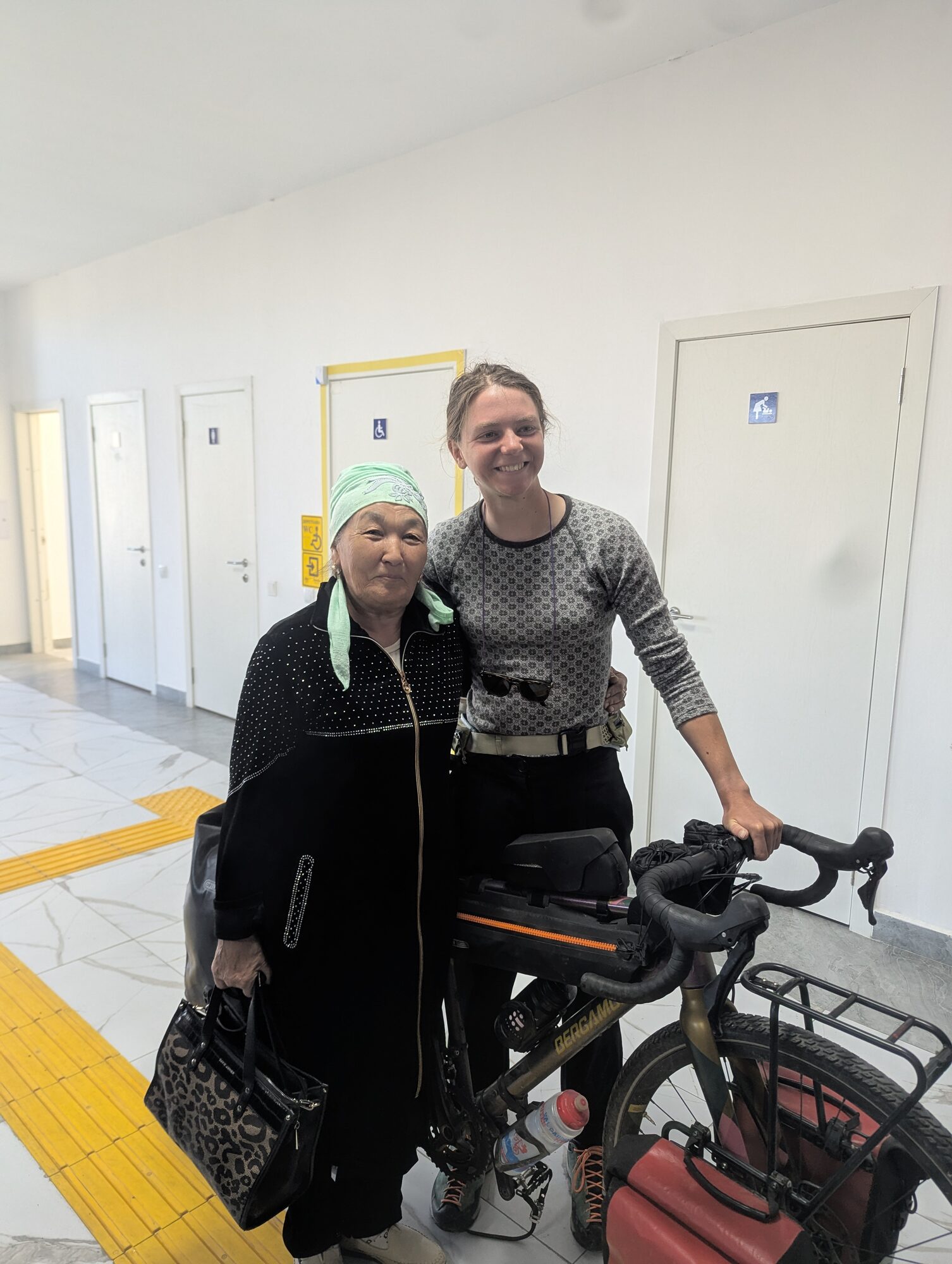
So everything goes back onto the bus once again and we continue to the immigration building. There, everyone has to stand exactly on the marked lines, and if you move even slightly away from them, you're immediately told to move back. Our fingerprints are taken and we are asked an endless number of questions. Most of the time, we simply answer that we're tourists and want to travel to Mongolia. Then, finally, we get our visa stamp. The officials want to scan our bags one more time. So once again, everything comes off the bikes and goes through the scanner. Then they discover our isotonic drink powder in one of my drybags, which they apparently think is drugs. I explain that it's vitamins while Vanessa is being questioned by other officials about what we do for work in Austria and so on. The bus driver is already getting impatient, and finally we're in China!
For the first day, we want to find a hotel so that we can register ourselves in Alashankou straight away. We also need a SIM card and a replacement for Vanessa's short-sleeved T-shirt, which mysteriously disappeared at the lake. We quickly find a hotel on Trip.com for around €30 for the two of us. Luckily, we had already installed and set up Alipay and WeChat beforehand, so paying isn't a problem. We also bought a Chinese "VPN" for around 20 yuan that was supposed to bypass the Great Firewall. It worked perfectly. We check in and are initially a little overwhelmed by the time difference. Even though it's only three hours, it still takes us a few days to really get used to it.
So off we go into town. When buying the SIM card, we already notice the first signs of the surveillance state. The saleswoman takes a photo of every single page of Vanessa's passport, including the blank ones ... Unfortunately, we can't find a suitable T-shirt, but instead we enjoy some incredibly good and cheap food in a restaurant.
For our first day of cycling in China, 70 km/h tailwinds were forecast. Full of motivation and excitement, we were already dreaming of 200–300 km stages, and with those dreams in our heads, we went to sleep.
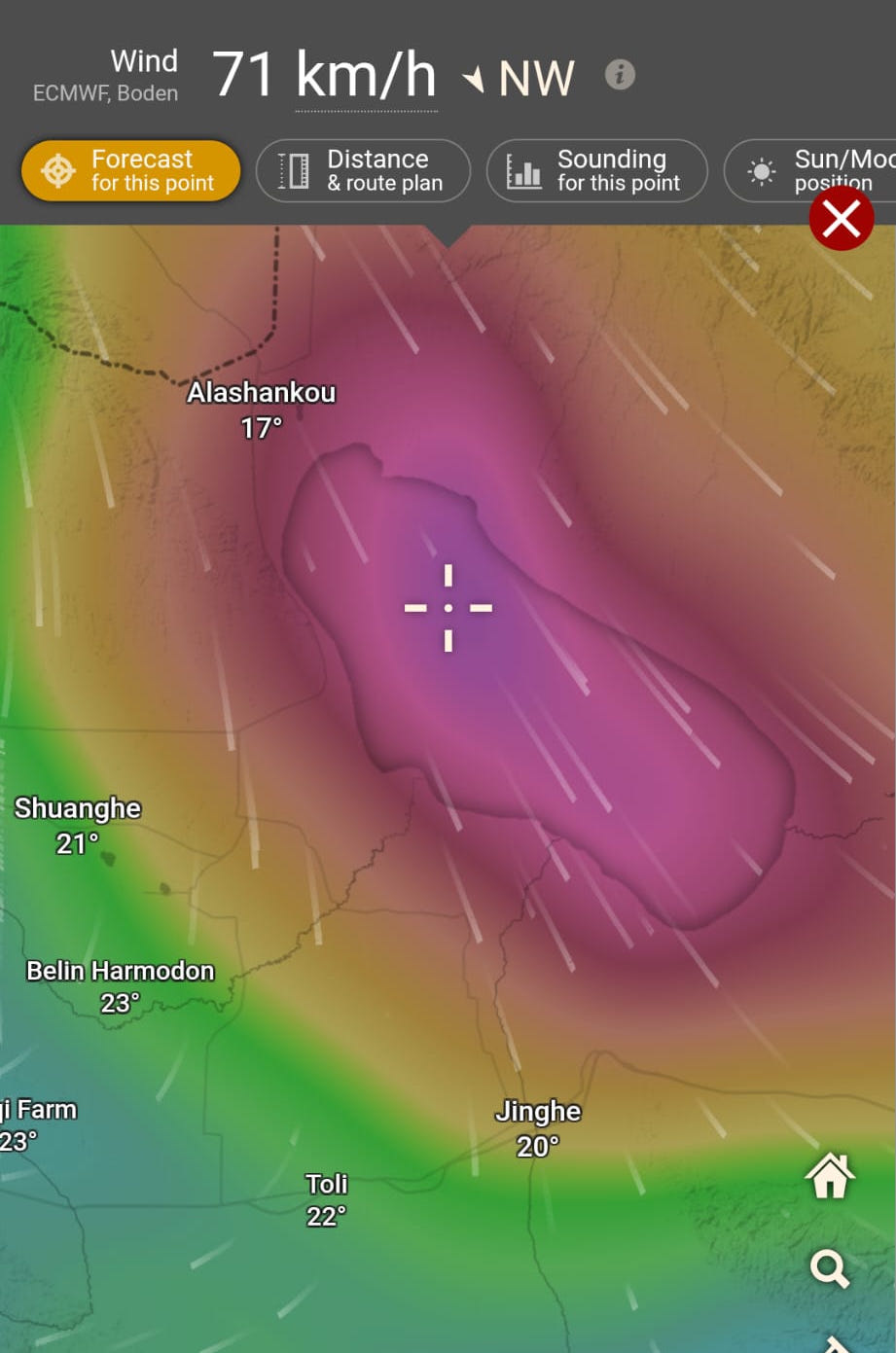
Day 1 Alashankou - Jinghe
With an extreme tailwind, we race the first few kilometres out of town. At the "exit" from the city, a police officer stops us and once again we have to show our passports and explain where we're going and where we've come from. As if there were so many different places we could have just come from ... Since it's already so windy, we have to hide behind a house with the police officer. After ten minutes, we're allowed to continue.
Still with an extreme tailwind, we ride along a side road next to the motorway. At every drainage channel beneath the motorway, someone is standing guard, and every few hundred metres there are cameras. Everything feels so bizarre and unreal. Unfortunately, at some point we have to turn right and suddenly get the full force of the tailwind from the side. After only a few metres, the wind rips Vanessa's sunglasses off her face, blows them across the two-lane road, over the barriers into the opposite lane and then out into the steppe. We ride a little further until we can cross the road and then try to find the glasses on foot. After an hour, we give up and continue.
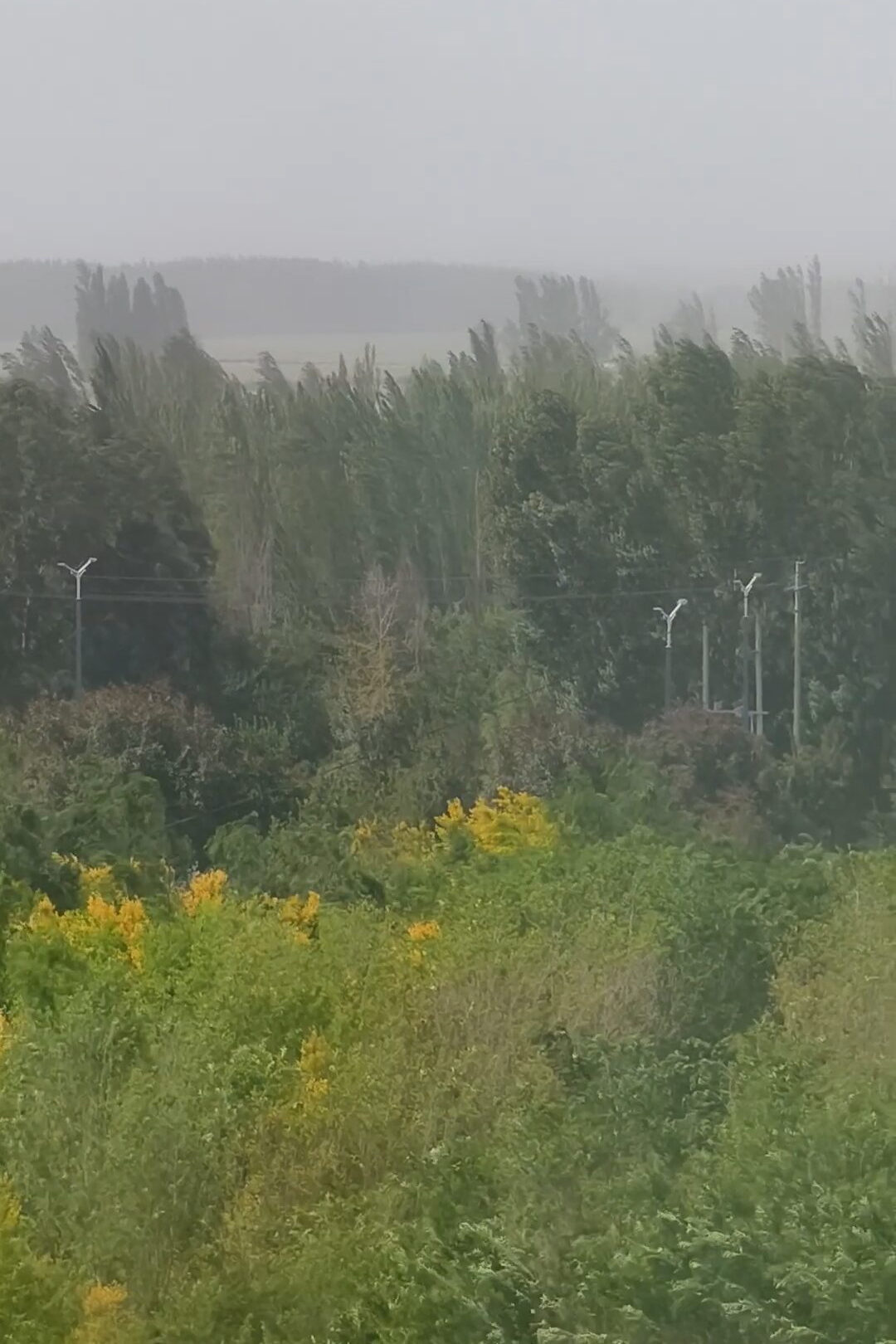
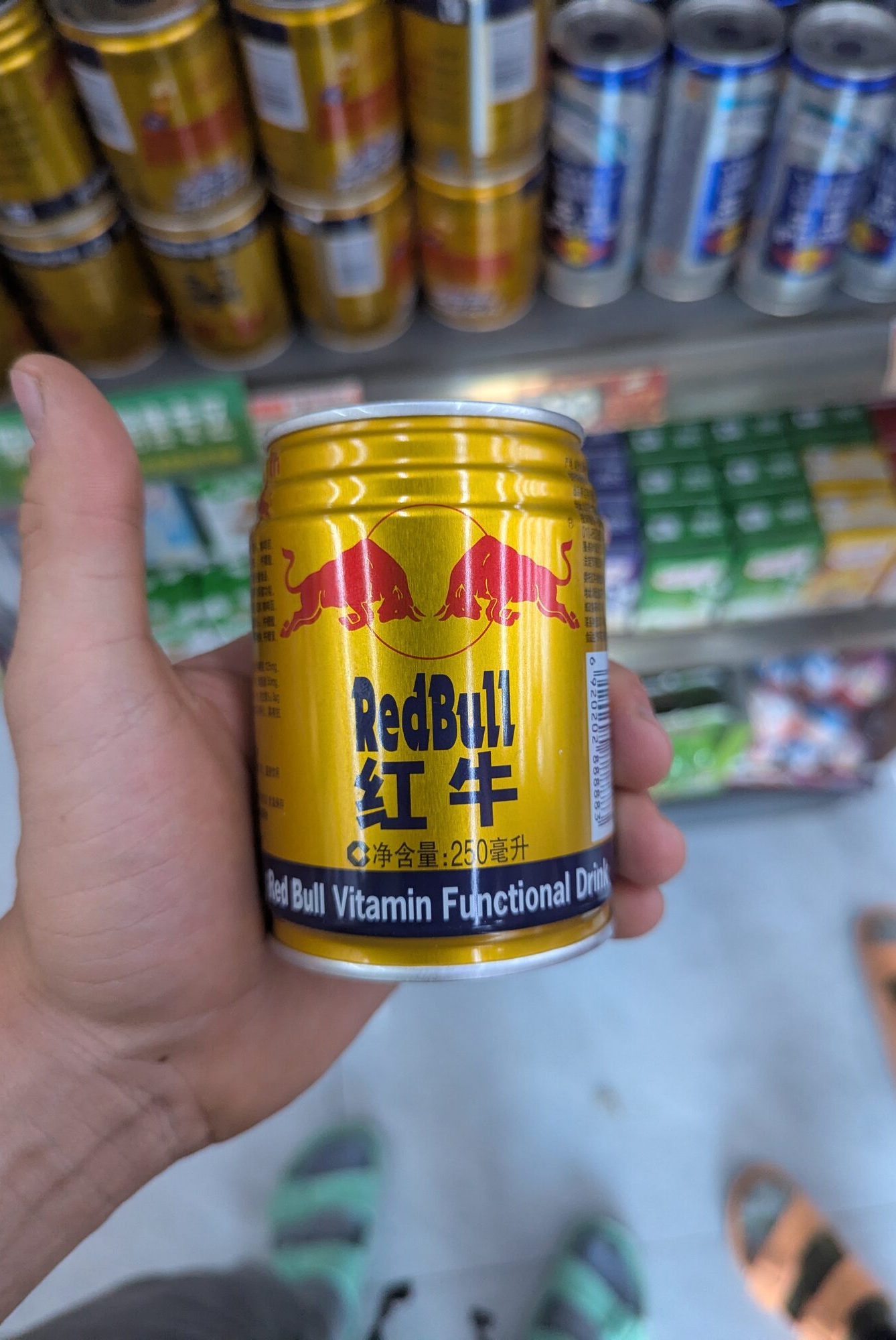
When we want to turn back towards the tailwind, the road is blocked by a five-metre-high metal fence. Amap showed the road as closed for cars but open for cyclists. So we push our bikes through an unguarded drainage channel beneath the motorway and haul them up onto the other side. The closed road is perfectly newly paved and guarded by a Chinese man sleeping in a car. Yesterday we were still trying not to cross the road on a red light; today we're already riding on a closed road. So off we go again with the tailwind before more and more sections with extreme crosswinds follow. Several times, I'm almost blown off the road, while the sand whipped up by the wind blasts into our faces like a sandblaster. Even though the road is technically closed, cars and trucks keep passing us. But because the wind is so strong, we almost have to ride on the opposite side of the road so that we aren't constantly worried about being blown off the edge and down into the desert. Before long, we abandon our dream of 200–300 km stages and only ride as far as the next town, Jinghe, where we check into a hotel. The friendly receptionist, with whom we can only communicate using a translator, asks whether we're athletes too. We don't think much of it at the time, but we notice that a lot of cyclists are staying at the hotel.
Day 2 Jinghe - Wusu
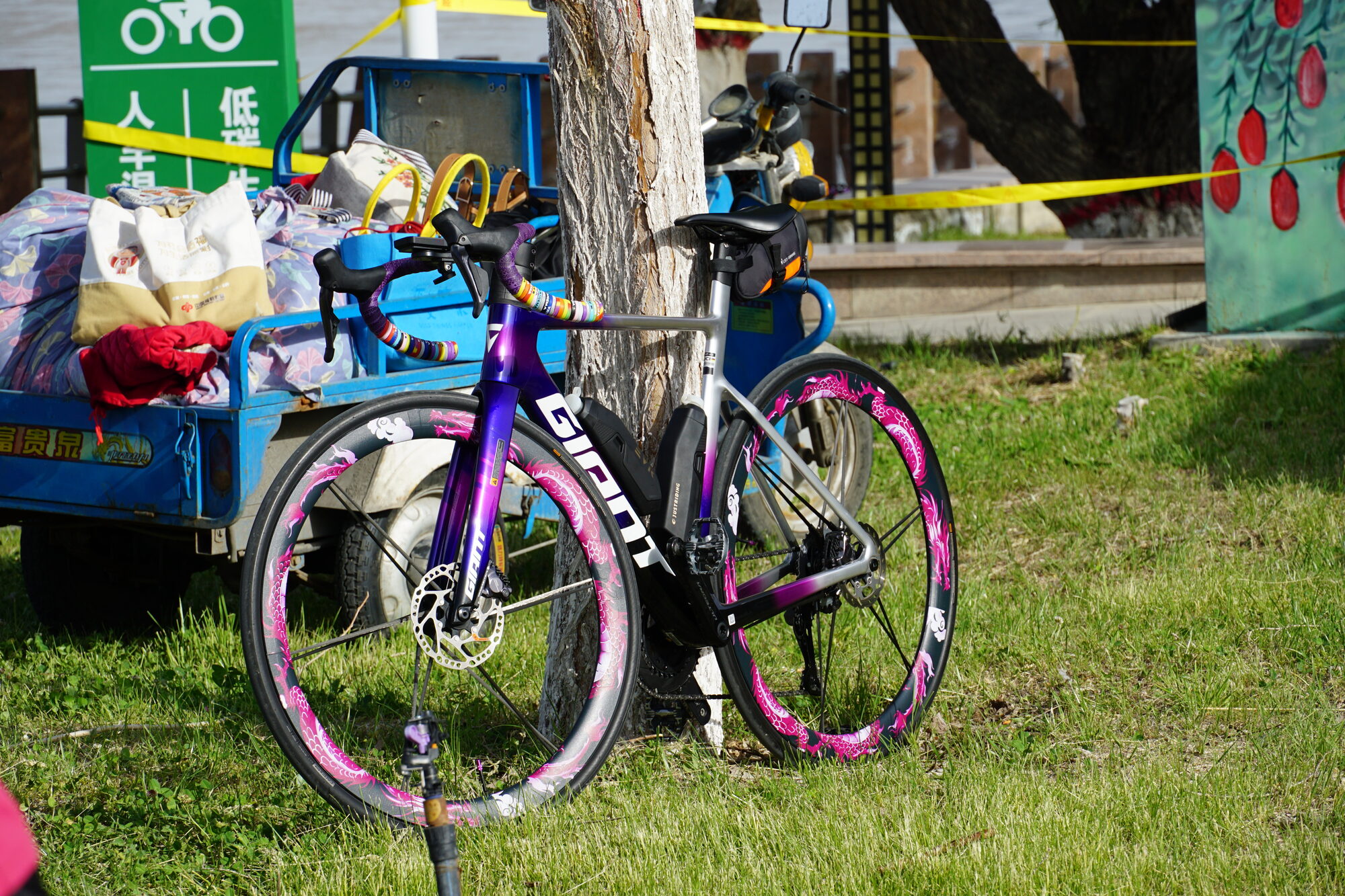
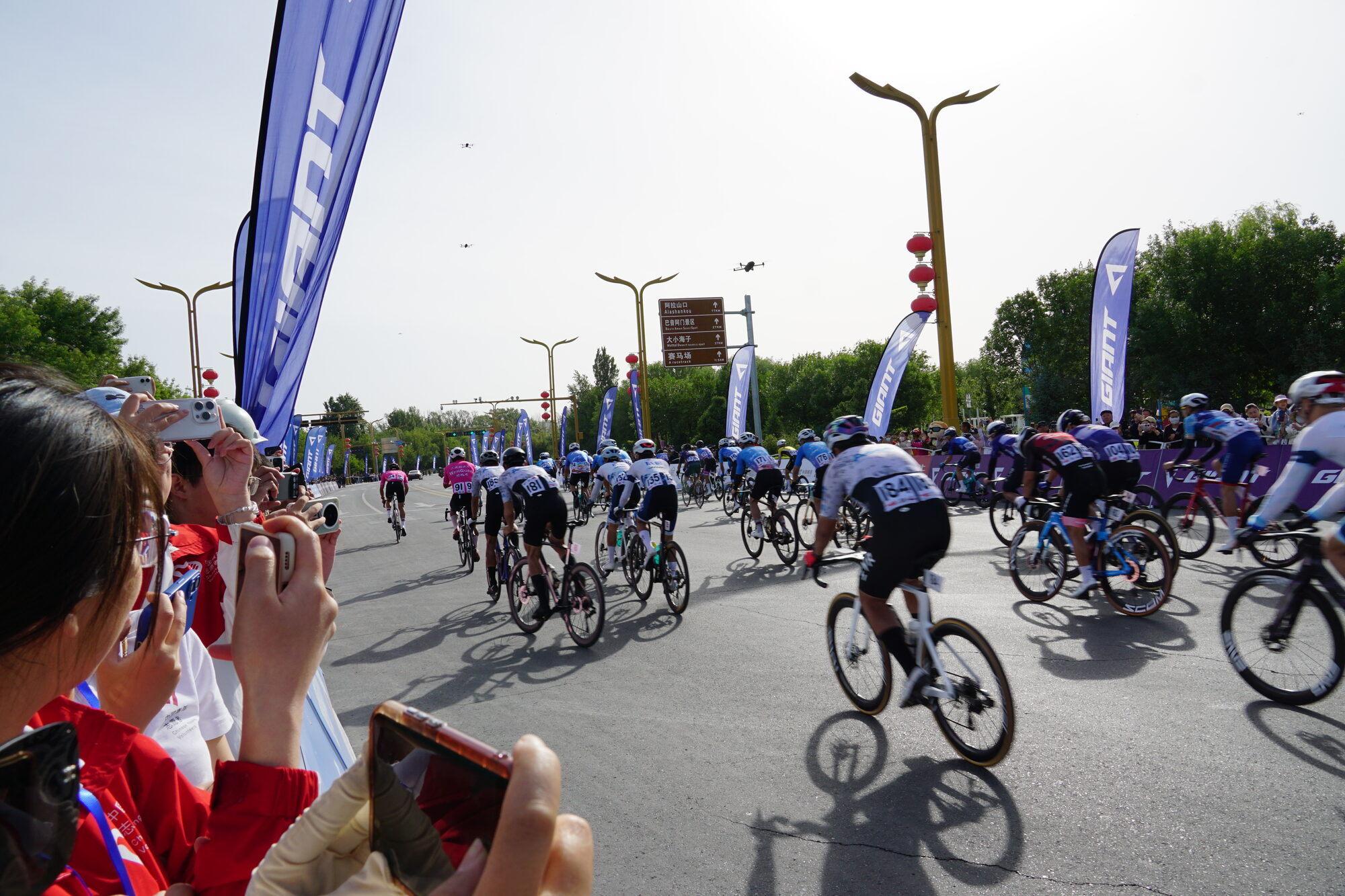
When we get on our bikes in the morning and ride through town, all the roads are closed, but Chinese people keep directing us, and suddenly we find ourselves right in the middle of a cycling race. We had ended up at the start of the Sayram Lake Road Cycling Race. The Chinese must have thought we were participants. After all, with our gravel bikes and fully loaded bikepacking bags, we looked almost exactly like the riders on their six-kilo carbon road bikes.
We manoeuvre our way back out of the starting area and try to find a good spot to watch the start. A friendly young journalist from Beijing approaches us and we chat for a while in English. Out of nowhere, we're suddenly surrounded by journalists and locals, everyone wants a photo with us, and the journalists want interviews. They want to know what we think of China so far, and everyone assumes that we're taking part in the race. The fact that we're only here by chance and aren't participating doesn't seem to matter much. And I don't tell them that during our only day in China so far, we've mainly seen cameras and villages completely surrounded by barbed wire. One journalist even gets me to say in Chinese that China and Xinjiang are great and beautiful. Even though that doesn't entirely reflect my personal opinion, I hope it earns our social score in China a few extra points.
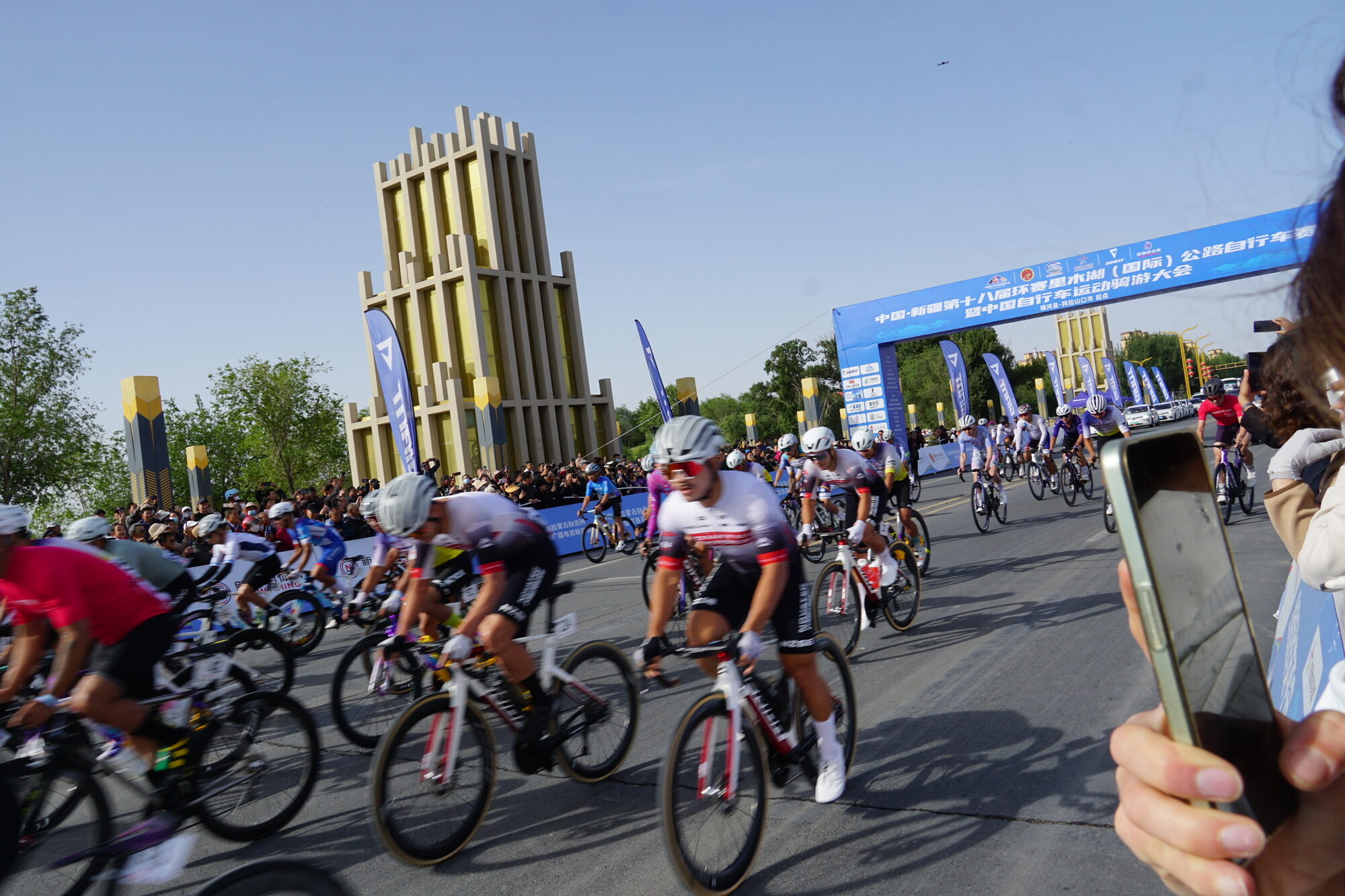
After the race has started, we make our way towards Wusu. We ride along the side road next to the motorway and make good progress. At one point, we're stopped by police officers who ask us the usual questions. Where are you from? Where are you going? Where are you sleeping? What are you doing in China? Two more photos of our passports and we're allowed to continue. For the 170 km to Wusu, we have a constant light headwind, but the forecast for the next day is even stronger, so our motto for the day is: "Better against the wind today than against the storm tomorrow." Shortly before Wusu, we even get a police escort that follows us every step of the way while we're looking for our hotel. We simply can't find it, while the police car constantly drives five metres behind us. It doesn't exactly make the situation any more relaxing. Eventually, I've had enough, knock on the police car window and ask whether they could help us find the hotel. They call another patrol, which then leads us there. Once we arrive at the hotel, it's the usual questions and another passport check. We've only just made ourselves comfortable in the room when someone knocks on the door. A police officer wants all the information again in person. At that point, we'd been in China for three days and had been registered around seven times. You'd think they would already have every step we take and all our information.
Day 3: Wusu - Kuytun
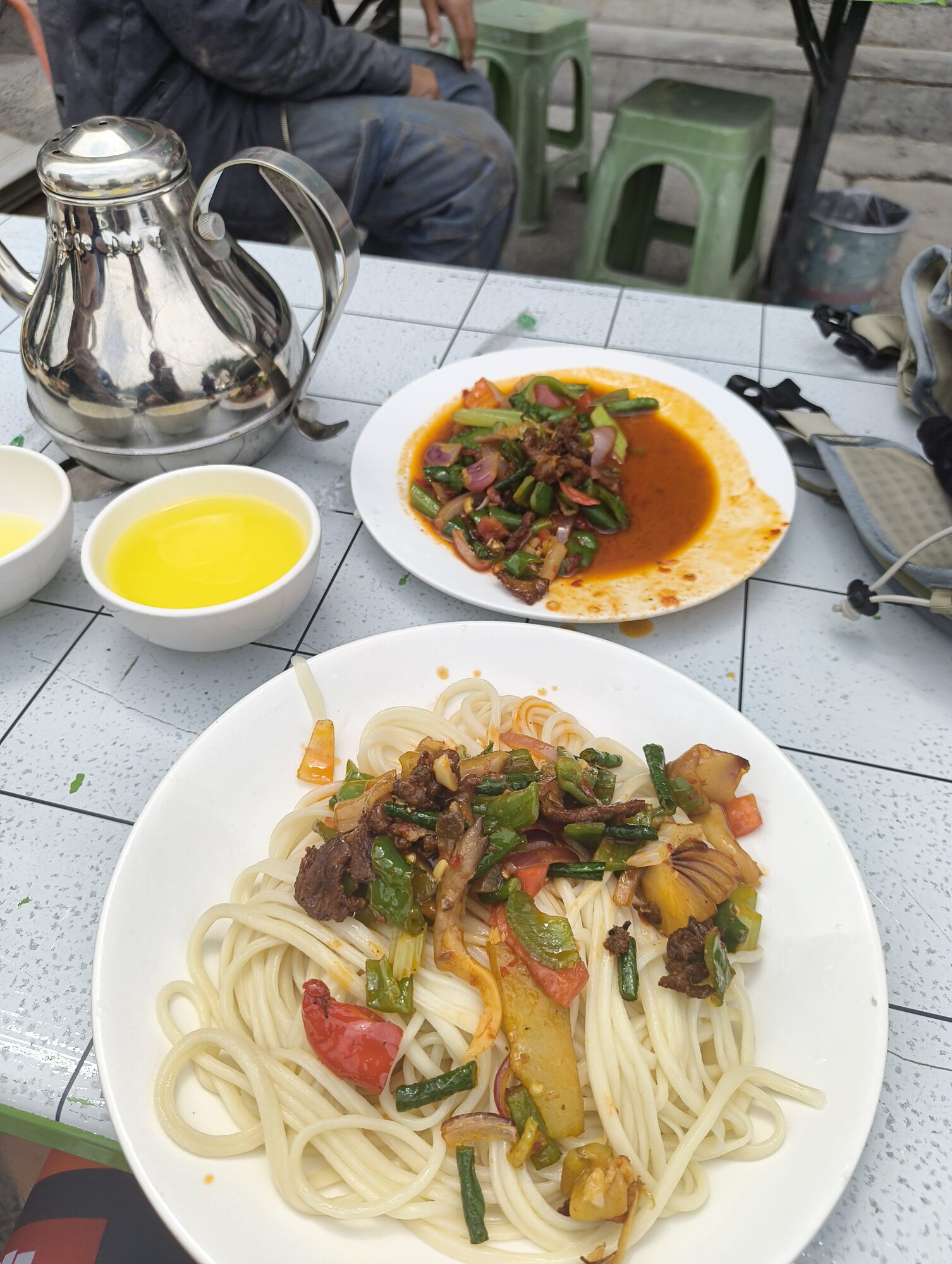
Since an extreme storm was forecast for the day and we had little desire to ride a stage into an extreme headwind, we decided to cycle only 25 km to the next city, Kuytun. We enjoyed the rest day, stuffed ourselves with the most delicious freshly made Lagman noodles and got some ice cream at McDonald's. Vanessa's mission for the day was to unlock her WeChat account for electric mopeds, but who would have guessed: once again, she had to upload her passport and wait 24 hours for manual approval. So we treated ourselves to a taxi ride back to the hotel for around 50 cents.
Day 4: Kuytun - Manas
We continue onwards. In places, the landscape gets a little hillier, and for the first time we see wild camels in the desert. Still completely shaggy from their winter coats, they stand in the steppe without being bothered by the cars passing by. At lunchtime, we find lots of noodle restaurants in a small village where we can refuel. Since arriving in China, we've actually managed to eat enough calories during the day. We must look pretty hungry because the waitress gives us an extra portion of noodles. At a small shop next door, we have another ice cream before riding the final kilometres to Manas. Shortly before the hotel, Vanessa's freehub starts causing serious problems. The cassette no longer spins freely, which means she can't stop pedalling. It's definitely time to get to a bike shop in Urumqi.
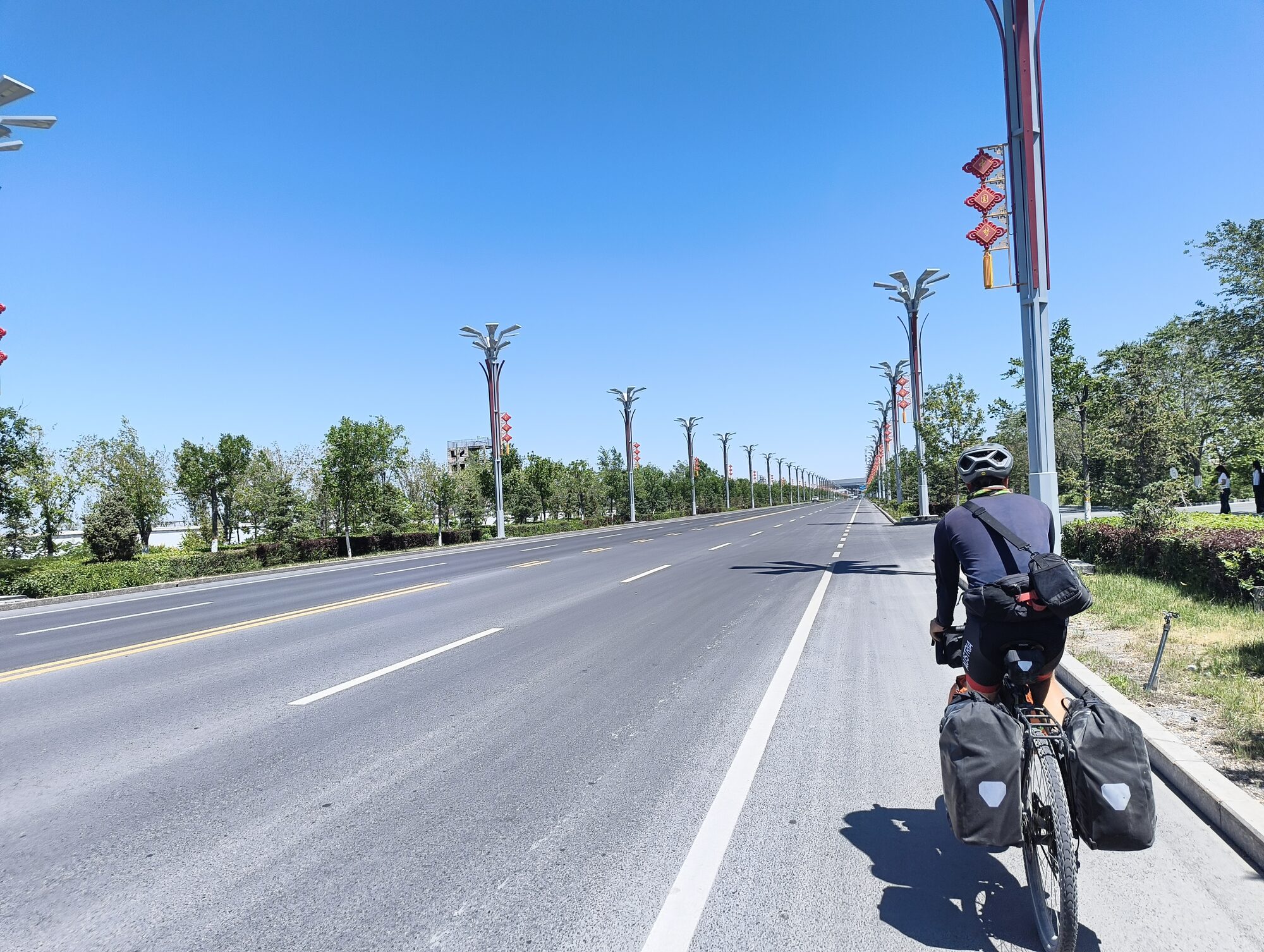
After a long discussion with the two young receptionists, we're eventually allowed to take our bikes into the room.
Vanessa's WeChat account has finally been unlocked for the electric mopeds, so we immediately find the nearest one and cruise into town. The first policewoman we pass whistles at us because apparently you're not allowed to ride two people on one moped. We find another small restaurant and this time enjoy dumplings and rice with vegetables. It's impressive how every Chinese restaurant, no matter how small and shabby it looks, serves really good food.
Day 5: Manas - Urumqi
The final stage to Urumqi is ahead of us, and it isn't going to be an easy one. We start in drizzle and within just a few minutes we're soaked to the bone. The cold drains our energy and it's really no fun at all. There's a lot of traffic, and unfortunately the Chinese drivers don't overtake us as nicely as we'd become used to in Kazakhstan. My motivation has finally hit rock bottom and I've had enough. We consider whether we could get on a train somewhere or try hitchhiking. We shelter next to a petrol station and hope that maybe someone will give us a lift. But as we'd already heard, hitchhiking in China isn't that easy. Especially in Xinjiang, where, based on our experience so far, the police presence is extremely high.
So we give up on hitchhiking and keep riding. Eventually, I'm doing reasonably well again – but now Vanessa's motivation has hit rock bottom. It doesn't help that we make an extra detour into a town to stop for lunch and then can barely find a restaurant. On top of that, while we're eating, two Chinese men keep bothering us because they desperately want to take photos with us.
When Vanessa then slices open her rear tyre on a piece of metal lying on the road, our motivation is completely gone. Luckily, the tyre isn't completely ruined, but after replacing the tube, we can't get the tyre to sit properly on the rim again. Vanessa suppresses her frustration and gets shaken around pretty badly for the final 40 km because the tyre is now wobbling so much.
We try to find a compressor at one of the petrol stations, all of which are guarded by police, to fix the tyre problem. But no luck.
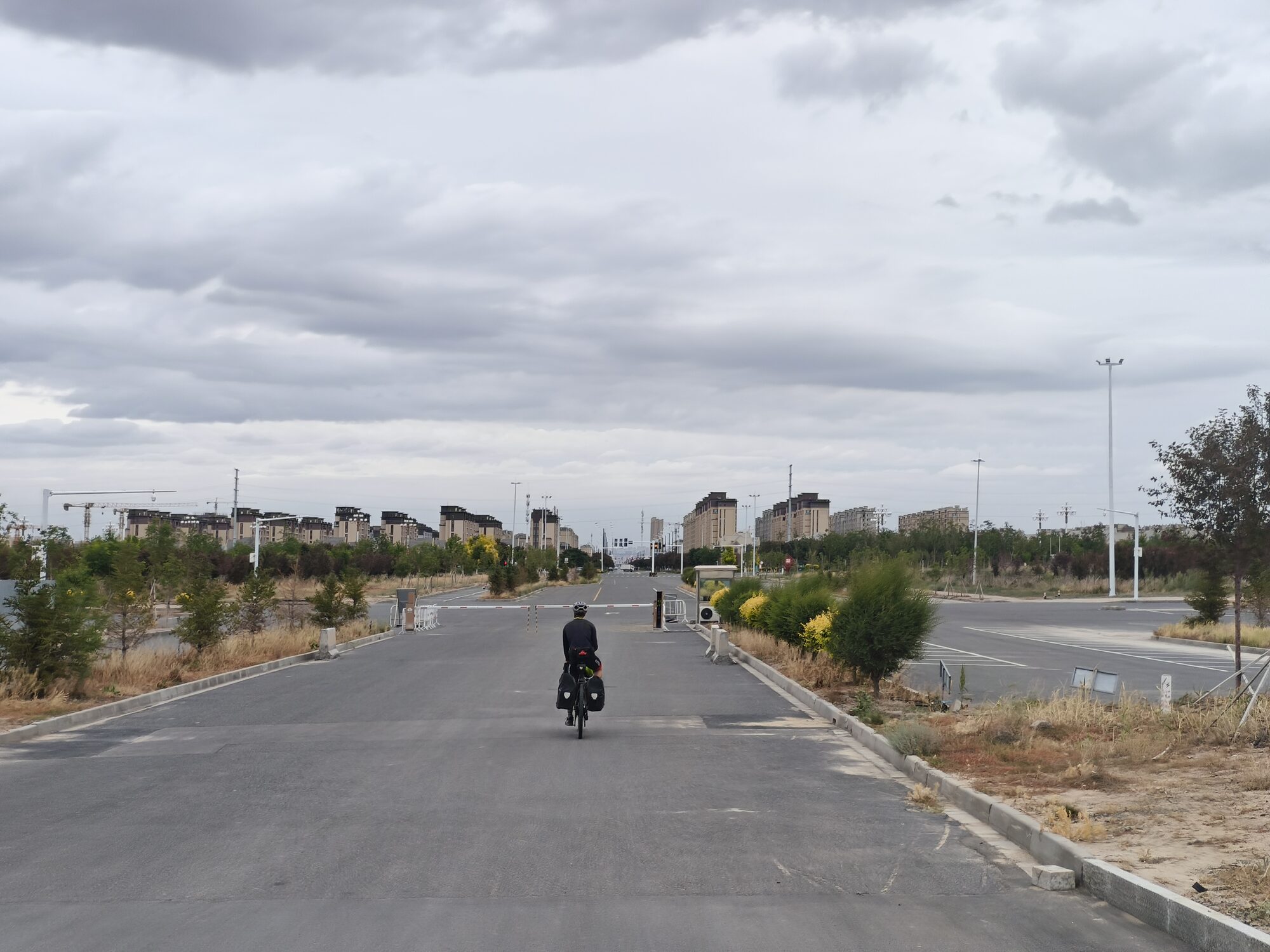
Slowly, we begin to see the high-rise buildings of Urumqi on the horizon. We ride through brand-new neighbourhoods with three-lane roads where nobody lives yet. It looks like something out of a science-fiction film. For what feels like forever, we wind our way alongside and beneath the city's motorways until we finally reach our hotel completely exhausted.
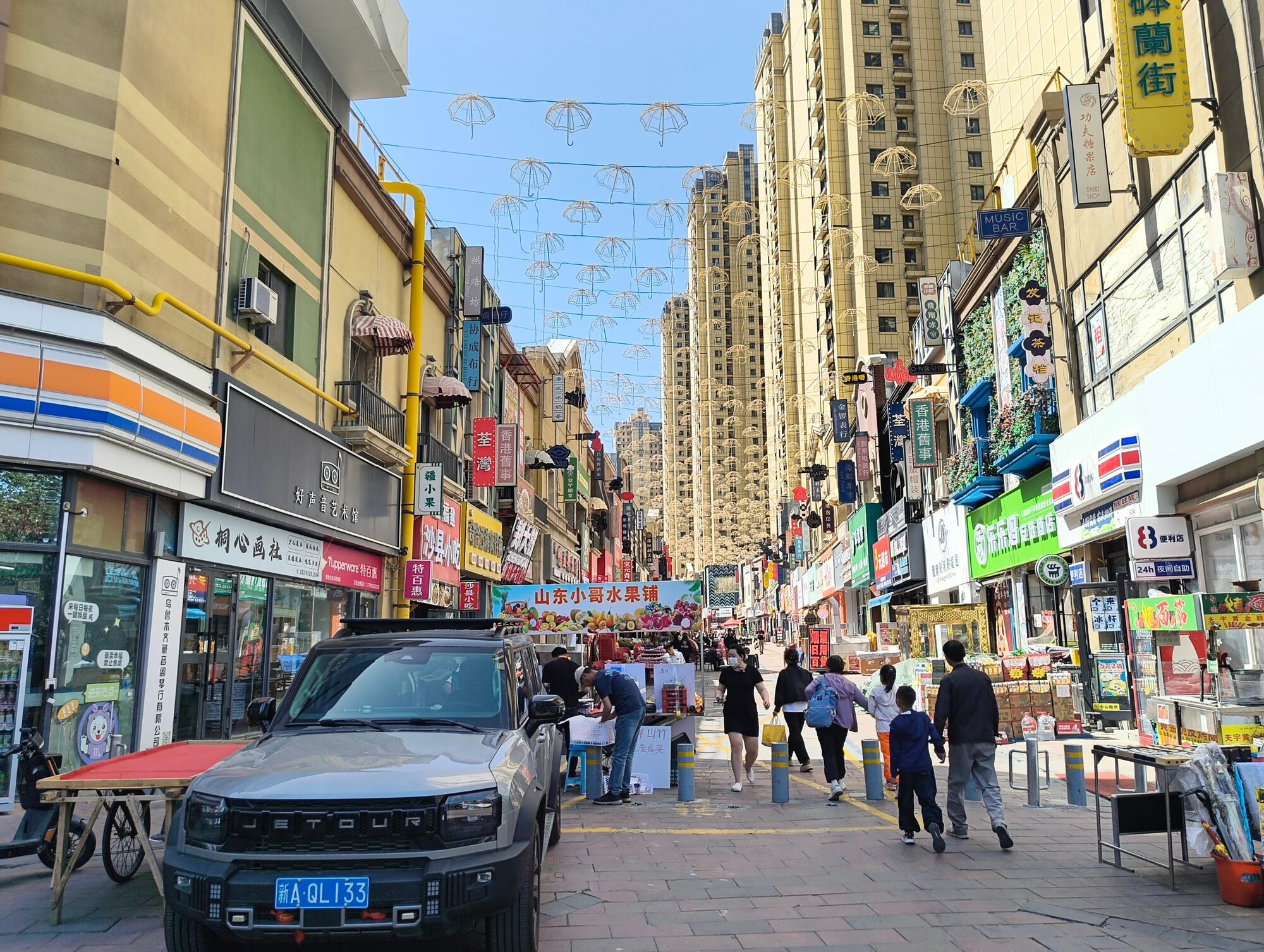
The final 10 km felt like 100. The friendly doorman helps us find the entrance, and completely exhausted, we take a shower and grab a burger from across the street before looking for another noodle restaurant.
5 Days in Urumqi
May 24, my 24th birthday. What I want most for my birthday: a bike shop that can repair our freehubs. Another bikepacker had already recommended a shop to us, so we head there first thing in the morning. Using the translator app, we try to explain our problem, but of course the freehubs are working perfectly at that exact moment ... When we show them a video of Vanessa's fixie, they understand the problem, and we arrange for them to fully service both bikes and repair the freehubs.
We spend the rest of the day in the city at the bazaar and finish the evening with beer, skewers and dumplings.
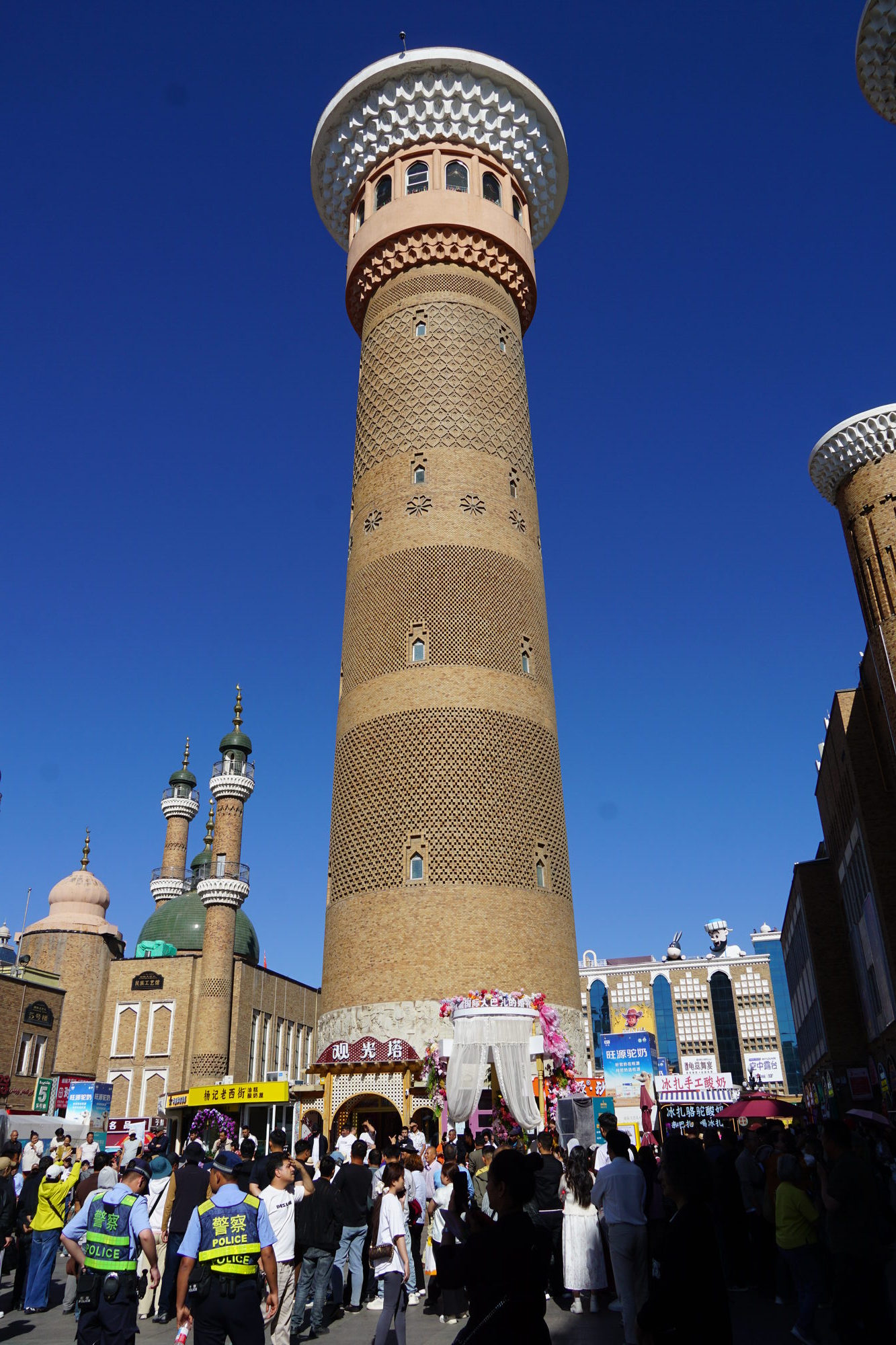
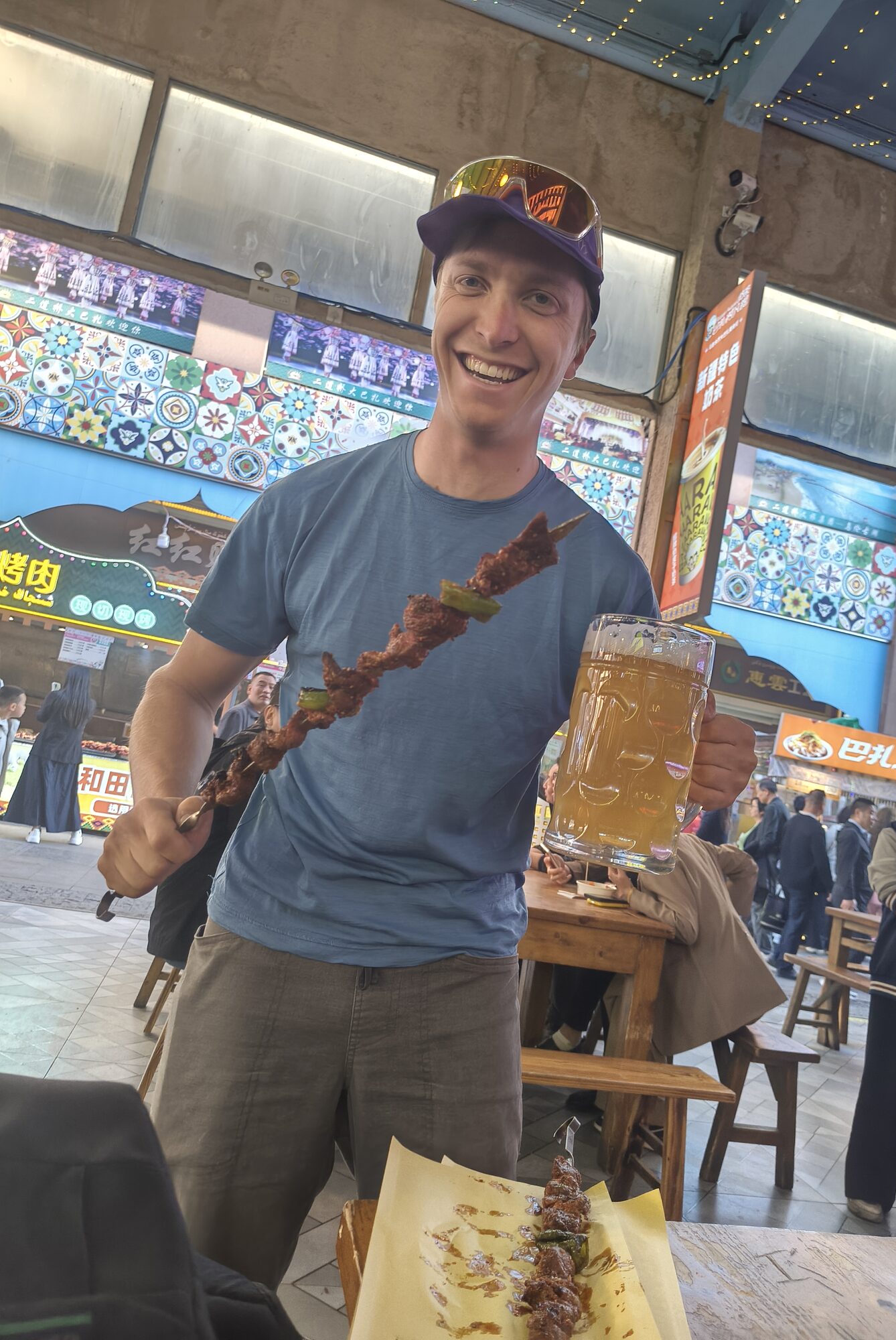
Over the next few days, we plan the rest of our journey and decide that we don't want to cycle another 500 km through the desert, so we'll cover that section by train. We also finally manage to replace Vanessa's short-sleeved shirt and find a cleaning kit for our camera. We almost even manage to get a new water filter after ours hasn't been working properly since Kazakhstan. Everything is running smoothly again.
Tips and Tricks for China
-
VPN: We bought a Chinese VPN that was able to bypass the Great Firewall and worked without any problems. You can also regularly get recommendations in bikepacking WhatsApp groups.
-
SIM card: Our Chinese SIM card worked well in combination with the VPN. We also had an eSIM that was supposed to bypass the firewall, but it didn't always work reliably.
-
Payments: We could pay practically everywhere with Alipay and WeChat – from street vendors to hotels. We didn't need any cash.
-
Hotels: We always booked through Trip.com. It worked without any problems and also saved us foreign currency fees.
-
Train tickets: We also booked these through Trip.com. You don't get a traditional ticket; the booking is linked to your passport number.
-
Navigation: Amap is the Chinese equivalent of Google Maps and was very useful for us to figure out where tourists are "supposed" to go and where they aren't.
-
Power sockets: In most hotels, we didn't need an adapter.