Taking the train in China: an experience in itself
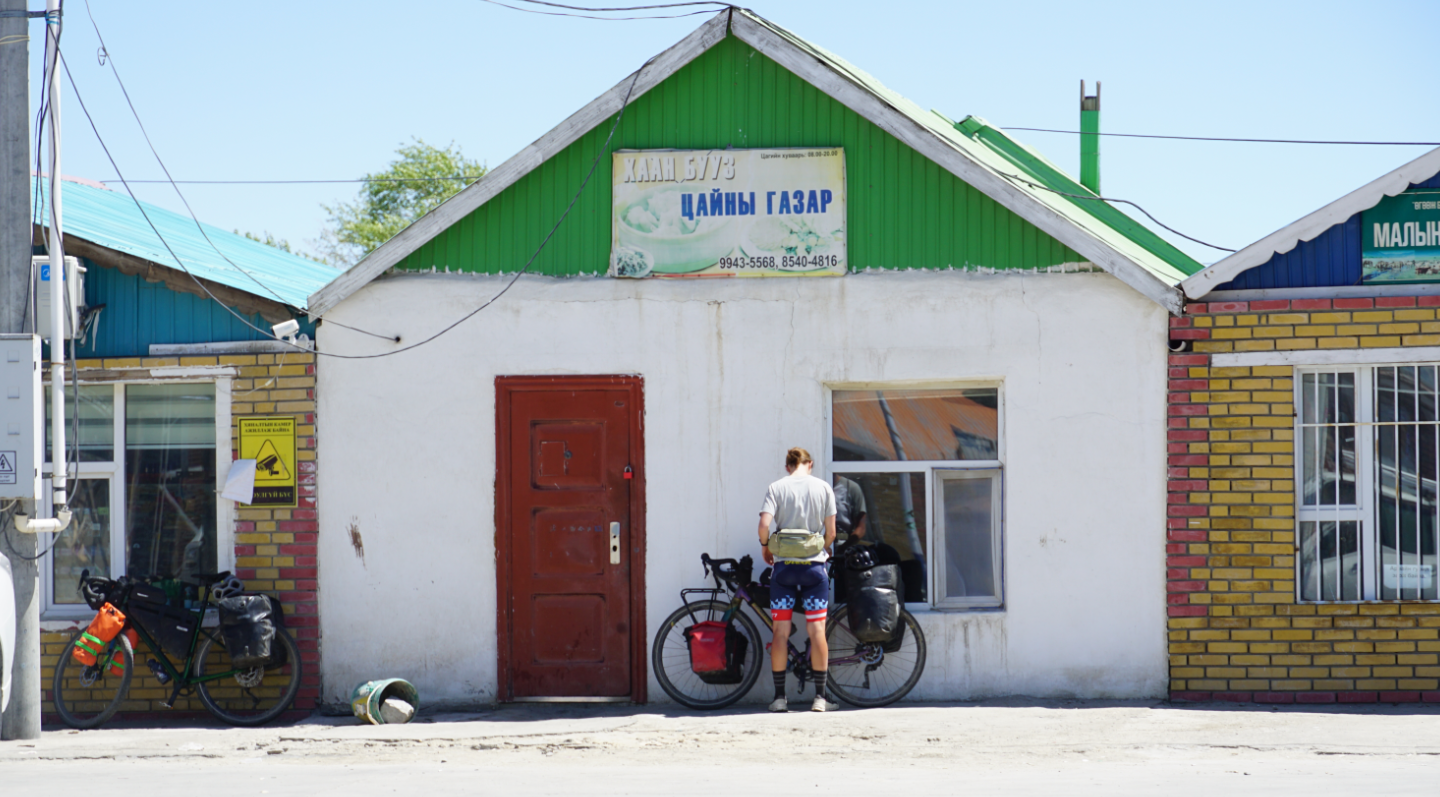
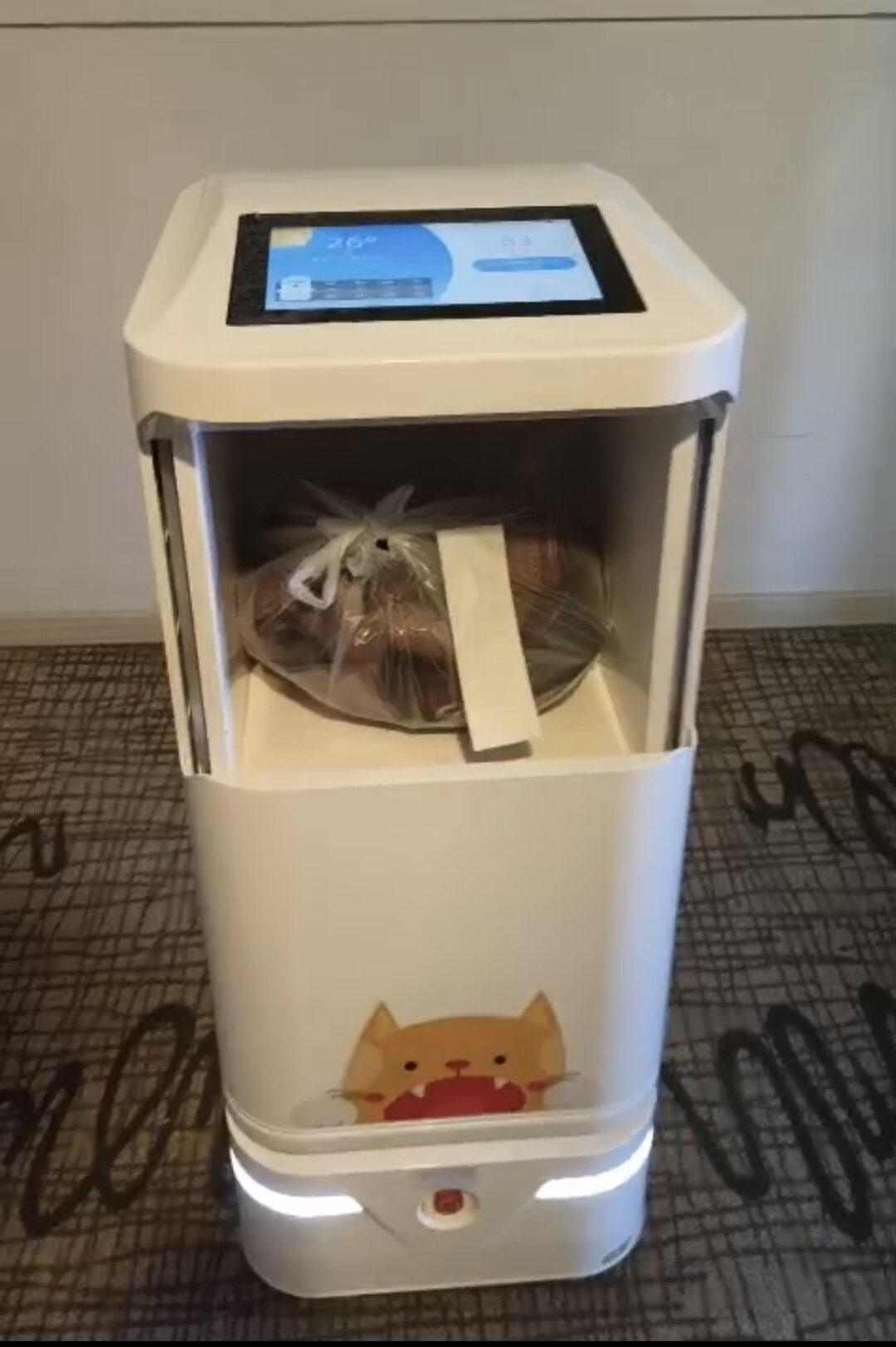
Just before 6 am, we leave the hotel and head to the train station. We're taking a five-hour train ride north through the desert, ready to cross into Mongolia the next day. Taking a train in China involves going through security, much like at an airport. Knives, petrol and dangerous items in general aren't allowed. There's no option to check in luggage either. Bikes have to be wrapped so that nothing is visible. Through Meituan, a delivery app, we've ordered potato sacks and packing tape. To our surprise, a robot delivered them to our hotel room just 45 minutes later.
So we take our bikes apart outside the station and wrap them up as best we can. Finally, we're allowed into the station and through to security. Our fuel bottle has been empty since Kazakhstan anyway. We've been making the most of the cheap, good food, and buying petrol as a tourist in China is almost impossible. The bottle is still a problem, though: it smells of petrol, and that's enough for it to be confiscated. After a long discussion, we manage to convince the officer that we really need it, as otherwise we won't be able to cook in Mongolia. Our knife is also 3 mm too long, but no amount of arguing helps with that one.
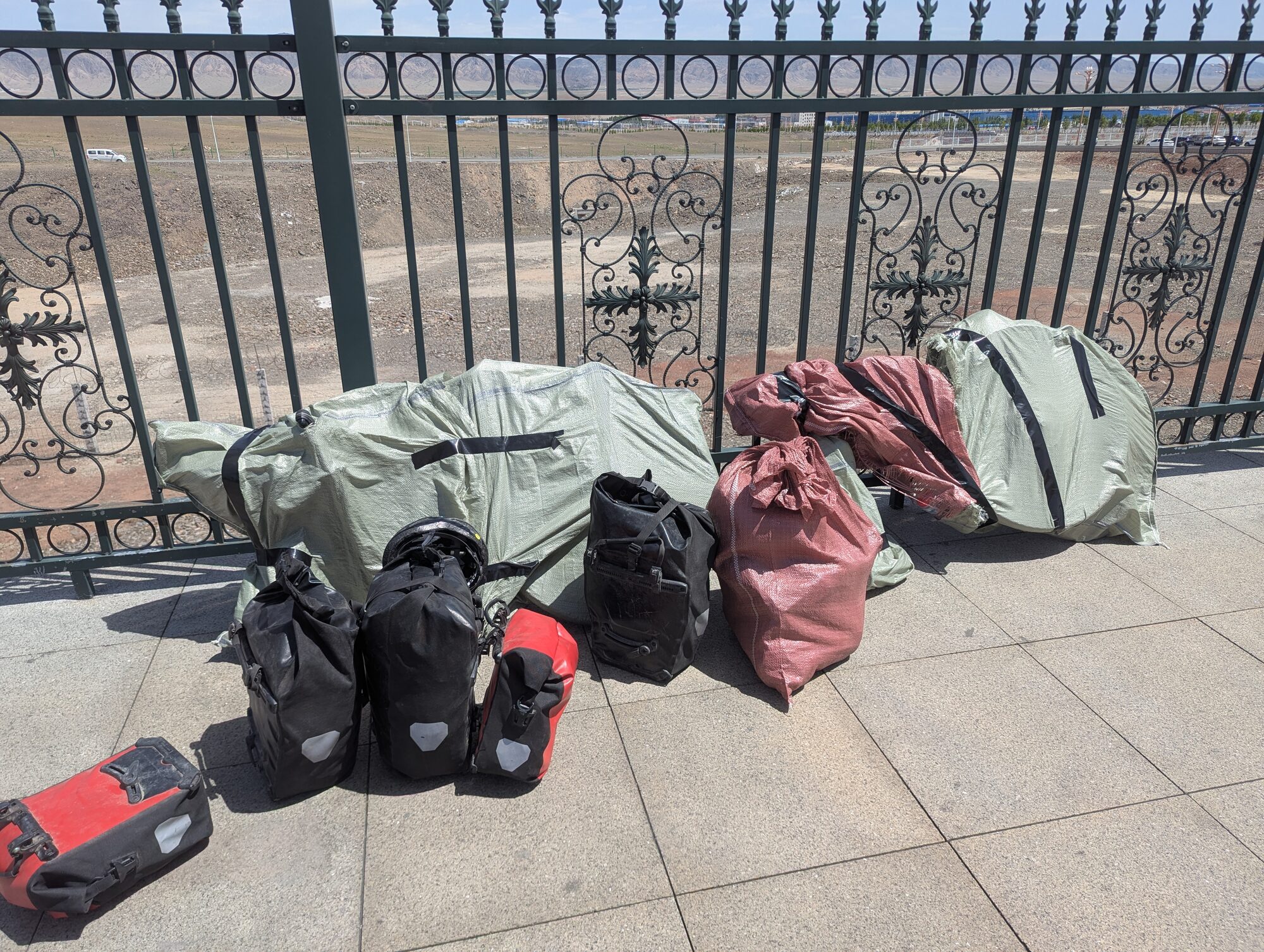
We quickly hire two porters to help us haul the bikes and bags onto the train. Without them, we'd probably have missed our train to Fuyun. Train travel in China is an experience in itself. Nobody uses headphones, and everyone seems to be trying to drown everyone else out. On top of that, a woman walks through the carriages selling chicken feet as snacks. Between all the noise and the chicken feet on offer, we don't know where to look first.
Outside, the desert rolls past, and we're glad we decided to take the train and skip riding this stretch.
Day 6: Fuyun - Araltobe
We arrive in Fuyun in the early afternoon and get straight back on the bikes. We've still got more than 100 km planned for today. After some trouble finding our way, we spot a hole in the barbed-wire fence leading to the main road and heave our bikes over the crash barrier. Back on track!
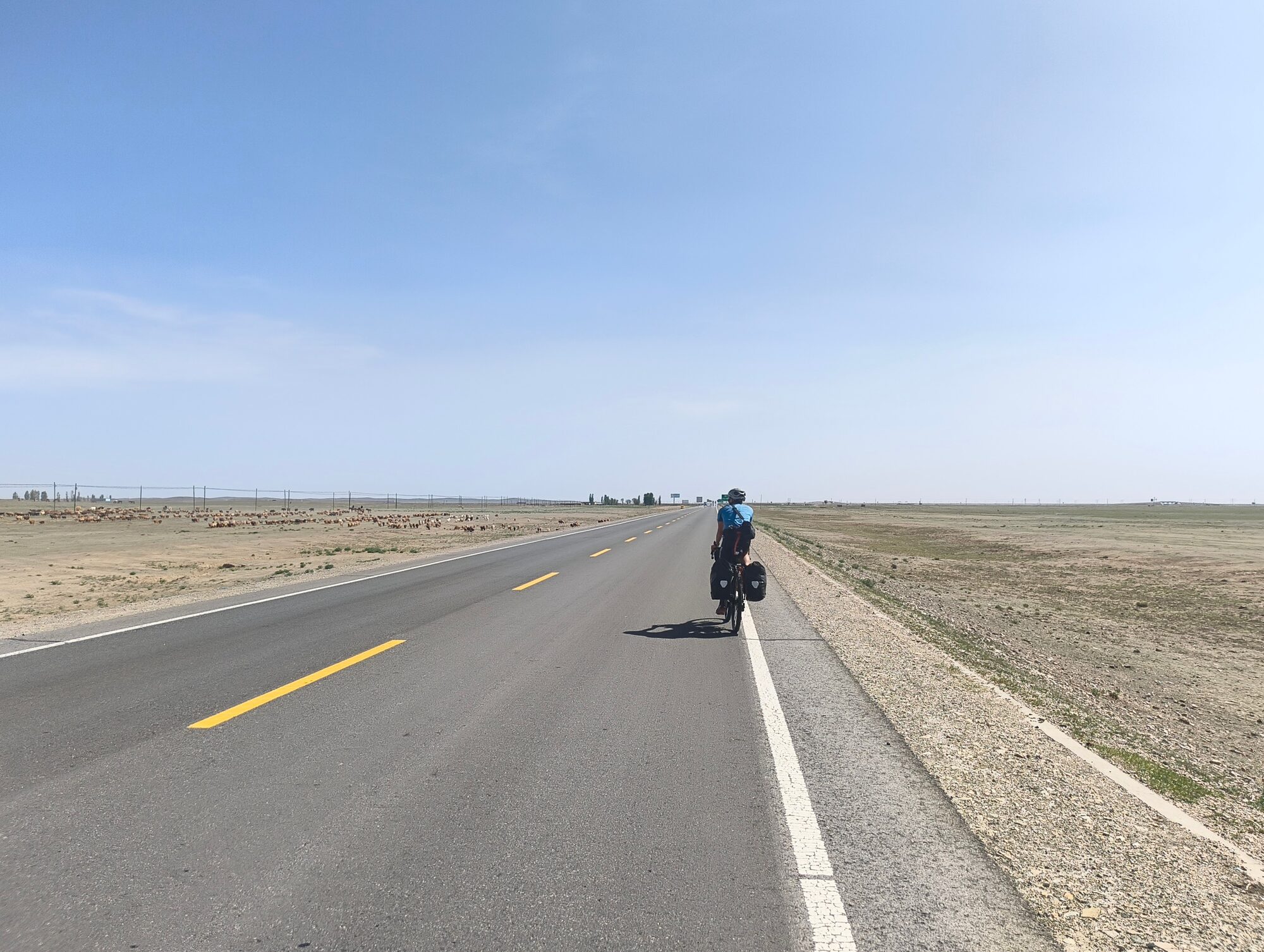
There's little change in the scenery as we ride through the seemingly endless desert. The Altai Mountains are already visible on the horizon, and every now and then we spot a white dot that's probably a yurt. A family passing us in their car gives us some fresh fruit, which we're pretty happy about.
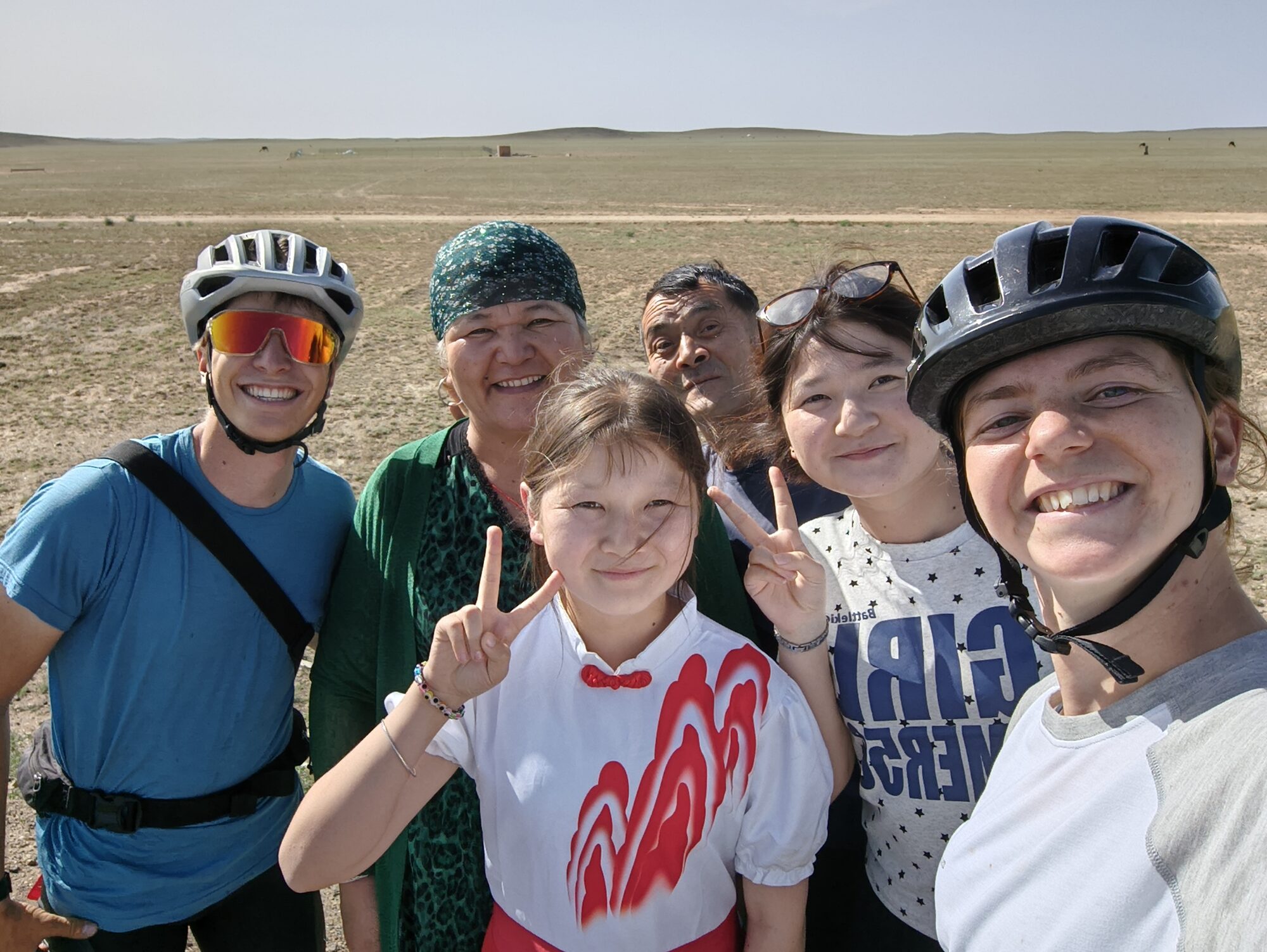
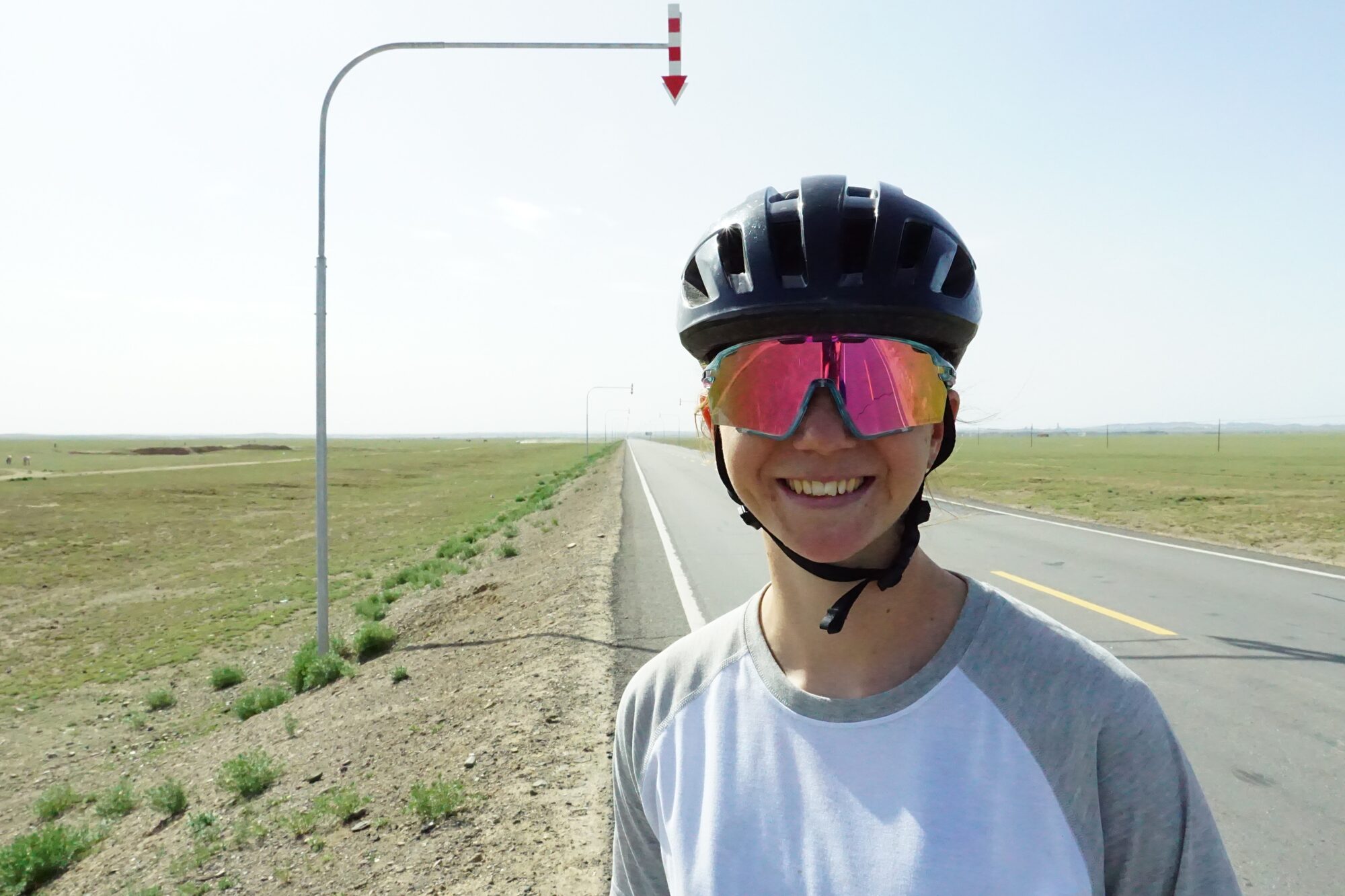
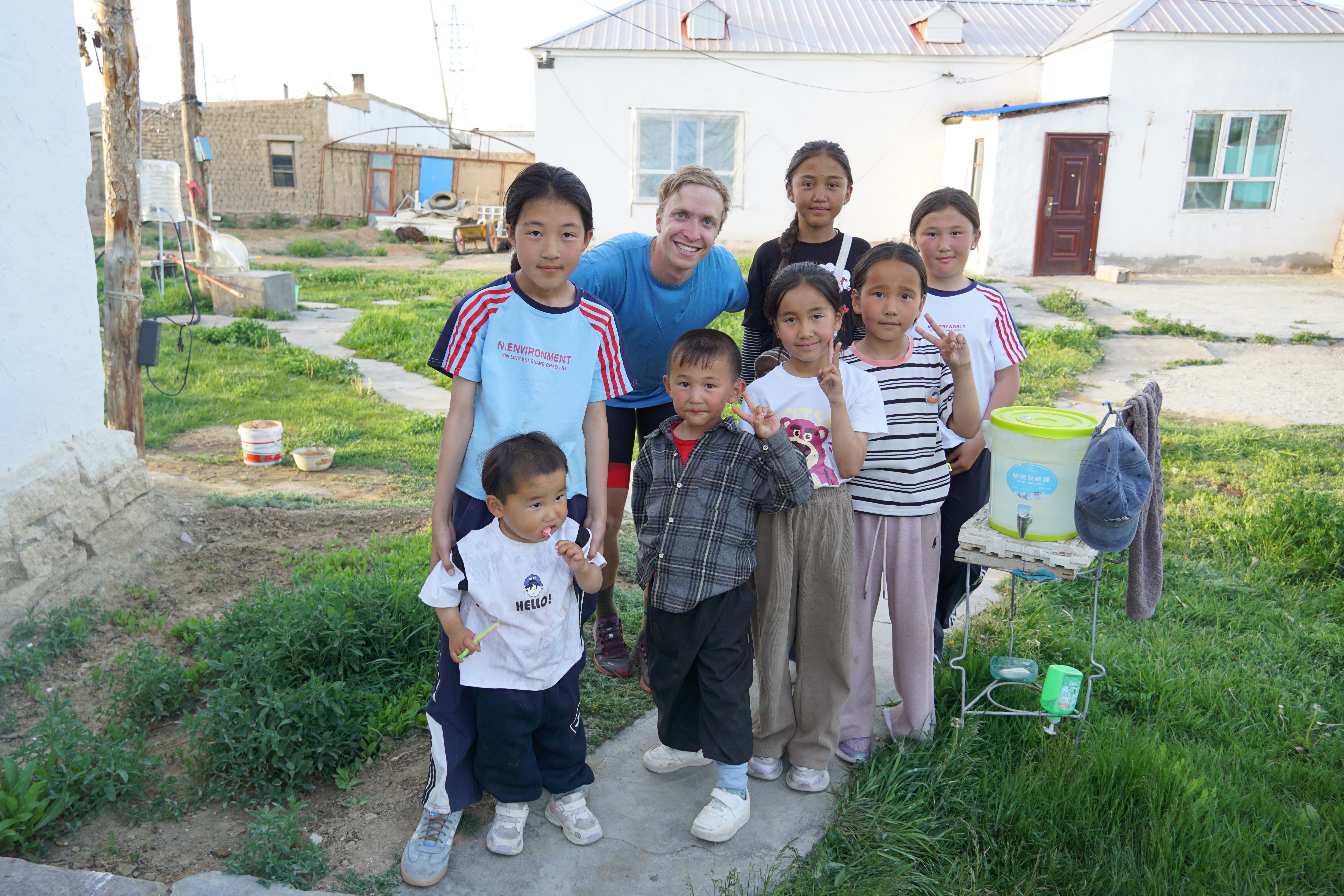
A long, enjoyable descent takes us into Araltobe, where we need to do some shopping. As we enter the village, two girls stare at us wide-eyed and then run after us all the way to the minimarket. They're a little shy at first, but we ask if they'd like a photo with us. That breaks the ice. Through the translation app, they ask us all sorts of questions and tell us we're the first foreigners they've ever seen. Judging by how excited they are, we believe them straight away.
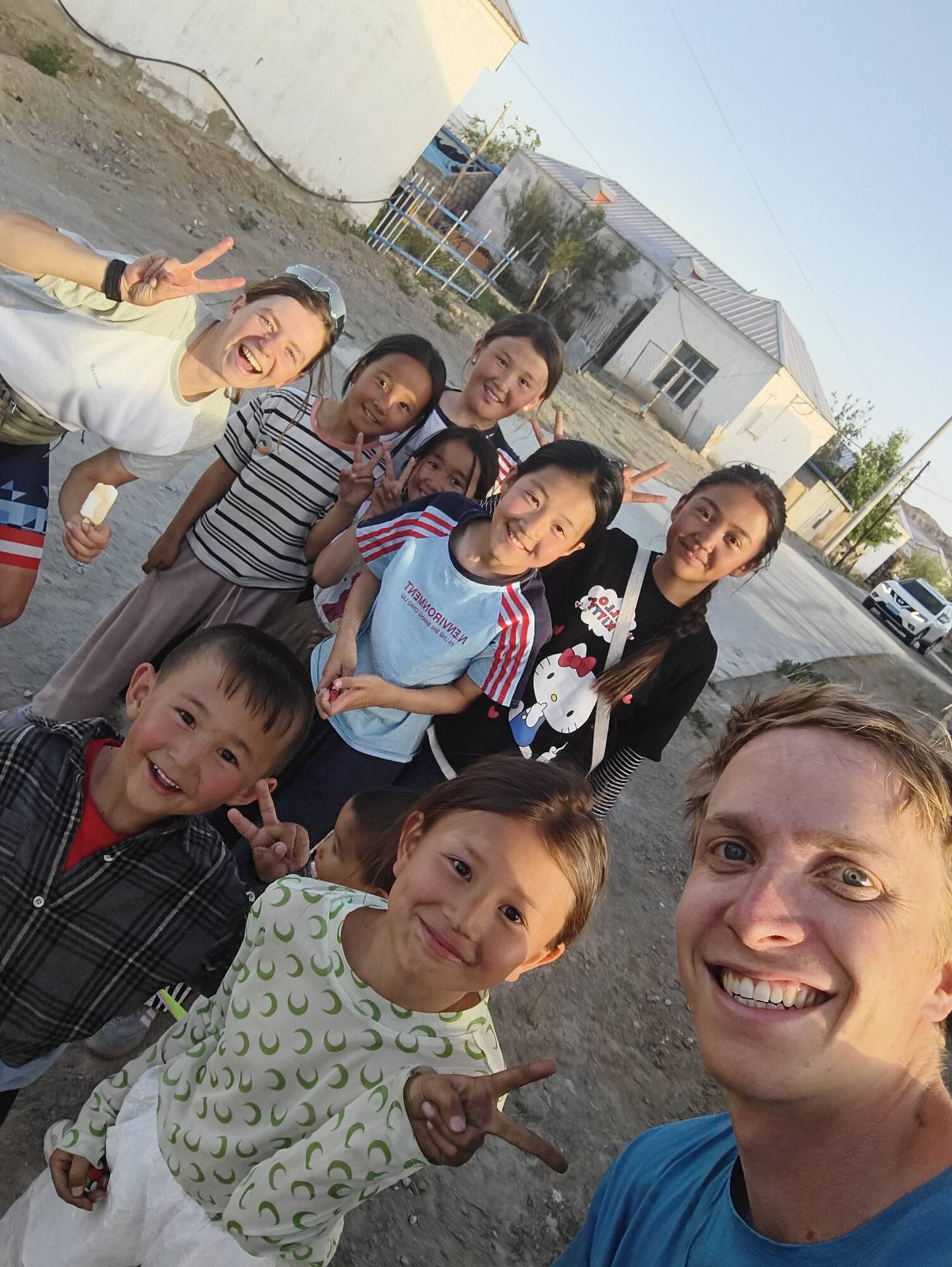
We end up being invited to their home for a meal. The villagers are ethnic Kazakhs, and the girls' mother doesn't speak Chinese, so they have to translate the text from our translation app for her as well. We're given tea, meat and sweets. It happens to be a Kazakh holiday, and the table is covered in food.
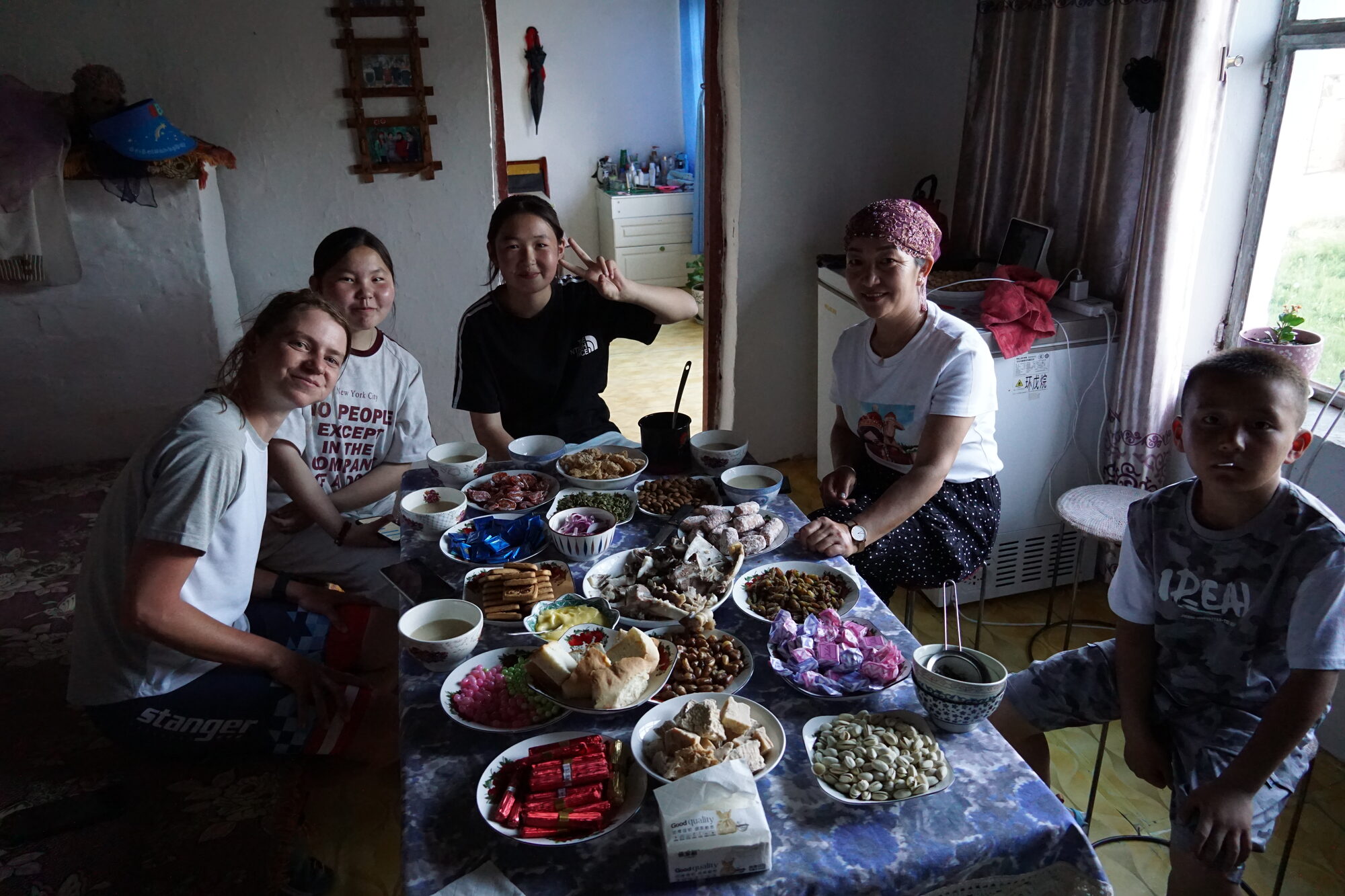
Their mother makes a determined effort to keep all the village children peeking through the doorway out of the house. After exchanging WeChat details and taking plenty of photos, we head off again. We still need to find somewhere to sleep. With no hotel anywhere nearby, our last night in China looks set to be our first night camping here. And, of course, this is exactly when the police stop us and fire off the usual questions, including: “Where are you sleeping tonight?” We explain that we normally stay in hotels, but there's nowhere to stay here. They're fine with us camping.
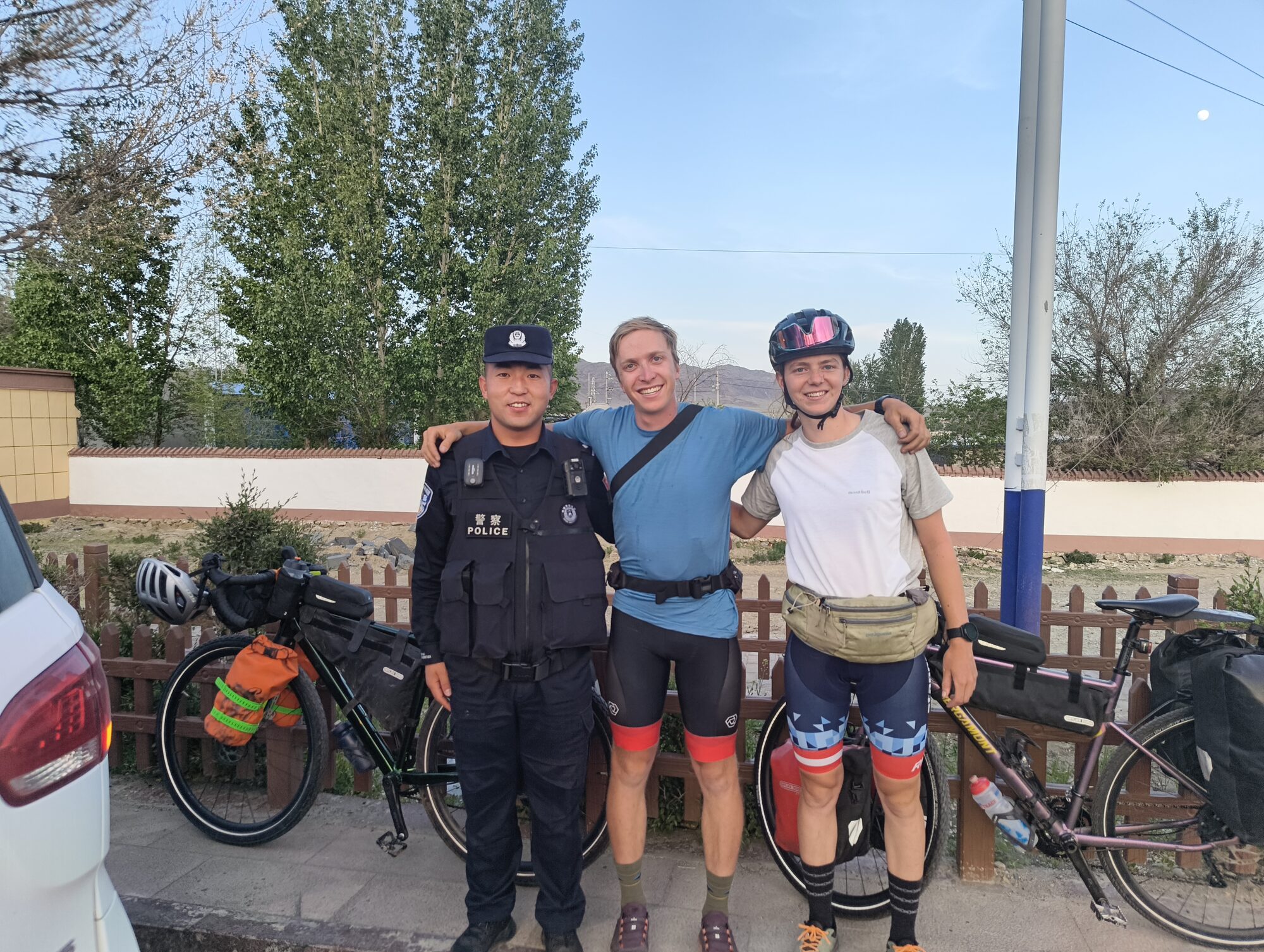
They follow us for a while, “well hidden” behind a truck, until we lose sight of them, or they lose sight of us. We find a nice spot by the river and pitch our tent. Just as we're about to go for a swim, the farmer turns up. He's less happy about us camping here. Neither Chinese nor our translation app gets us anywhere with him. He can neither read nor write. Slightly annoyed, we pack up and move on. Just off the road, behind a hill on the steppe, we find a spot that'll do for tonight.
Day 7: Crossing into Mongolia, Araltobe (CN) - Bulgan (MNG)
Finally, a tailwind again. Knowing we'll be crossing into Mongolia today, and looking forward to being able to pitch our tent wherever we like again, we get pedalling. But that's the thing with tailwinds: sooner or later, they turn into crosswinds. The road winds gently through the foothills of the Altai Mountains, climbing steadily all the way to the border town of Taykeshekn. The Kazakhs could learn a thing or two from the road builders here. As we've come to expect, there's a “mini border checkpoint” before town, where we reel off our usual answers again.
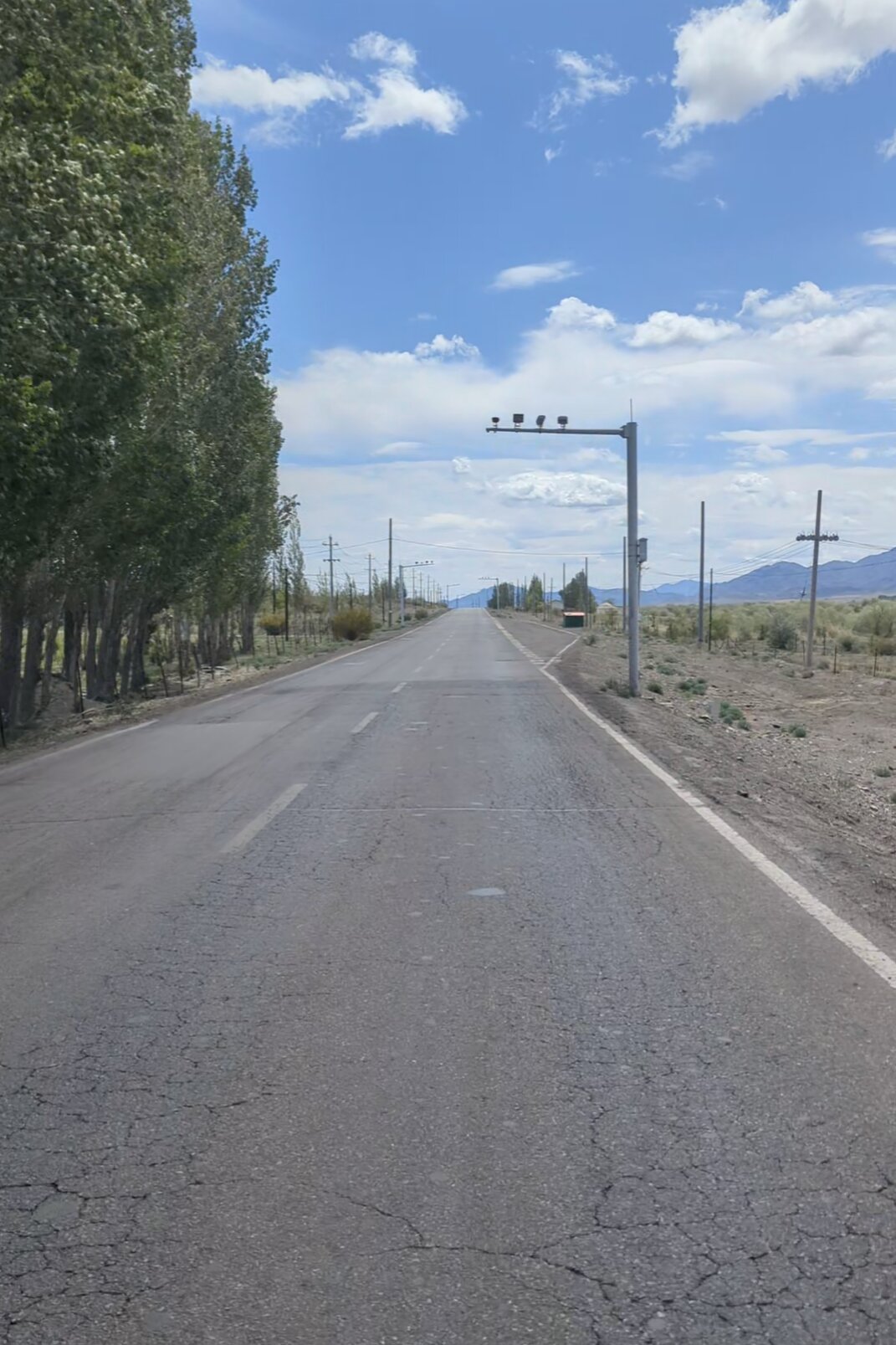
We stop for one last meal, then head for the border. Along the final 15 km, the road is lined with barbed-wire fences, with cameras every 50 metres watching everything in both directions. A police patrol also stops us to ask where we're going. Either they have a great sense of humour or they're following their instructions to the letter. Where else would we be going except the border, unless we fancied climbing over three layers of barbed wire? One more passport check, and we carry on. The crossing is mainly used by trucks carrying iron ore from Russia through Mongolia to China. The passenger crossing is unstaffed, and it takes a few minutes for the border officers to take their places.
Leaving China is much quicker than expected, and everyone is extremely friendly and efficient, as always. On the way out, we're asked whether we've posted anything on Instagram or Facebook. Is this a trick question …? Western social media platforms are blocked in China, after all. We show them the video we've shared on Instagram anyway, and the border officer loves it.
On we go to the Mongolian immigration building.
There, we have to explain to the two immigration officers that we're not from Australia, but Austria, in Europe. They're a little confused, but they find Austria on the list of visa-exempt countries and stamp our passports. They randomly pick two of our bags to scan, and we're allowed in. Okay, that was easy!
We cycle past endless queues of trucks waiting to enter China. There are even mobile restaurants catering to them. It looks as though the drivers have to wait several days at the border.
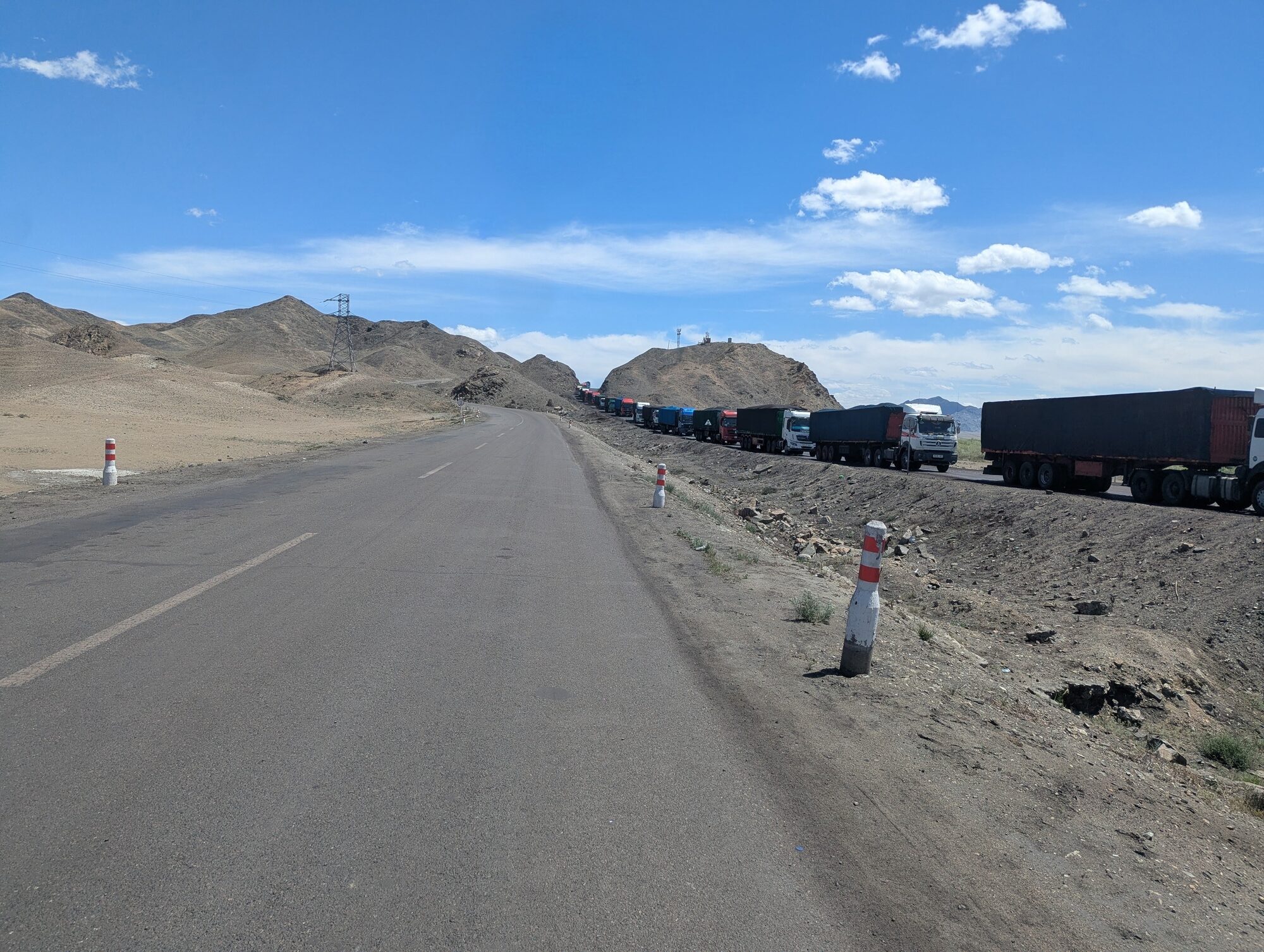
At a junction, a car is parked in the middle of the road, and a man tells us we can't continue this way and have to take the other road. By now, we're used to these unexpected situations, so we find another route to the next village. In Bulgan, we want to prepare for our upcoming crossing of the Altai Mountains, buy supplies and withdraw some cash.
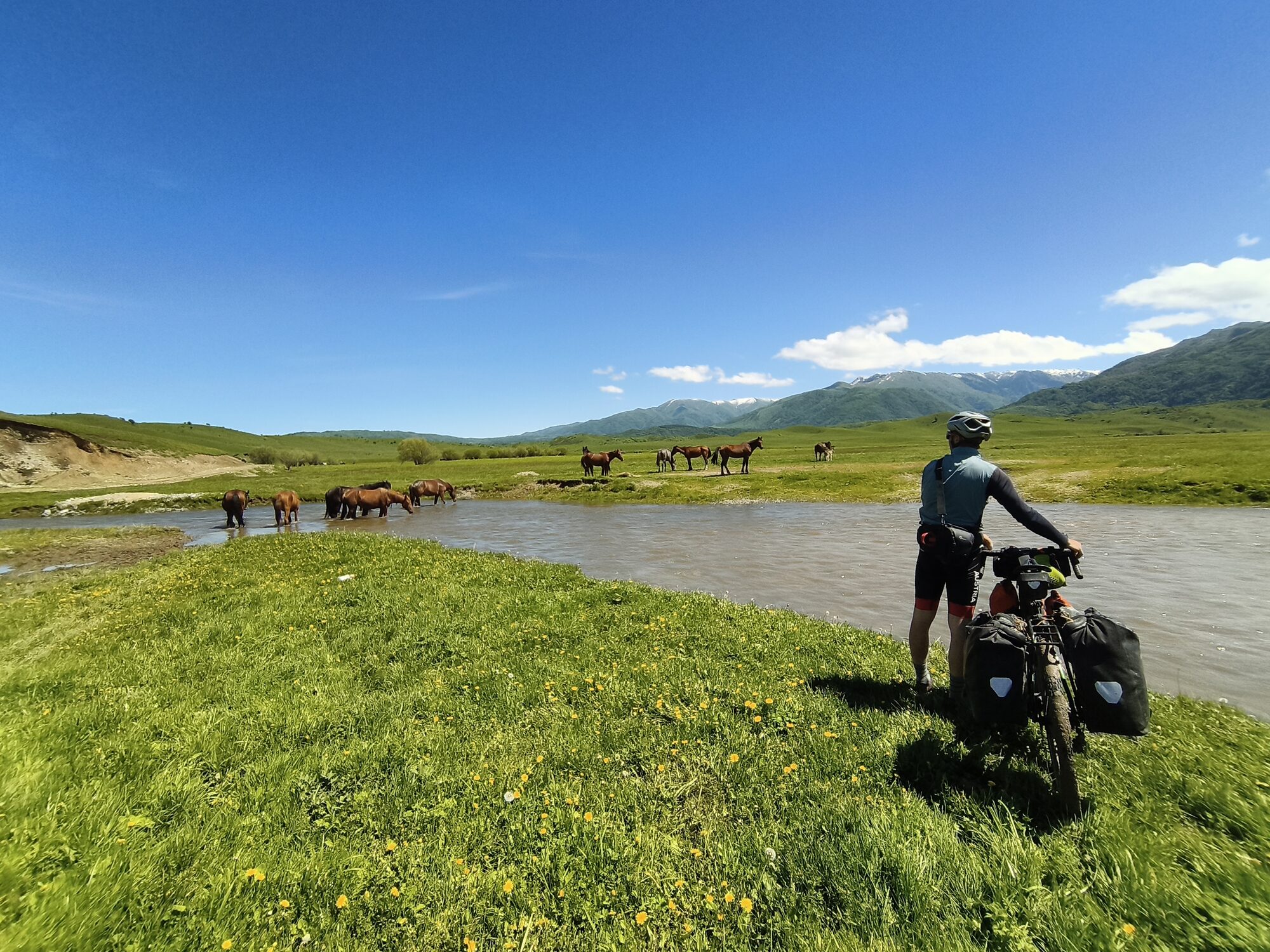
The new route means a 30 km detour, but oh well. At least there's something to look at again. There are herds of camels and yurts beside the road, and a strip of trees marks the river running through the middle of the valley. When we turn off the tarmac, we're not entirely sure we're going the right way, but that's Mongolian roads for you: not immediately recognisable as roads. We battle into the wind towards the village, with no idea how big it'll be. With the headwind getting stronger and stronger, we reach Bulgan on our last reserves of energy.
We have no trouble buying petrol for the stove at the filling station. Getting a SIM card is much less hassle than in China, too. We stock up on food and look for somewhere to camp. When we try to ride out of the village towards a river, the road is blocked again, and we're asked to stay on this side of the river. Apparently, some kind of animal disease has broken out, and the area around the stretch of road we've detoured around is under quarantine. Luckily, that's not the direction we need to go over the next few days.
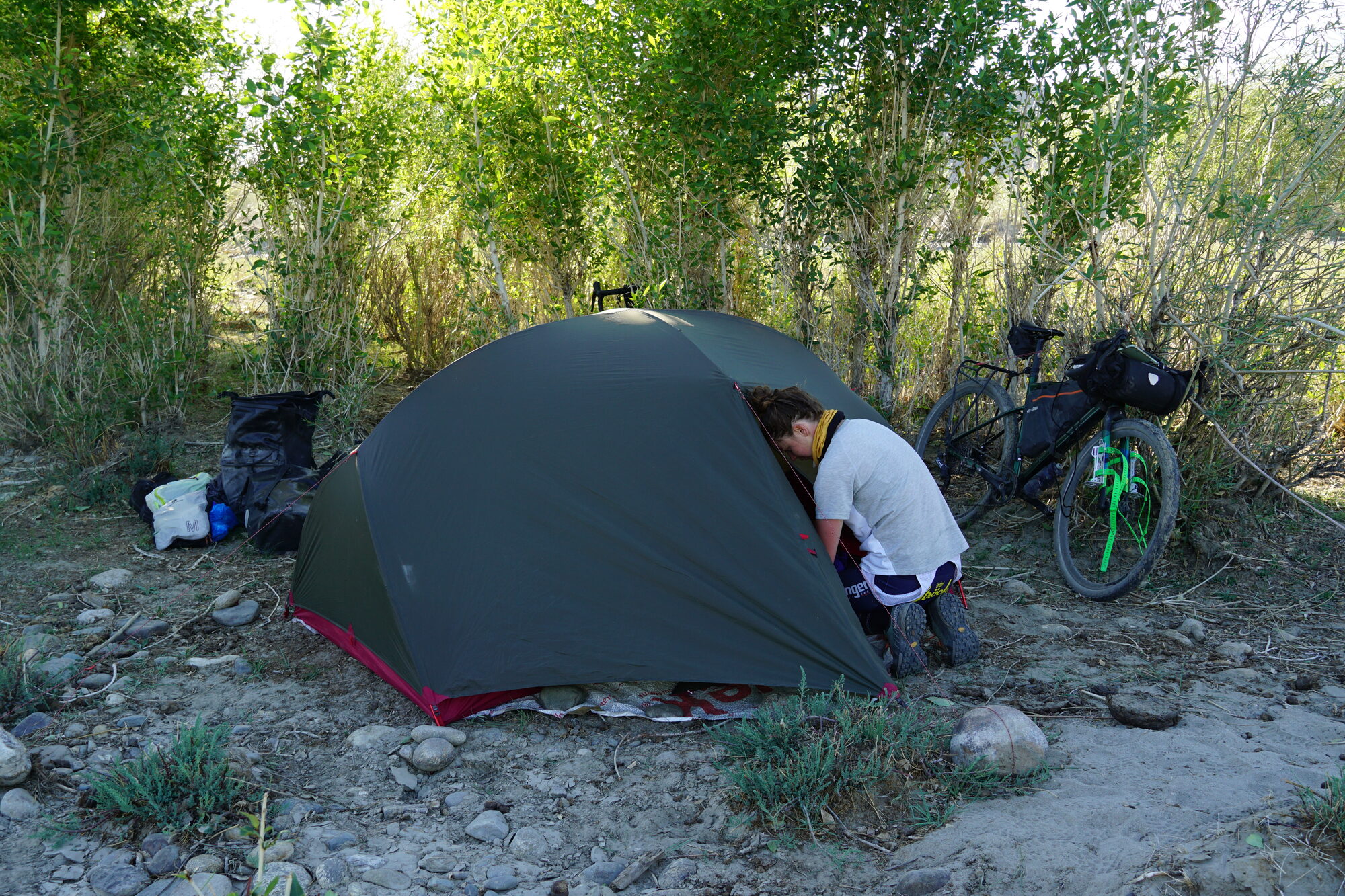
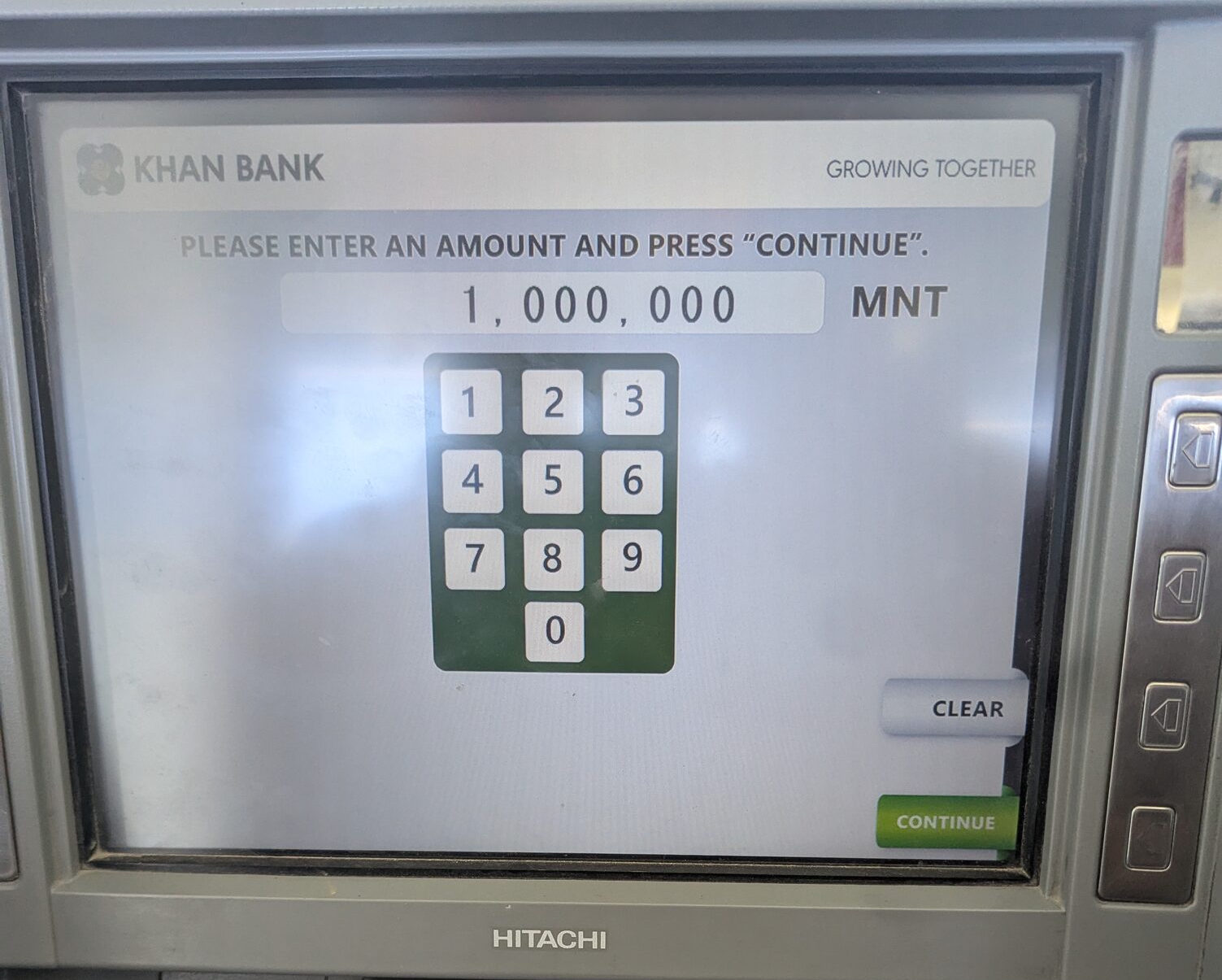
So we find somewhere to sleep on the “safe” side of the river and enjoy finally being able to camp without any hassle again. Tomorrow's plan is to buy the rest of our food for the mountain section and withdraw some more cash. Apparently, we can only take money out once someone else has deposited some.
Mongolia isn't making it as easy for us as we had hoped...
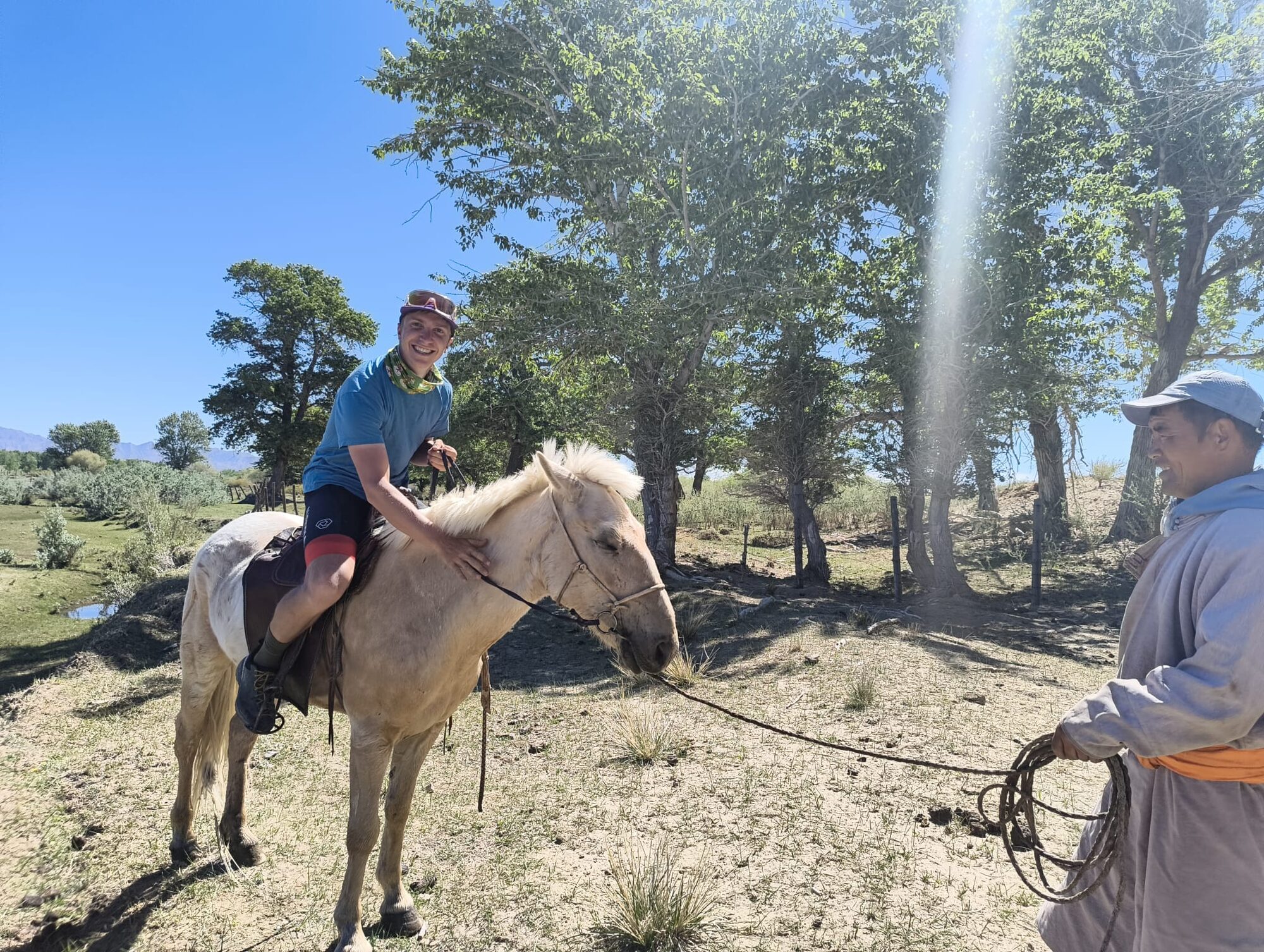
In the morning, a herder comes by and promptly puts us on his horse so we can take a photo. It's our first morning in Mongolia, and we've already been on a horse. Just how we'd imagined it.
After buying the rest of our food, we spend an hour waiting outside the ATM for people to arrive with a big stack of cash and deposit it, so we can withdraw it straight afterwards. With everything sorted, we head for the mountains.
Shortly after leaving Bulgan on a gravel road towards the Altai Mountains, we come across two more cars. It looks as though the mountain villages are under quarantine as well. We're stopped. Since nobody speaks English, someone calls a person who can translate for us, and suddenly it all becomes clear. We're in quarantine! WTF! According to the guy on the phone, Bulgan is under quarantine for the next 30 days because of an outbreak of an animal disease that's supposedly transmissible to humans as well. He says they could find us an empty house where we can wait it out. We thank him for the information, turn around and ride back into the village. One thing's clear: we need to get out of here as quickly as possible. So we do what anyone would do first in this situation. We call our mums back in Austria …