Getting to Zermatt
A little later than originally planned, we drive to Switzerland. The weather gives us little hope of getting more than two or three days of good weather – and those are forecast for the next few days. The plan is: drive straight to Zermatt, hike up to the Arbenbiwak in the rain on the same day, climb the Arbengrat and traverse the Obergabelhorn on the first day of good weather. On the second good-weather day, we want to climb the Rothorngrat to the Zinalrothorn. That's the plan, at least.
Approach to the Arbenbiwak
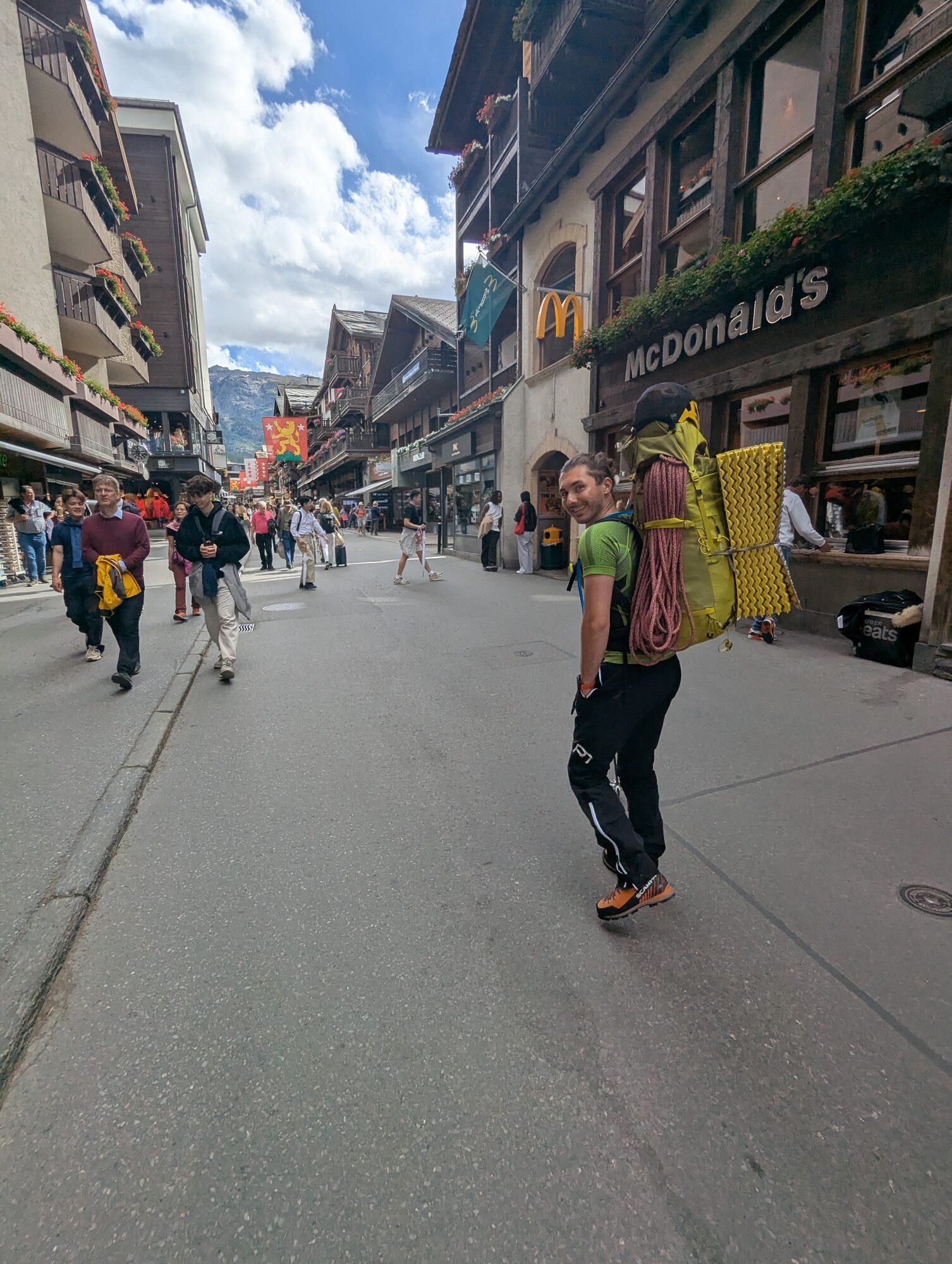
We start with the classic train ride from Täsch and reach Zermatt at 5:30 p.m. We save ourselves the first few metres of ascent by taking the cable car. We can't make it all the way to Schwarzsee, though, and have to get off at the middle station.
Time to start the steep 1,400-metre ascent! To escape the forecast rain, we switch into speed mode and head towards the bivouac. About halfway up, it starts to rain lightly and gets really cold. Towards the end, I have to move ahead a little because I'm already getting pretty cold. By the time I reach the final ladders and fixed cables, my fingers are already completely numb.
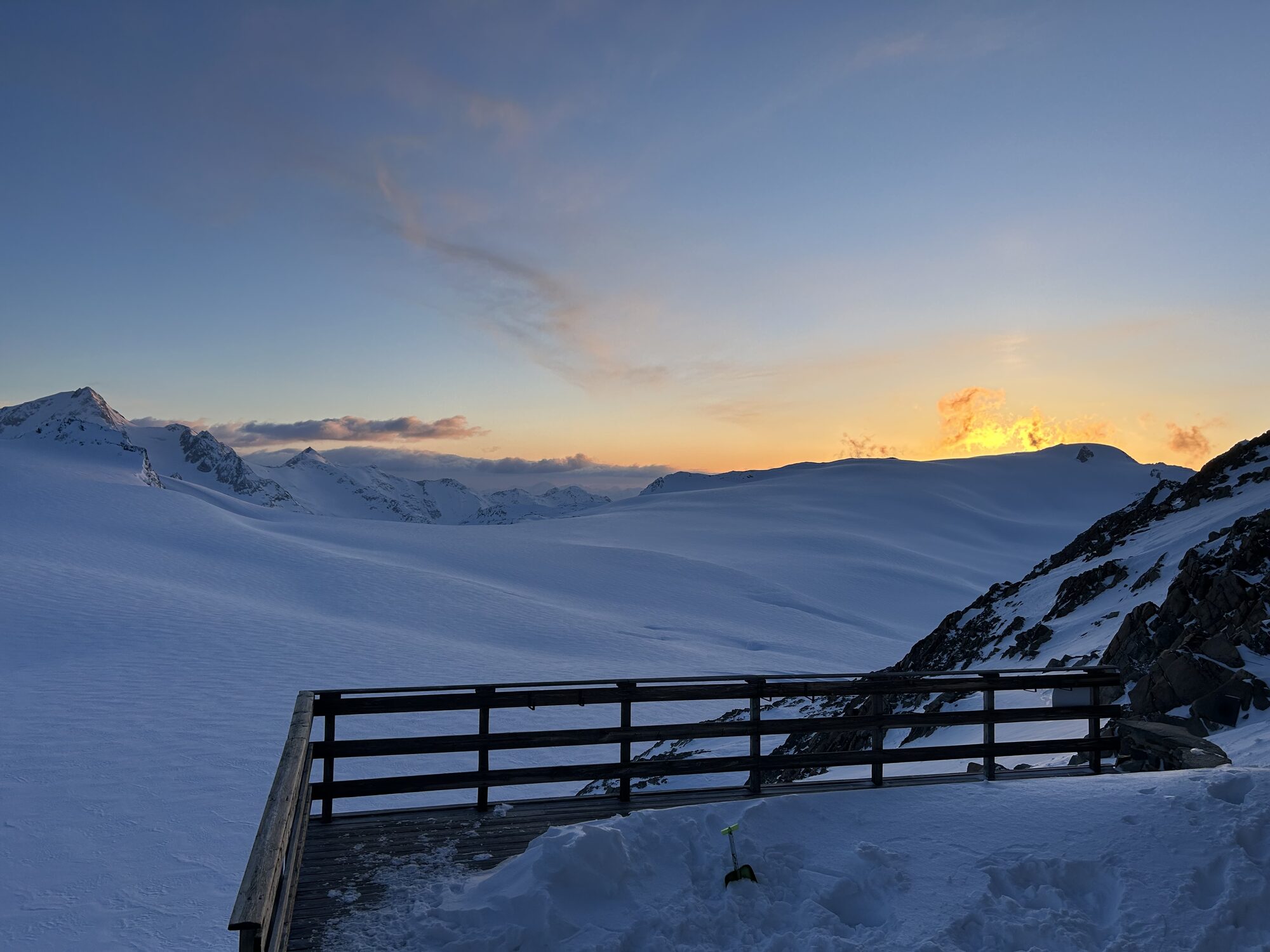
After exactly four hours of climbing, I reach the bivouac in the last daylight and start cooking some pasta. I fire up the gas stove as quietly as possible, as everyone else in the bivouac is already asleep. Nick arrives shortly after me. We agree to get up at 5:00 a.m., as the weather isn't supposed to improve until around 7:00 a.m.
From the Arbenbiwak to the Rothornhütte
At 5:00 a.m., the alarm goes off. It's still raining outside and nobody else in the bivouac is moving either. We decide to sleep for another hour.
At 6:00 a.m., the alarm goes off again. It's still extremely windy, wet and foggy, and there are still patches of fog hanging around the ridge in particular. We talk to the others in the bivouac and it quickly becomes clear that only one party will start climbing today: a mountain guide and his girlfriend, who want to climb the more sheltered south face.
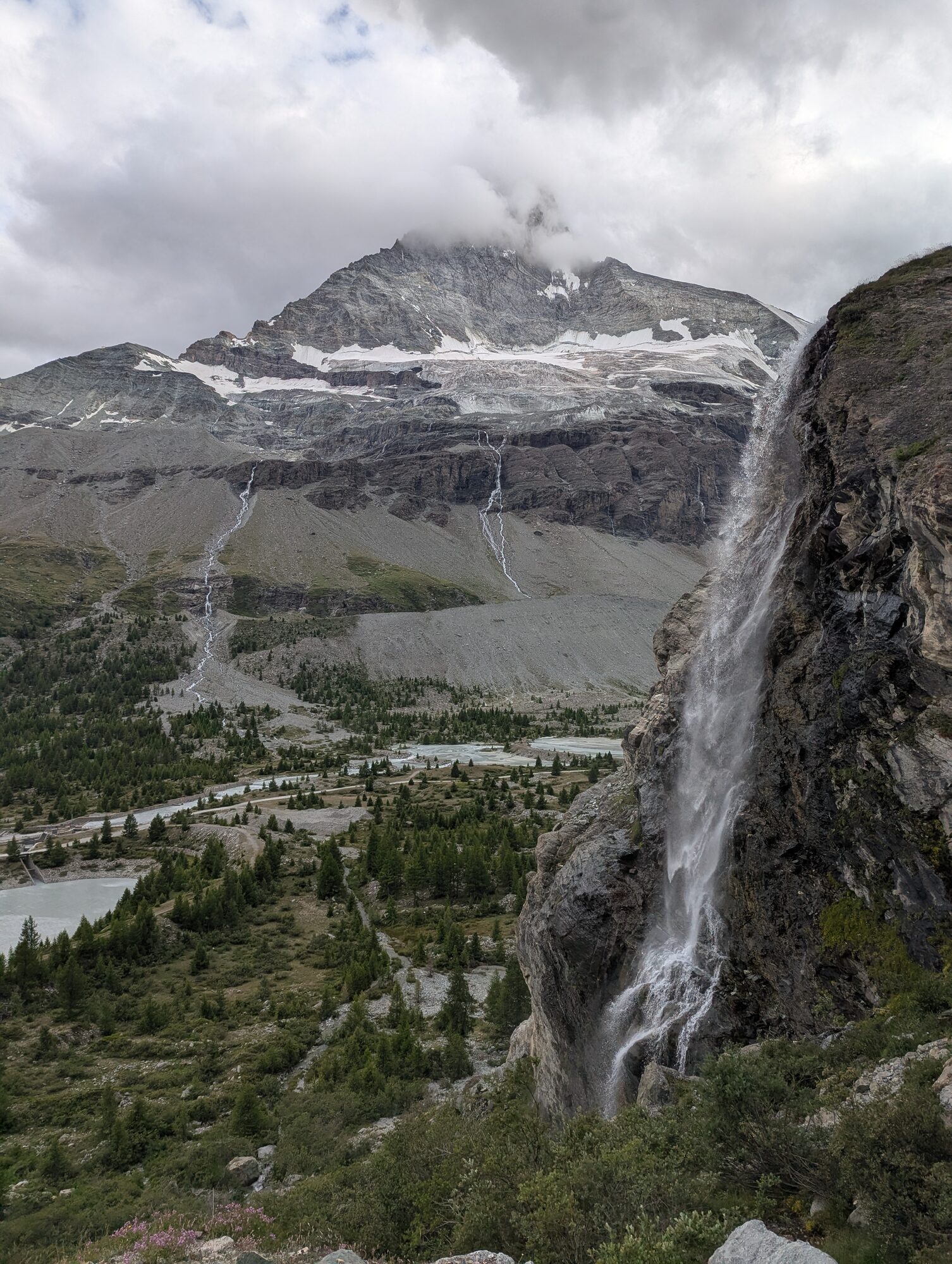
The decision is made. We descend 700 vertical metres and traverse towards the Rothornhütte. Eventually, we reach the Berggasthaus Trift, where we join the normal route to the Rothornhütte.
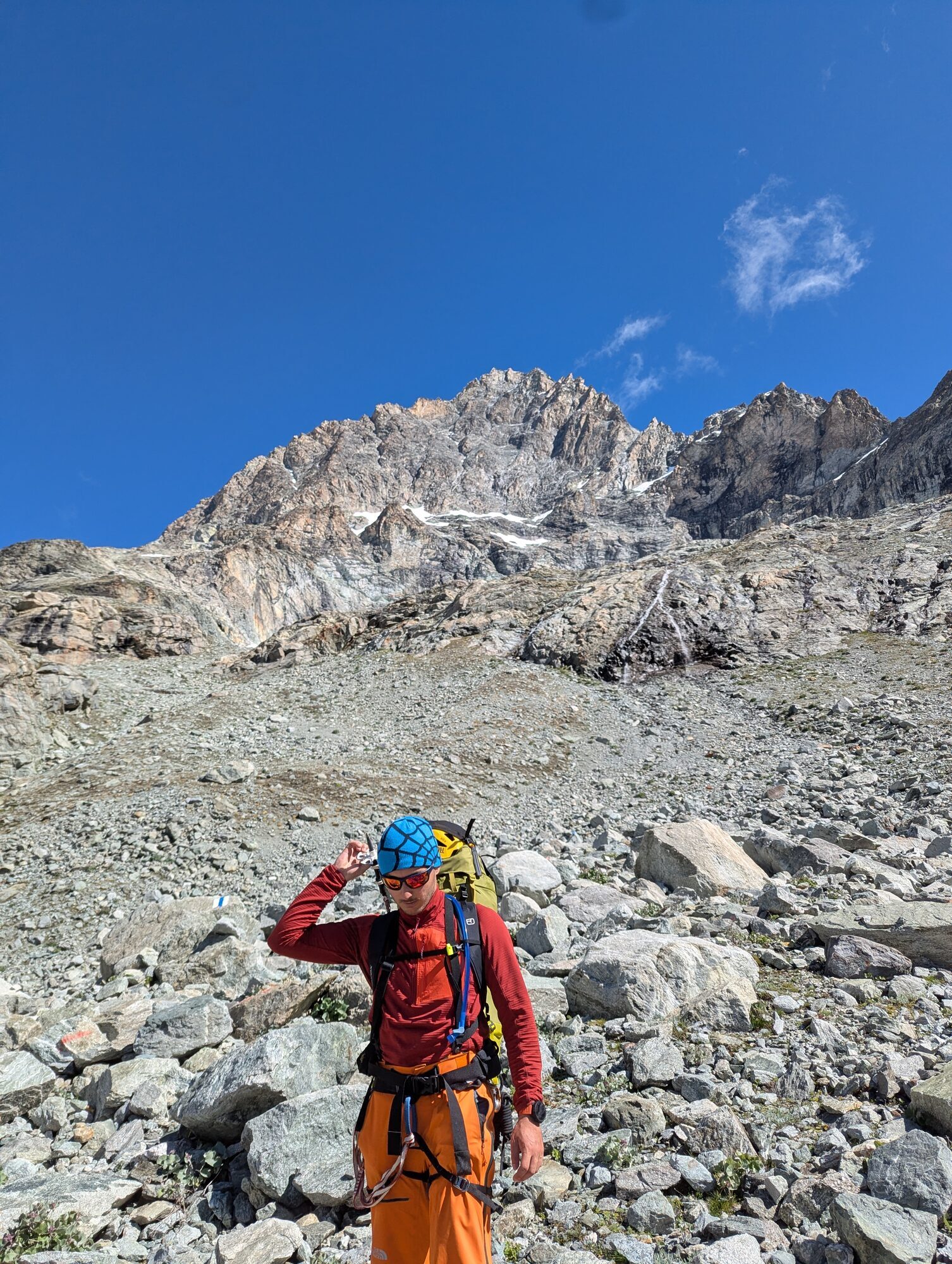
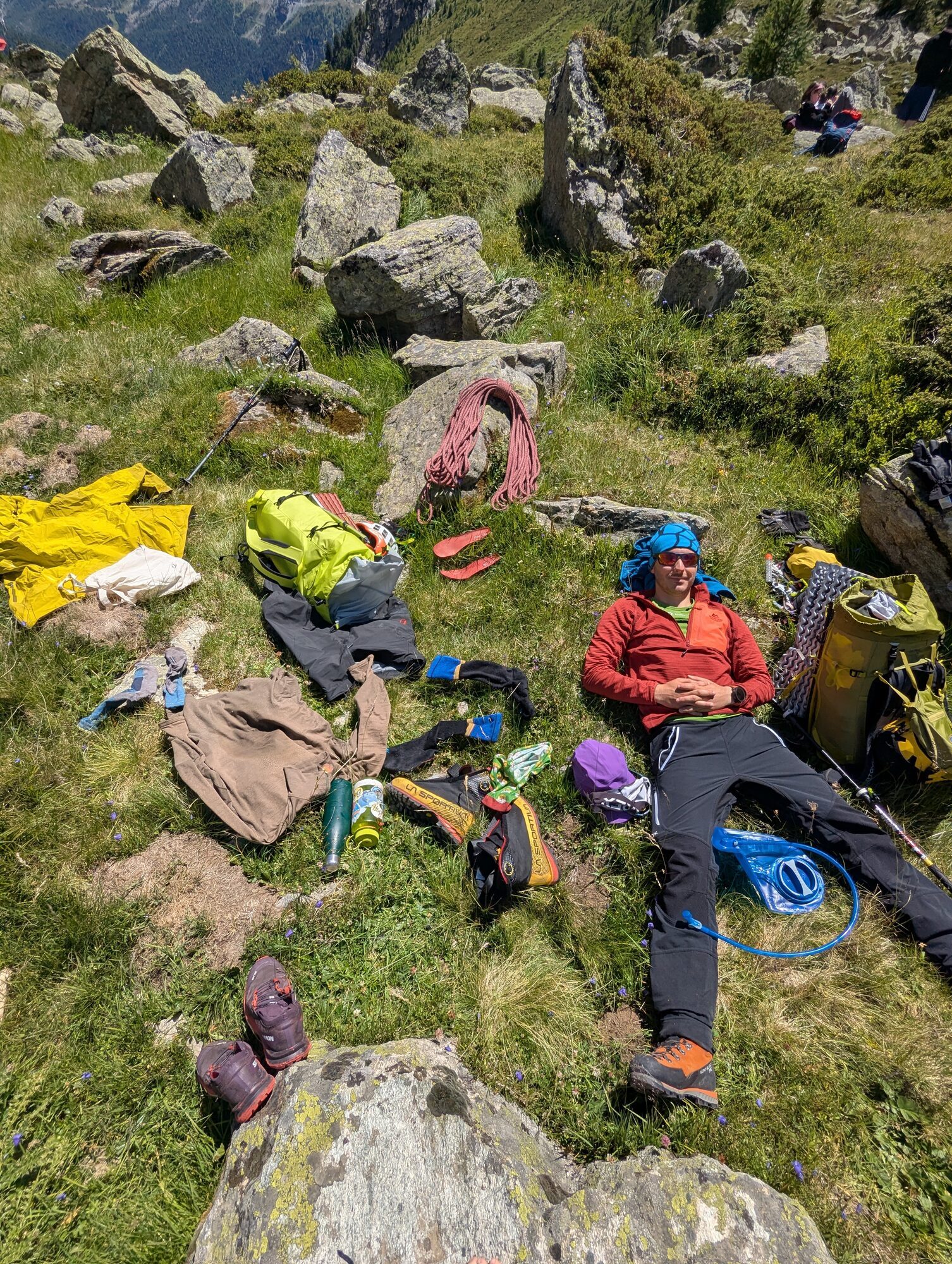
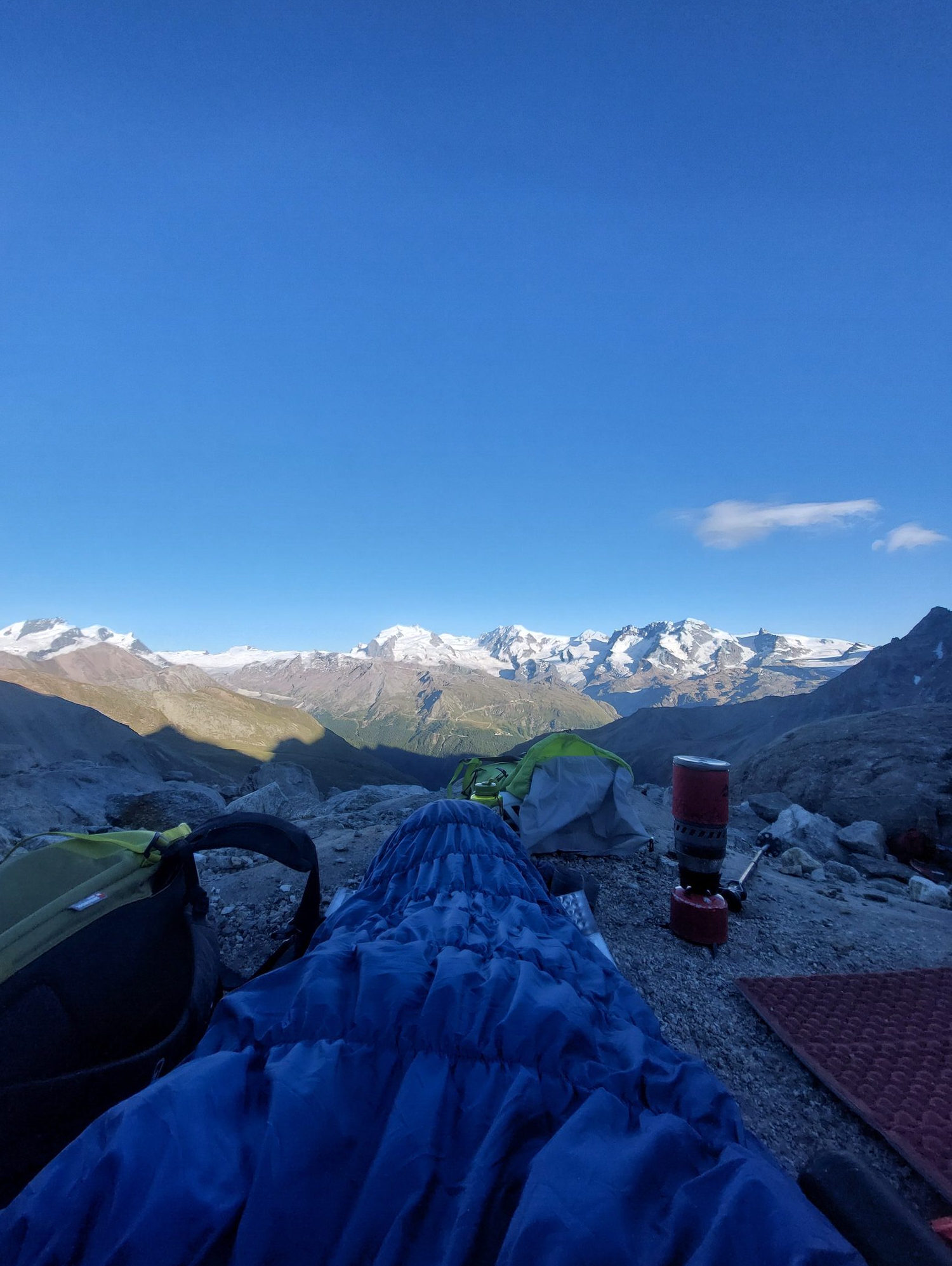
We take a break and dry our gear, which is still wet from the rain. Another 700 vertical metres later, we find a suitable place to bivouac. As the Rothornhütte is already fully booked, we have no other option but to spend the night outside.
We go to sleep fairly early, as we want to get up at 3:00 a.m. the next morning. During the night, we're woken by a helicopter searching for climbers who have lost their way in the rocky terrain while descending from the Obergabelhorn. The next day, we learn that both of them were fine and were safely flown down to the valley by helicopter.
Climbing the Rothorngrat
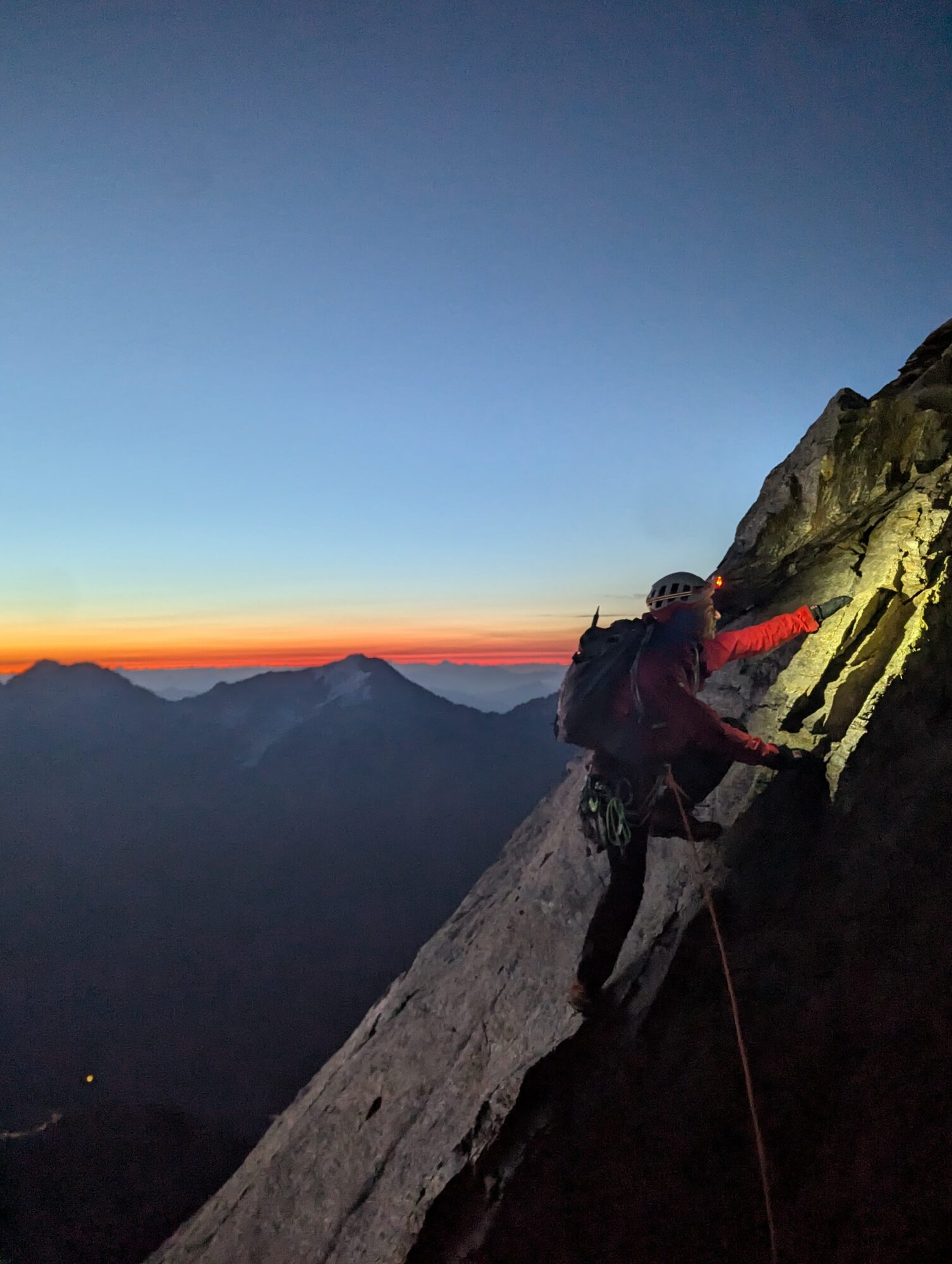
3:00 a.m., the alarm goes off. We quickly eat some porridge and set off. Shortly after 4:00 a.m., we reach the Rothornhütte and join the very back of the line. We're probably the last ones.
We make good progress and soon overtake the first rope teams. After the first steep section, the rock is still a little icy and we have to be careful. After that, however, the path is perfectly worn in again and we don't need crampons before reaching the turn-off towards the ridge.
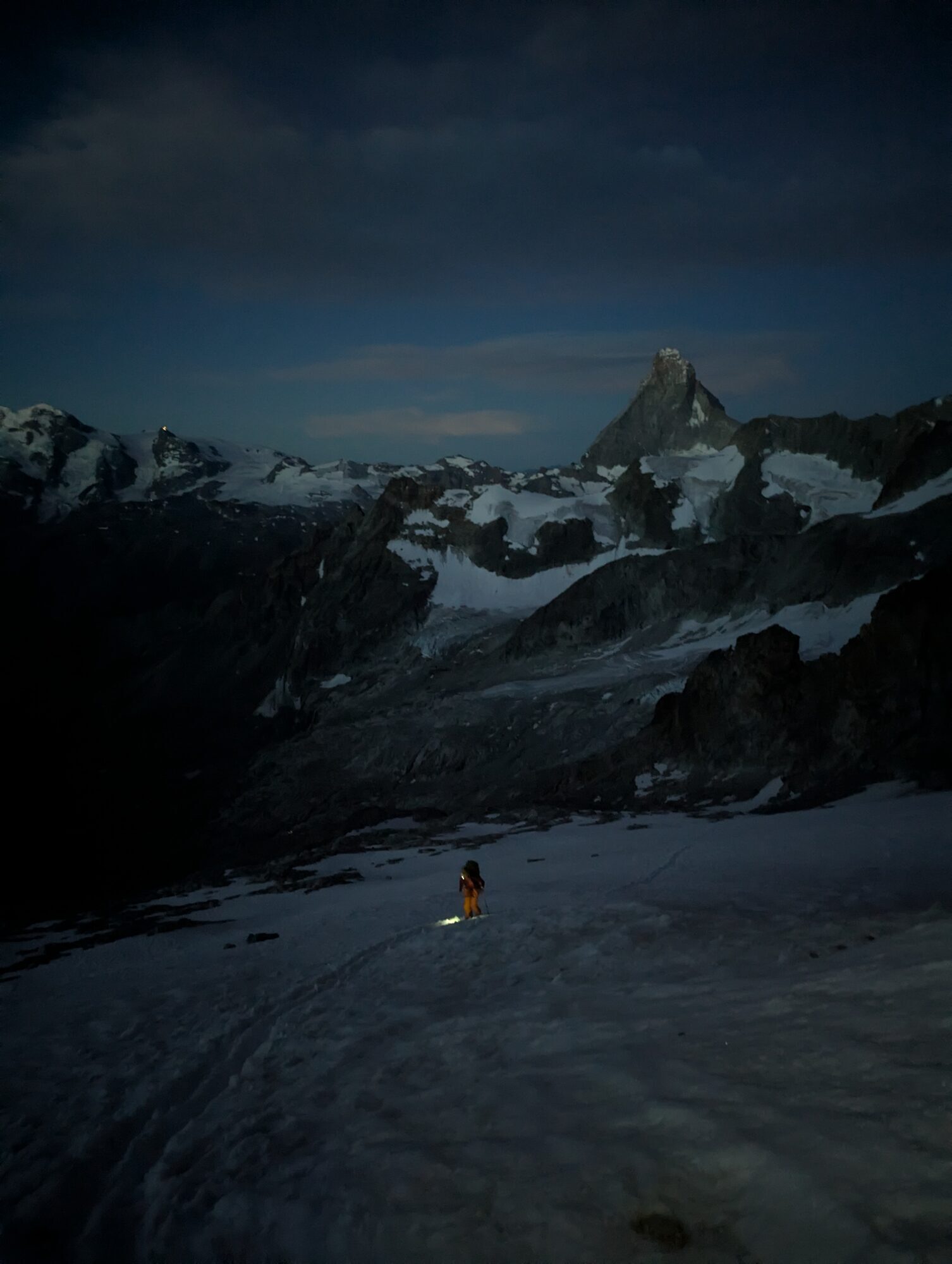
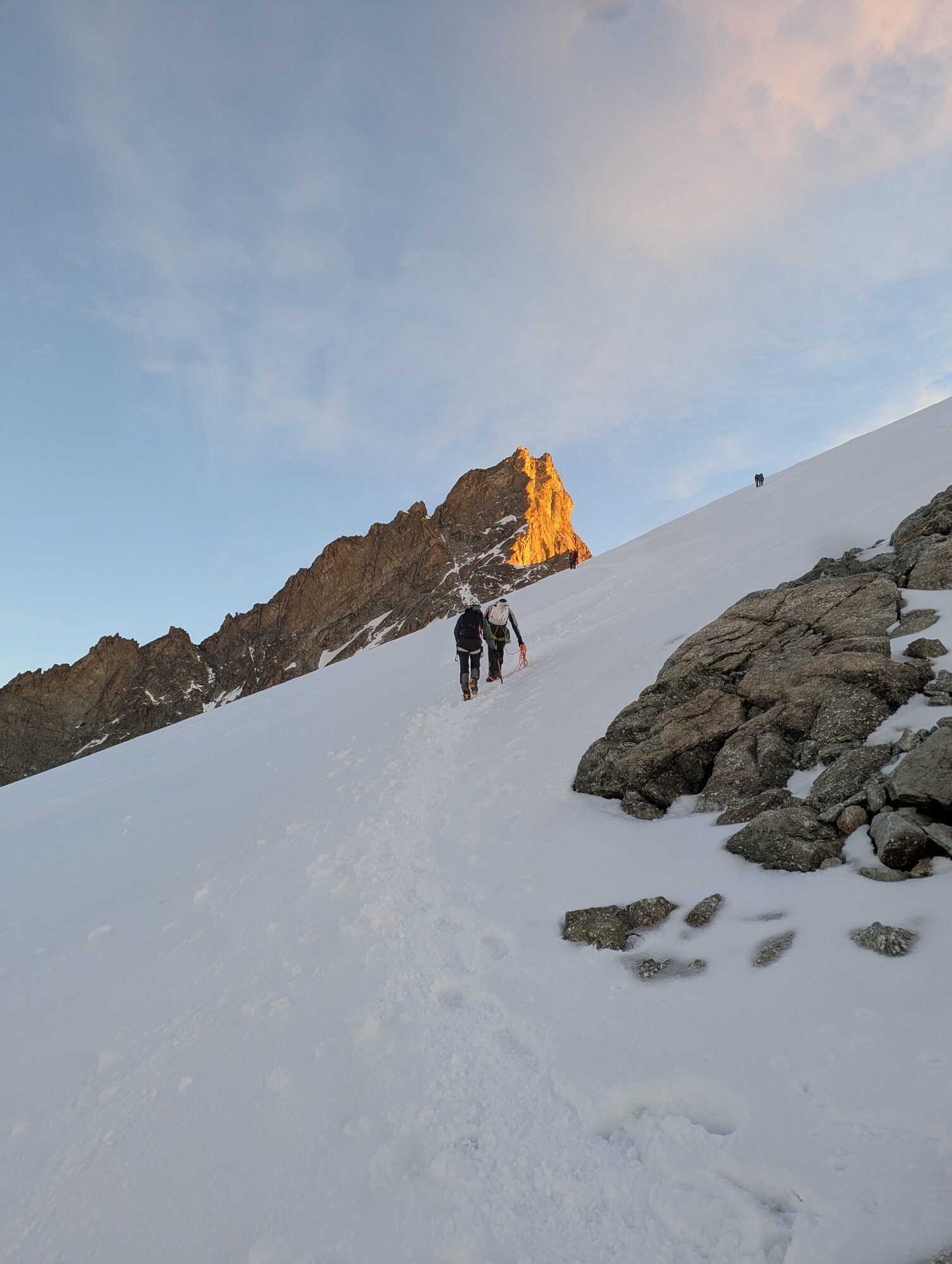
Most of the rope teams continue along the normal route, while we have to descend into a glacier basin. At first, we follow a cairn, but a group down in the glacier basin waves to us and points out that we're too high. We have to traverse onto the glacier a little further down.
Back on the right route, we continue without any problems to the start of the ridge. First, we climb up a gully into the col before the actual climbing along the ridge begins.
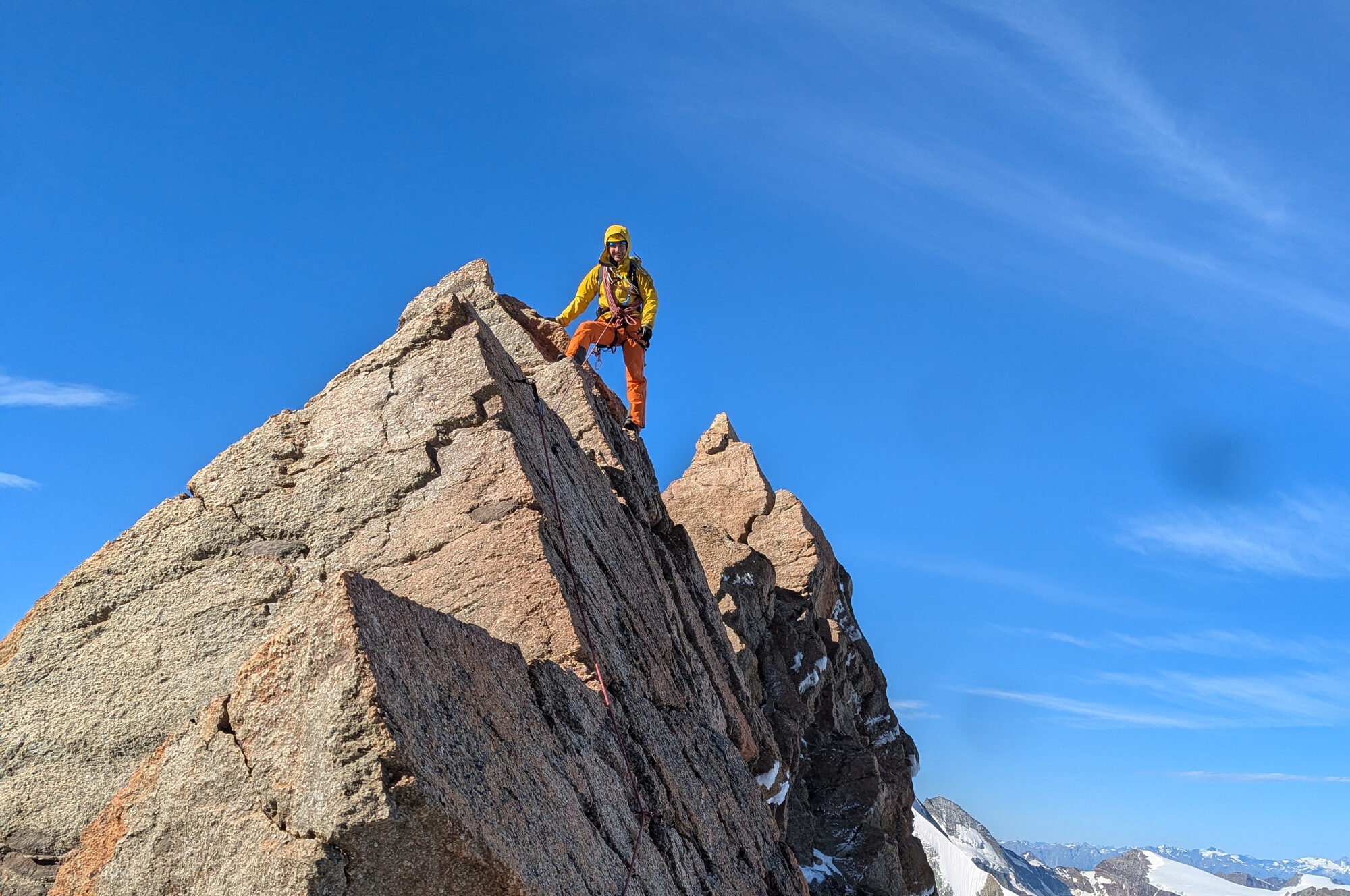
The Rothorngrat is incredibly varied and most of the climbing follows the ridge crest directly. There is hardly any fixed protection, but the rock takes cams and nuts perfectly. We bypass the final gendarme on the north side and shortly afterwards arrive at the Gabel – the col where the normal route and Rothorngrat meet.
Suddenly, there are endless rope teams around us. Ropes are crossing everywhere and the atmosphere is tense accordingly. A party of two, among the first to return from the summit, tells us that there is complete chaos higher up and that we'd have to wait for at least an hour in the freezing wind.
We decide that we don't necessarily need to top off what has been a perfect tour so far with the summit and start descending. A little later, when we look back at the abseiling chaos behind us, we're pretty happy with that decision. Together with the rope team ahead of us, we abseil quickly and soon make it out of the abseil gully.
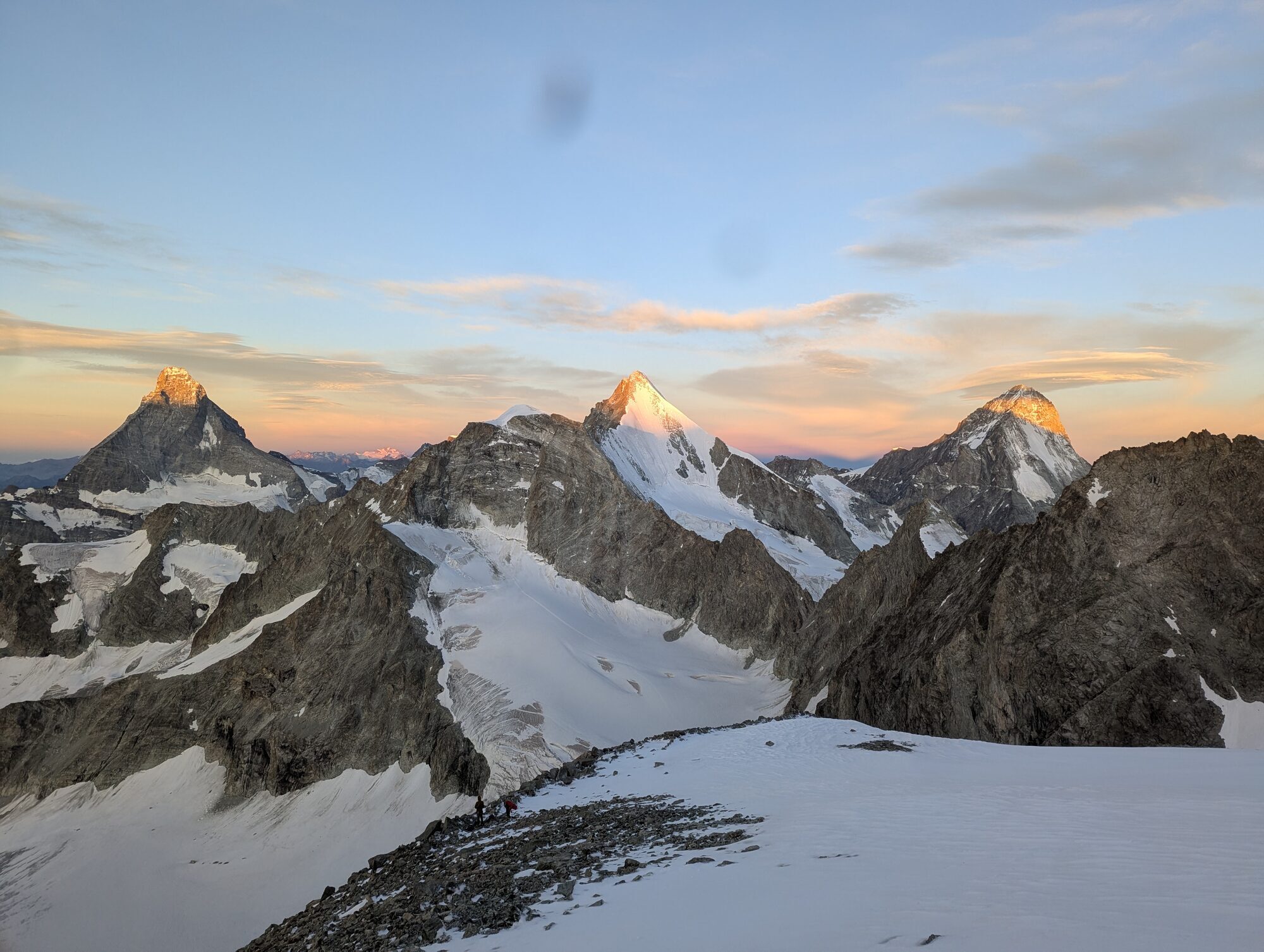
Descent
When we reach the snowfield where we left the normal route on the approach, the snow is already really soft and we're glad we're not descending any later.
Once we reach the Rothornhütte, we quickly have a Coke before facing what feels like an endlessly long descent into the valley. At our bivouac spot, we quickly pack up the rest of our gear and continue down.
After 15:30 hours, we reach the train station in Zermatt at 7:00 p.m. In Täsch, we buy some beer and pesto. When we arrive at the campsite, we meet Luca and Kili, who have just returned from the Dufourspitze.
Conclusion
Once again, a perfect Valais gneiss tour that fully deserves its reputation as a classic. The Rothorngrat offers varied climbing, can be protected perfectly and is beautifully exposed and airy in places.
We were pretty happy with our decision not to continue to the summit. That way, there was no bitter aftertaste at the end either. Apparently, it was the first day in a week when conditions allowed an ascent. That was probably also the reason for the crowds, which luckily we didn't encounter until we reached the Gabel.
Equipment
- standard alpine mountaineering equipment
- 60 m rope (40 m should be enough)
- BD Camalots 0.3–1
- nuts
- 6 alpine quickdraws